


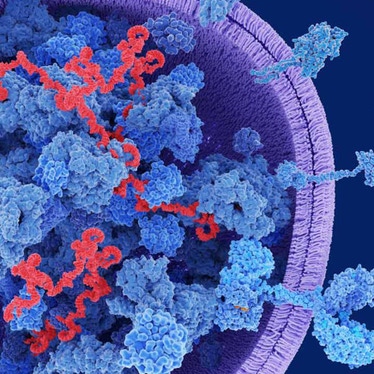
Key workflow technologies
Learn more about our products that support EV enrichment and characterization, small RNA extraction, and sequencing library preparation.
Extracellular vesicle enrichment and characterization
BioLegend offers tools for enriching and characterizing extracellular vesicles, including MojoSort™ Microbead Kits for immunoaffinity-based isolation using common EV-associated markers such as CD9, CD63, and CD81. Antibodies are also available for EV marker detection and characterization.
Small RNA extraction from biofluids and extracellular vesicles
chemagic miRNA Kits use magnetic bead-based purification to isolate circulating cell-free miRNA from biofluids and small RNA from extracellular vesicles. The kits support challenging sample types such as plasma, serum, and saliva, where RNA concentrations can be low and efficient recovery is important for downstream analysis.
Manual and automated formats provide flexibility for different throughput needs, including scalable processing on the chemagic instruments. Purified small RNA can be used for downstream applications including next-generation sequencing, with demonstrated compatibility with the NEXTFLEX Small RNA-Seq Kit v4.
Small RNA sequencing library preparation
The NEXTFLEX Small RNA-Seq Kit v4 provides gel-free library preparation for miRNAs and other small RNA species from low-input samples. The workflow has been demonstrated with RNA isolated from plasma and serum, as well as with miRNA isolated from purified extracellular vesicles, supporting both cell-free and EV-associated small RNA studies.
Optimized ligation and dimer-reduction chemistry help reduce sequencing bias and adapter-dimer formation without PAGE-based size selection. For higher-throughput studies, the workflow can also be automated on Revvity liquid handling workstations.
Small RNA sequencing controls and blockers
Low and variable RNA abundance in biofluids can make it difficult to distinguish biological differences from technical variation. miND™ Spike-In Controls provide defined synthetic small RNA standards that can be added to extracted RNA before library preparation to monitor assay performance and enable absolute normalization across samples and batches.
Highly abundant small RNAs can also consume a substantial share of sequencing reads. NEXTFLEX Blood miRNA Blockers reduce the representation of common high-abundance miRNAs in human blood and plasma, while NEXTFLEX Custom Small RNA Blockers can target user-selected sequences such as tRNA fragments, Y RNA fragments, rRNA fragments, or highly expressed miRNAs. Both integrate with the NEXTFLEX Small RNA-Seq Kit v4 workflow to direct more sequencing capacity toward lower-abundance RNAs of interest.
Explore our solutions


Featured resources
FAQs
-
What is the difference between extracellular vesicles and exosomes?
Extracellular vesicles (EVs) are membrane-bound particles released by cells. Exosomes are a subtype of EV associated with the endosomal biogenesis pathway. When vesicle origin has not been established, the broader term extracellular vesicle is generally preferred.
-
What types of small RNA can be profiled in extracellular vesicle and cell-free samples?
In addition to miRNAs, extracellular RNA populations can contain other small RNA species and fragments, including Y RNAs, tRNAs, piRNAs, and rRNA-derived sequences. Their abundance can vary considerably with sample type, biological source, and sample preparation method.
-
Can EV-associated and broader cell-free small RNA be studied from the same biofluid sample?
Yes. Separate aliquots of the same biofluid can be processed using different workflows. One aliquot can undergo EV enrichment before RNA extraction to focus on EV-associated small RNA, while another can be extracted directly to profile the broader extracellular small RNA population. Consistent sample handling is important when comparing the resulting profiles, which should also be interpreted in the context of the EV enrichment method used.
-
What pre-analytical factors can affect extracellular and cell-free small RNA analysis?
Sample collection, processing time, centrifugation conditions, hemolysis, storage, and freeze-thaw history can all influence extracellular RNA profiles. Consistent handling across samples helps reduce technical variation, particularly when working with low-abundance RNA from biofluids.
For research use only. Not for use in diagnostic procedures.

