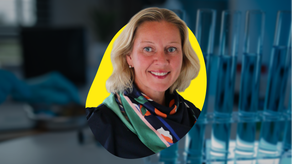



An interview with Karolina Baker, Technical Operations Lead, Genomics UK
When Karolina Baker joined Revvity just over a year ago, the genomics operation in Macclesfield was at a very different stage of its development. The team was smaller, many processes were still taking shape, and the scale of what lay ahead was difficult to imagine.
Since then, the operation has grown rapidly. More than 10,000 genomes have been processed on site as part of a pioneering newborn screening study, new capabilities have been introduced, and the team has expanded significantly.
Karolina has experienced that growth from the inside. Having progressed from Lab Supervisor to Technical Operations Lead, she has helped build both the operation and the team behind it. We spoke to her about scaling a complex scientific environment, leading through rapid change, and why some of the most valuable lessons come when there isn't a clear roadmap.
Q: More than 90 babies have already been identified through the study. Does that change how you think about your work?
Karolina: Absolutely. When I first started my career, I was fascinated by genetics from a scientific perspective. I wanted to understand how genetic information could help explain disease and improve healthcare.
Over time, that became much more tangible.
Today, when I think about the work we do, I think about the families behind the data. More than 90 babies have already been identified with serious but treatable conditions through the study. Earlier diagnosis can make a significant difference to treatment and long-term outcomes.
It's a reminder that the work doesn't end in the laboratory.
Q: A year ago, the operation looked very different. What has changed?
Karolina: Almost everything. When I joined, we had a relatively small leadership team and a much smaller operation.
Since then, we've expanded into a larger space, recruited extensively, increased throughput, and built capabilities that simply didn't exist at the beginning. At the same time, I moved into a new role and became a hiring manager.
What stands out isn't any single milestone. It's the pace of change. A year ago, many of the processes we rely on today were still being developed. Reaching more than 10,000 genomes felt like a distant objective. Now it's something we've already achieved and moved beyond.
Q: Was there a moment when you realized this wasn't a typical laboratory operation?
Karolina: Probably when I realized we were designing processes at the same time as we were delivering results.
In many environments, systems are already established when you arrive. Here, we were building and refining them while the operation continued to grow.
That creates a different kind of challenge. You have to make decisions with incomplete information, adapt quickly when circumstances change, and accept that some solutions will need to evolve over time.
Not everyone enjoys working that way, but I found it incredibly engaging.
Q: What type of person thrives in that environment?
Karolina: Someone who is comfortable with change. People sometimes join expecting a very structured environment where every process is already defined. That's not really where we are.
The operation is growing, priorities evolve, and new challenges appear regularly. Some people find that frustrating. Others see it as an opportunity to contribute and influence how things develop.
The people who tend to do well here are those who enjoy solving problems and don't need everything to be fully mapped out before they begin.
Q: You've helped grow the team significantly. What have you learned about leadership?
Karolina: One of the biggest lessons has been the importance of communication.
As teams grow, information becomes harder to move around. Something that worked naturally when there were a handful of people no longer works when the team becomes much larger.
A significant part of leadership is making sure people understand what is changing, why it's changing, and how their work connects to the wider operation. The science is important, but clarity and communication become just as important when you're scaling a team.
Q: When you're hiring graduates, what do you look for?
Karolina: Curiosity matters, but not in the way people sometimes assume. I'm less interested in whether somebody already knows everything and more interested in how they approach things they don't know.
Many of the people we hire are at the beginning of their careers. Nobody expects them to arrive with all the answers.
What stands out is a willingness to learn, ask questions, and take ownership of new challenges. Those qualities tend to matter much more in the long run than trying to appear as though you already know everything.
Q: What has surprised you most about working at Revvity?
Karolina: The amount of expertise that's available across the organization. When you're building something new, there are inevitably moments when you encounter a problem you've never seen before.
What I've found is that there is almost always somebody willing to help. Whether it's a technical question, an operational challenge, or advice from someone who's solved a similar problem elsewhere, there is a strong willingness to share knowledge.
That has been incredibly valuable, particularly during periods of rapid growth.
Q: Looking ahead, what interests you most about the future of genomics?
Karolina: The scale of what is becoming possible. We're generating and analyzing data at a level that would have been difficult to imagine not very long ago. Technologies such as AI will undoubtedly become increasingly important in helping us interpret that information.
At the same time, we're operating in a clinical environment where quality, reliability, and trust are critical.
The challenge isn't simply adopting new technologies. It's understanding where they genuinely add value and how they can be applied responsibly within healthcare. That's where I think some of the most interesting work will happen.
One final thought
When asked what she's most proud of, Karolina doesn't immediately mention promotions, titles, or milestones.
She talks about the team. About the people who joined when much of the operation was still taking shape. About the expertise they've built together. About the fact that work which once felt experimental has become part of a large-scale operation processing thousands of genomes.
"A year ago, some of this felt impossible," she says. "Now we're focused on what's next."
For Research Use Only. Not for use in diagnostic procedures.