
JP

Revvity Sites Globally
Select your location.
*e-commerce not available for this region.

pHSense Eu Streptavidin, 2 x 96 Assay Points
pHSense Eu Streptavidin, 2 x 96 Assay Points
Cellular Internalization Kits and Reagents
The pHSense™ Eu Streptavidin involves Europium-labeled, pH-sensitive streptavidin that allows real-time, no-wash detection of biotinylated ligand and binder internalization, and intracellular trafficking in live-cell assays.
| Feature | Specification |
|---|---|
| Application | 内部化 |
The pHSense™ Eu Streptavidin involves Europium-labeled, pH-sensitive streptavidin that allows real-time, no-wash detection of biotinylated ligand and binder internalization, and intracellular trafficking in live-cell assays.
Product variants
Unit Size: 96 Assay Points
Part #:
81SAEU1AA
Unit Size: 2 x 96 Assay Points
Part #:
81SAEU1AB
Unit Size: 10 x 96 Assay Points
Part #:
81SAEU1AC
For research use only. Not for use in diagnostic procedures. All products to be used in accordance with applicable laws and regulations including without limitation, consumption and disposal requirements under European REACH regulations (EC 1907/2006).
pHSense Eu Streptavidin, 2 x 96 Assay Points
Cellular Internalization Kits and Reagents
Loading...
Product information
Overview
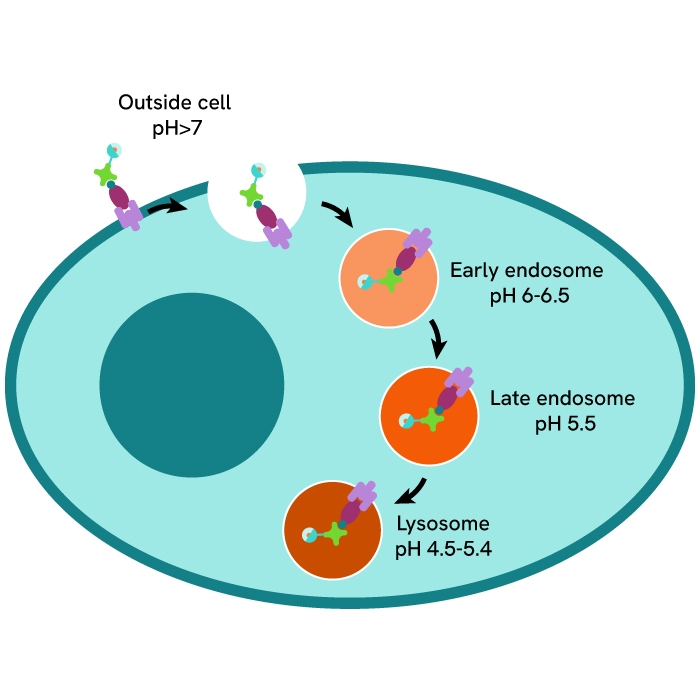
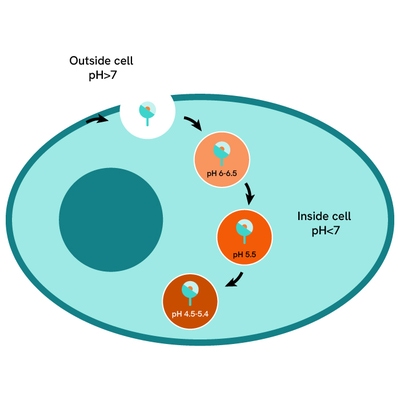
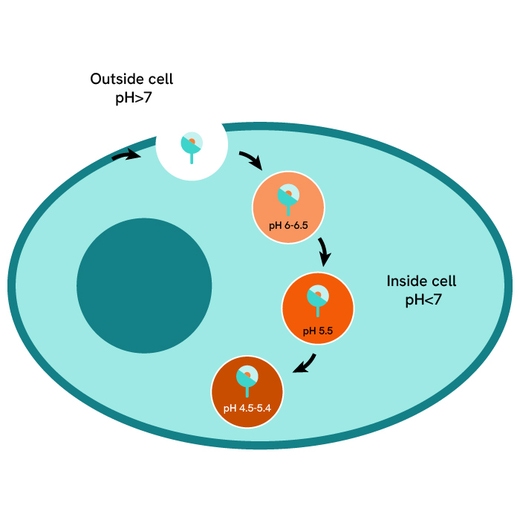
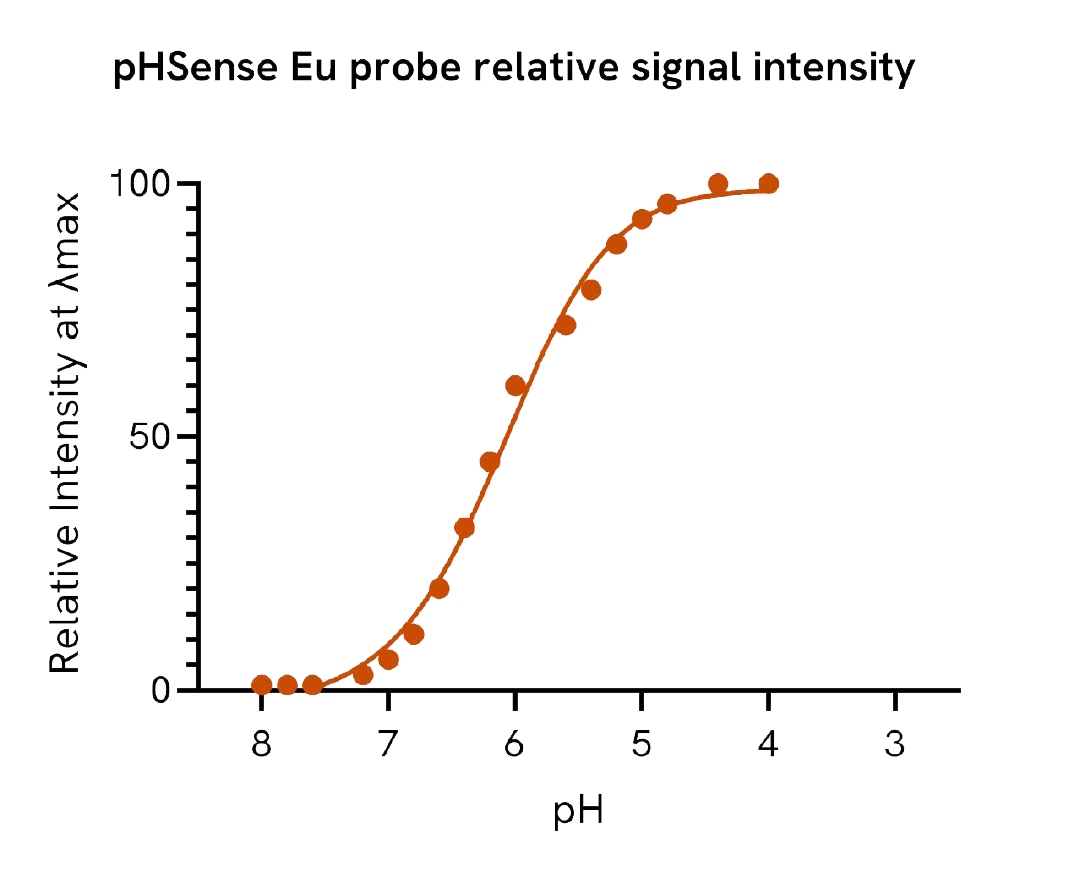
The pHSense Eu Streptavidin reagent is non cell permeant and labeled with a pH-sensitive Europium complex. It is specifically developed to monitor the internalization of biotinylated binder. At neutral extracellular pH (≥7), its fluorescence remains minimal. Once internalized, the pHSense Eu Streptavidin encounters increasingly acidic compartments such as early and late endosomes and lysosomes, where the Europium signal becomes progressively stronger. This novel pH sensitive Europium complex is compatible with a time-resolved fluorescence (TRF) detection, effectively reducing most fluorescence background and significantly enhancing the signal-to-background ratio. Its photophysical properties enable simple and robust no-wash detection of receptor-mediated endocytosis of binders in plate-based assays with live cells.
How it works
pHSense™ Eu Streptavidin: internalization assay principle
The pHSense™ Eu Streptavidin reagent is a streptavidin that is covalently labeled with a Europium-based pHSense probe. It is developed to monitor biotinylated binder internalization in real time.
It supports high-affinity binding to biotinylated ligands while helping reduce aggregation, and remains minimally fluorescent at neutral extracellular pH (≥7). Upon internalization, the Monomeric Streptavidin-binder complex encounters increasingly acidic intracellular compartments such as early and late endosomes and lysosomes, where the pHSense probe fluorescent signal becomes progressively stronger and longer-lived.
Assay protocol for monitoring binder internalization
The assay begins with culturing cells in a 96-well plate. The biotinylated test binder is pre-incubated with pHSense™ Eu Streptavidin reagents at a 1:2 molar ratio in cell culture medium or pHSense BSA internalization buffer 1X (Part #: 81BUFBR1, Revvity) for 30 minutes at room temperature. The resulting complex is then added to the cells and incubated at 37°C, followed by kinetic or endpoint fluorescence measurements using a TRF-compatible plate reader.
**Note:** A protocol for monitoring internalization in suspension cell lines is also available. Please refer to the user’s manual for details.
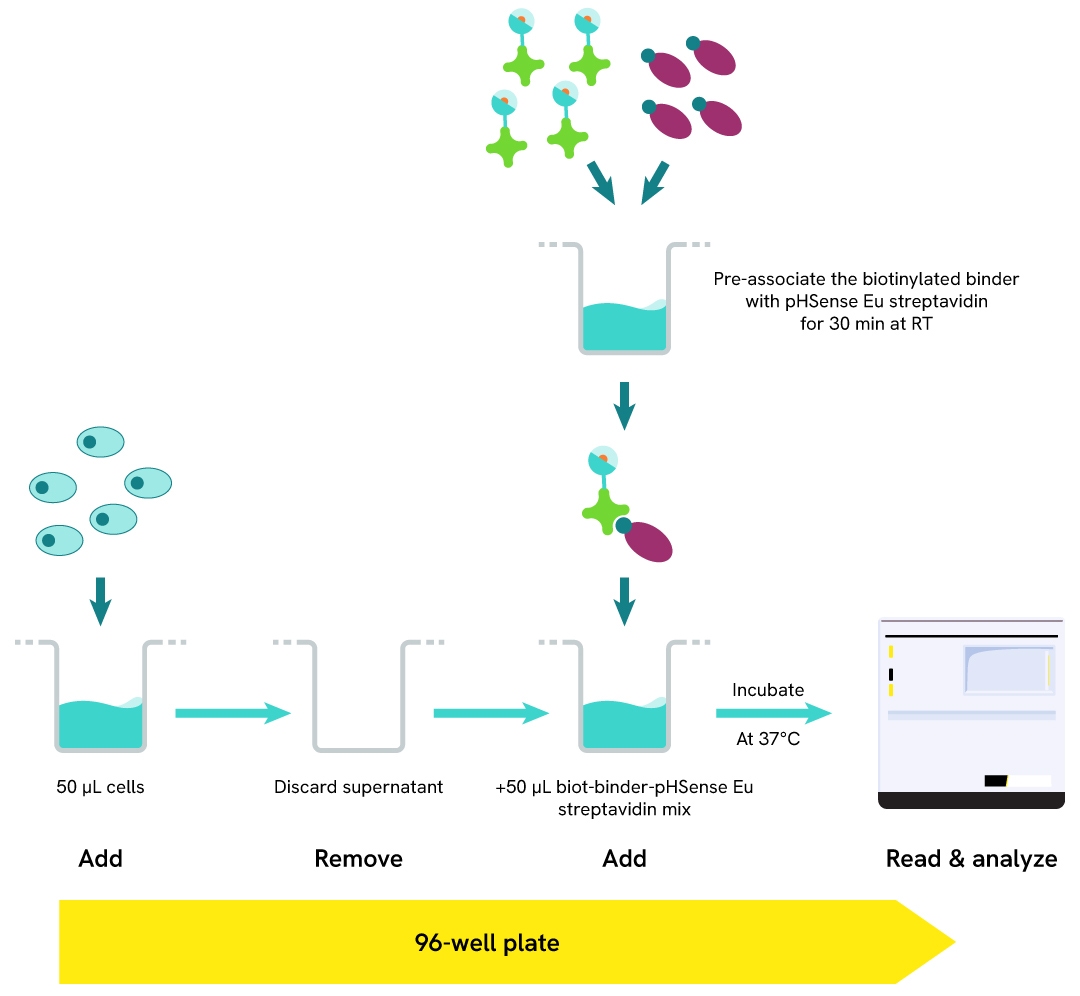
Assay protocol for monitoring binder-induced receptor and membrane protein internalization
The assay begins with culturing cells in a 96-well plate. The biotinylated binder directed against the target of interest is pre-incubated with pHSense™ Eu Streptavidin at a 1:2 molar ratio in cell culture medium or pHSense BSA Internalization Buffer 1X (Part #: 81BUFBR1, Revvity) for 30 minutes at room temperature.
The mixture is then added to the cells and incubated for 1 hour at room temperature. Following incubation, cells are stimulated with a pharmacological compound.
The fluorescent signal is measured using a TRF-compatible plate reader. Readings are done repeatedly at several time-points for a kinetic study, or after appropriate incubation times for endpoint assays.
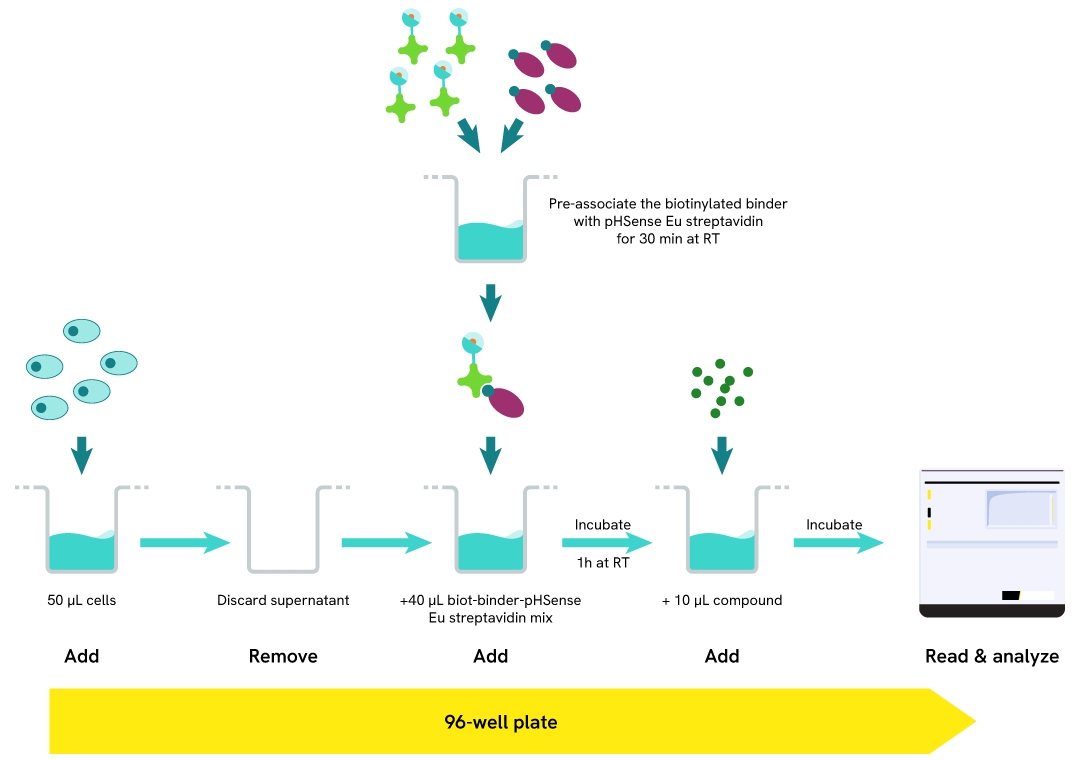
Assay validation
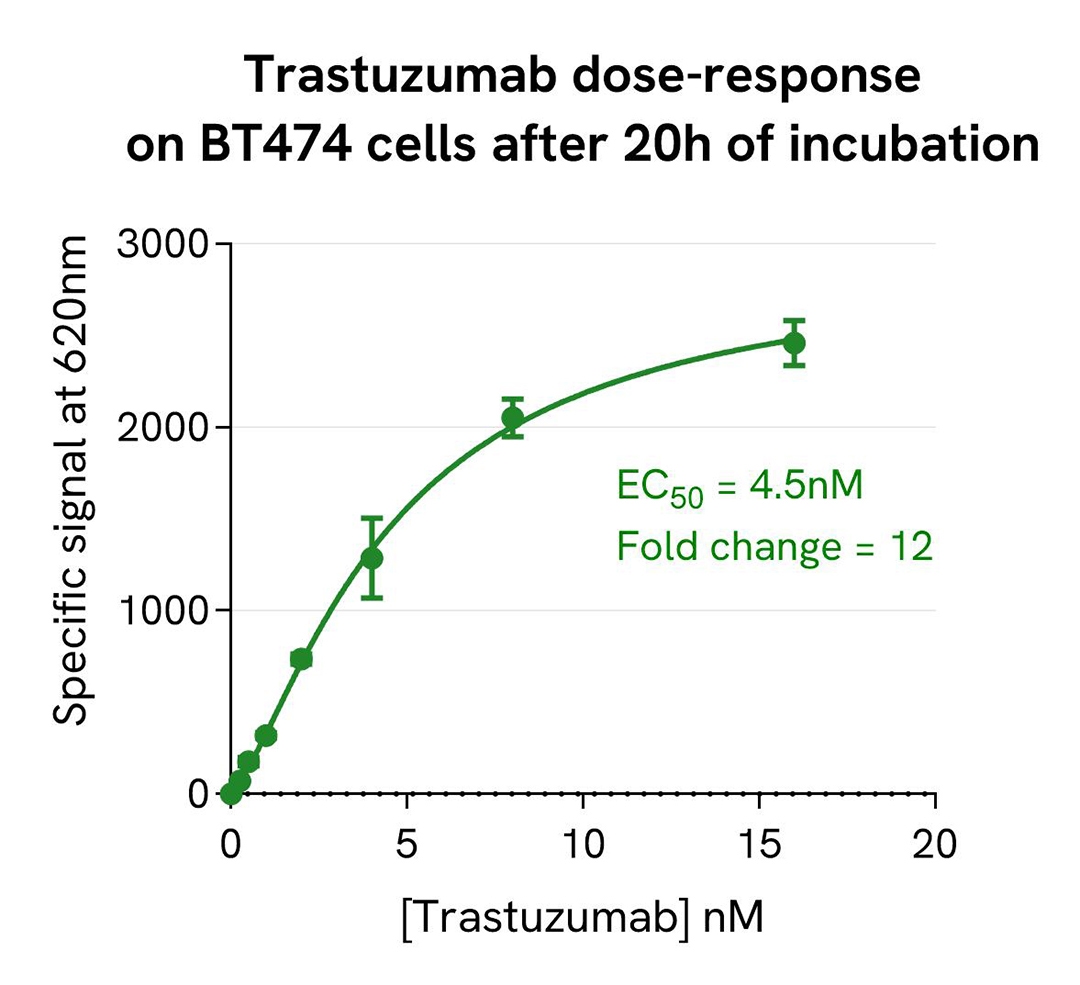
pHSense-based monitoring of anti-HER2 internalizing antibody
BT-474 cells were seeded in a 96-well white, culture-treated plate at a density of 20,000 cells per well in complete culture medium, and incubated overnight at 37°C, 5% CO₂. Biotinylated Trastuzumab (an anti-HER2 internalizing antibody) was pre-incubated at room temperature for 30 minutes with pHSense™ Eu Streptavidin at a 1:2 molar ratio in cell-culture medium. The Streptavidin-antibody mixture was then serially diluted in cell-culture medium and 50 µL of each dilution was added to the cells, followed by a 20-hour incubation at 37°C, 5% CO₂.
The fluorescent signal was recorded on an EnVision™ Nexus Multimode Microplate Reader (Part# HH36000002, Revvity).
The resulting dose-dependent increase in signal demonstrates that pHSense™ Eu Streptavidin reagents can specifically detect the internalization of the anti-HER2 antibody.
Specifications
| Application |
Internalization
|
|---|---|
| Automation Compatible |
Yes
|
| Brand |
pHSense
|
| Detection Modality |
pH sensitive dye
|
| Product Group |
Fluorescent Reagent
|
| Shipping Conditions |
Shipped in Dry Ice
|
| Target |
Biotin
|
| Target Class |
ADCs
Antibodies
Cell surface proteins
Cell surface proteins, antibodies, ADCs
GPCRs
|
| Technology |
TRF
|
| Unit Size |
2 x 96 Assay Points
|
Resources
Are you looking for resources, click on the resource type to explore further.
Loading...


How can we help you?
We are here to answer your questions.