
JP

Revvity Sites Globally
Select your location.
*e-commerce not available for this region.

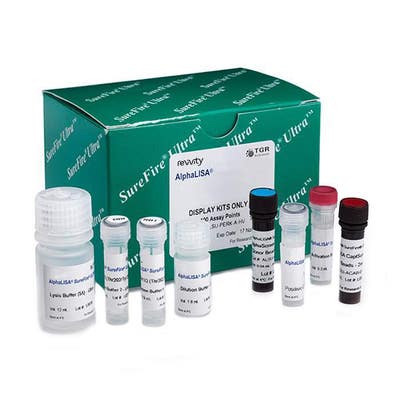
AlphaLISA SureFire Ultra Human Phospho-PKR (Thr451) Detection Kit, 100 Assay Points
 View All
AlphaLISA SureFire Ultra Human Phospho-PKR (Thr451) Detection Kit, 100 Assay Points
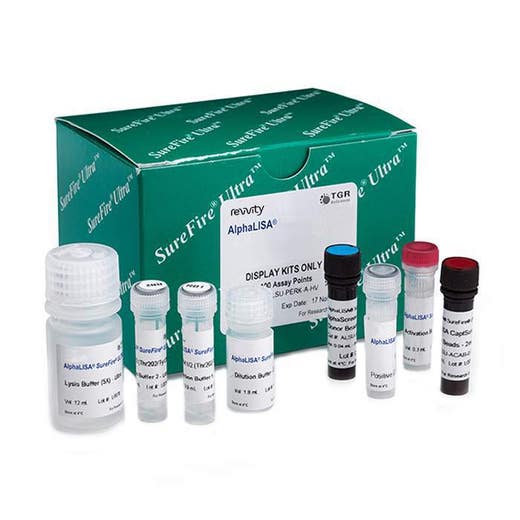


AlphaLISA SureFire Ultra Phospho-Protein
The AlphaLISA™ SureFire® Ultra™ Human Phospho-PKR (Thr451) assay is a sandwich immunoassay for quantitative detection of phospho-PKR (Thr451) in cellular lysates using Alpha Technology.
| Feature | Specification |
|---|---|
| Application | 細胞シグナル伝達 |
| Protocol Time | 2h at RT |
| Sample Volume | 30 µL |
The AlphaLISA™ SureFire® Ultra™ Human Phospho-PKR (Thr451) assay is a sandwich immunoassay for quantitative detection of phospho-PKR (Thr451) in cellular lysates using Alpha Technology.
Product variants
Unit Size: 500 assay points
Part #:
ALSU-PPKR-B500
Unit Size: 10,000 assay points
Part #:
ALSU-PPKR-B10K
Unit Size: 50,000 assay points
Part #:
ALSU-PPKR-B50K
Unit Size: 100 assay points
Part #:
ALSU-PPKR-B-HV
For research use only. Not for use in diagnostic procedures. All products to be used in accordance with applicable laws and regulations including without limitation, consumption, and disposal requirements under European REACH regulations (EC 1907/2006).
AlphaLISA SureFire Ultra Human Phospho-PKR (Thr451) Detection Kit, 100 Assay Points
AlphaLISA SureFire Ultra Phospho-Protein
Loading...
Product information
Overview
Protein kinase R (PKR) is a kinase encoded by the EIF2AK2 gene and is involved in central cellular processes such as mRNA translation, transcriptional control, regulation of apoptosis, and proliferation. PKR plays a key role in the innate immunity pathway and is a mediator of the antiviral effects exerted by interferons. PKR also regulates eIF2α through phosphorylation. Dysregulation of PKR has been implicated in cancer, neurodegenerative disease, inflammation, and metabolic disorders.
The AlphaLISA SureFire Ultra Human Phospho-PKR (Thr451) assay is a sandwich immunoassay for the quantitative detection of phospho-PKR (Thr451) in cellular lysates, using Alpha Technology.
Formats:
- The HV (high volume) kit contains reagents to run 100 wells in 96-well format, using a 60 μL reaction volume.
- The 500-point kit contains enough reagents to run 500 wells in 384-well format, using a 20 μL reaction volume.
- The 10,000-point kit contains enough reagents to run 10,000 wells in 384-well format, using a 20 μL reaction volume.
- The 50,000-point kit contains enough reagents to run 50,000 wells in 384-well format, using a 20 μL reaction volume.
AlphaLISA SureFire Ultra kits are compatible with:
- Cell and tissue lysates
- Antibody modulators
- Biotherapeutic antibodies
Alpha SureFire kits can be used for:
- Cellular kinase assays
- Receptor activation studies
- Screening
How it works
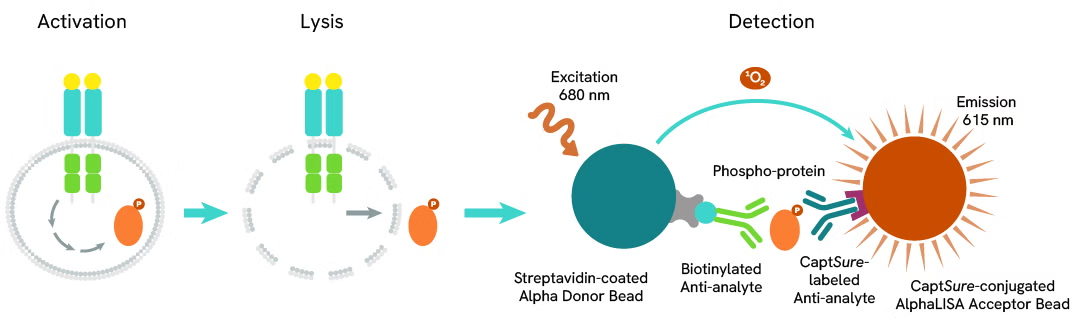
Phospho-AlphaLISA SureFire Ultra assay principle
The Phospho-AlphaLISA SureFire Ultra assay measures a target protein when phosphorylated at a specific residue in a biological sample (e.g. cell lysate).
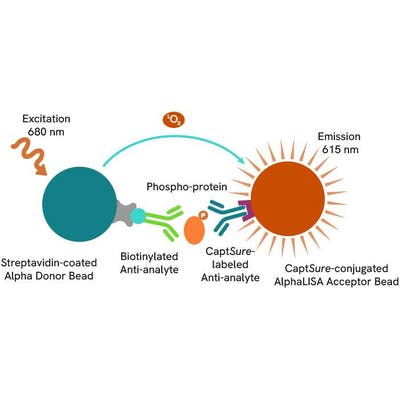
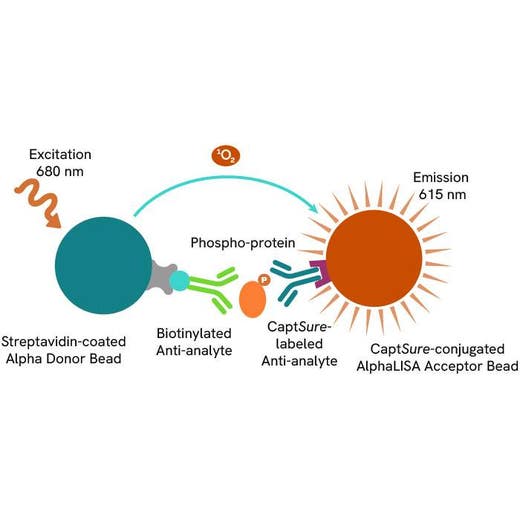
The assay uses two antibodies which recognize the phospho epitope and a distal epitope on the target protein. AlphaLISA assays require two bead types: Acceptor and Donor Beads. Acceptor Beads are coated with a proprietary CaptSure™ agent to specifically immobilize the assay specific antibody, labeled with a CaptSure tag. Donor Beads are coated with streptavidin to capture one of the detection antibodies, which is biotinylated. In the presence of phosphorylated protein, the two antibodies bring the Donor and Acceptor Beads in close proximity whereby the singlet oxygen transfers energy to excite the Acceptor Bead, allowing for the generation of a luminescent Alpha signal. The amount of light emission is directly proportional to the quantity of phosphoprotein present in the sample.
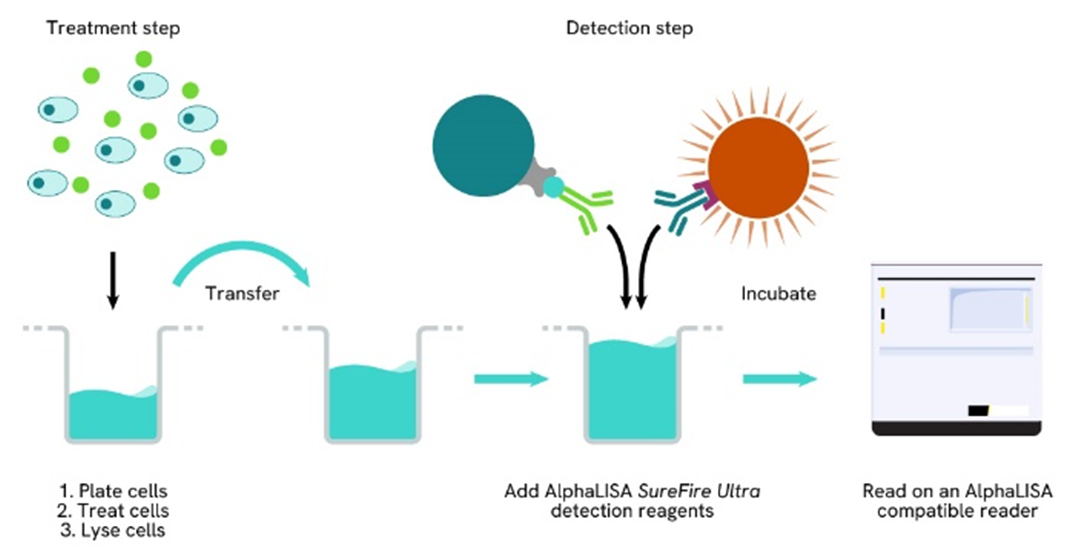
Phospho-AlphaLISA SureFire Ultra two-plate assay protocol
The two-plate protocol involves culturing and treating the cells in a 96-well plate before lysis, then transferring lysates into a 384-well OptiPlate™ plate before the addition of Phospho-AlphaLISA SureFire Ultra detection reagents. This protocol enables cell viability and confluence to be monitored. In addition, lysates from a single well can be used to measure multiple targets.
Phospho-AlphaLISA SureFire Ultra one-plate assay protocol
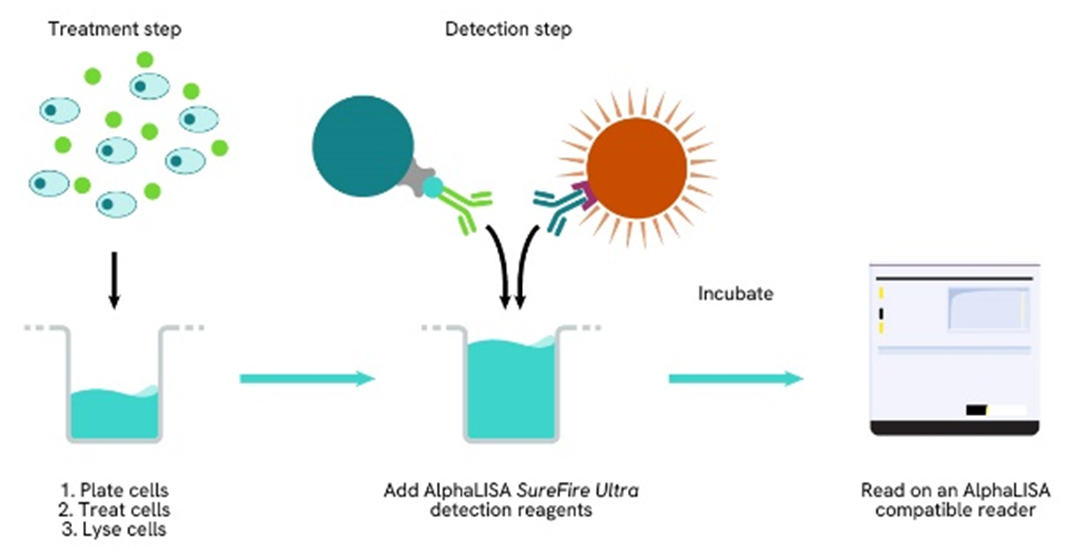
Detection of Phosphorylated target protein with AlphaLISA SureFire Ultra reagents can be performed in a single plate used for culturing, treatment, and lysis. No washing steps are required. This HTS designed protocol allows for miniaturization while maintaining robust AlphaLISA SureFire Ultra quality.
Assay validation
PKR phosphorylation mediated by interferons
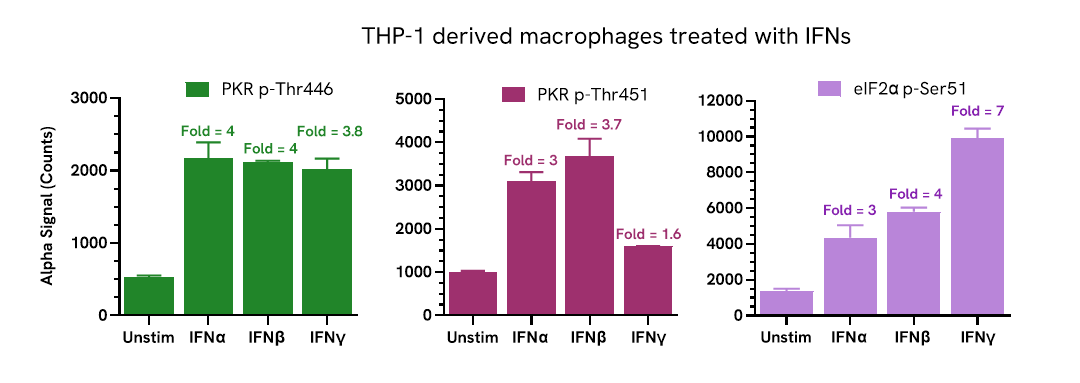
THP-1 cells were seeded in a 12-well plate (250,000 cells/well) in medium containing 100 nM PMA and incubated for 24 hours at 37°C, 5% CO2. THP-1 derived macrophages were then treated with 250 ng/mL of IFNα, IFNβ or IFNγ for a further 24 hours.
After treatment, the cells were washed with HBSS and lysed with 100 µL of Lysis Buffer for 10 minutes at RT with shaking (350 rpm). Phospho PKR (Thr446 and Thr451) and Phospho eIF2α (Ser51) levels were evaluated using respective AlphaLISA SureFire Ultra assays. For the detection step, 10 µL of cell lysate (approximately 25,000 cells) was transferred into a 384-well white OptiPlate, followed by 5 µL of Acceptor mix and incubated for 1 hour at RT. Finally, 5 µL of Donor mix was then added to each well and incubated for 1 hour at RT in the dark. The plate was read on an Envision using standard AlphaLISA settings.
Treatment with IFNs induced phosphorylation of PKR (Thr446, Th451), leading to downstream phosphorylation of eIF2α (Ser51).
Activation of Phospho PKR (Thr451) in HeLa cells
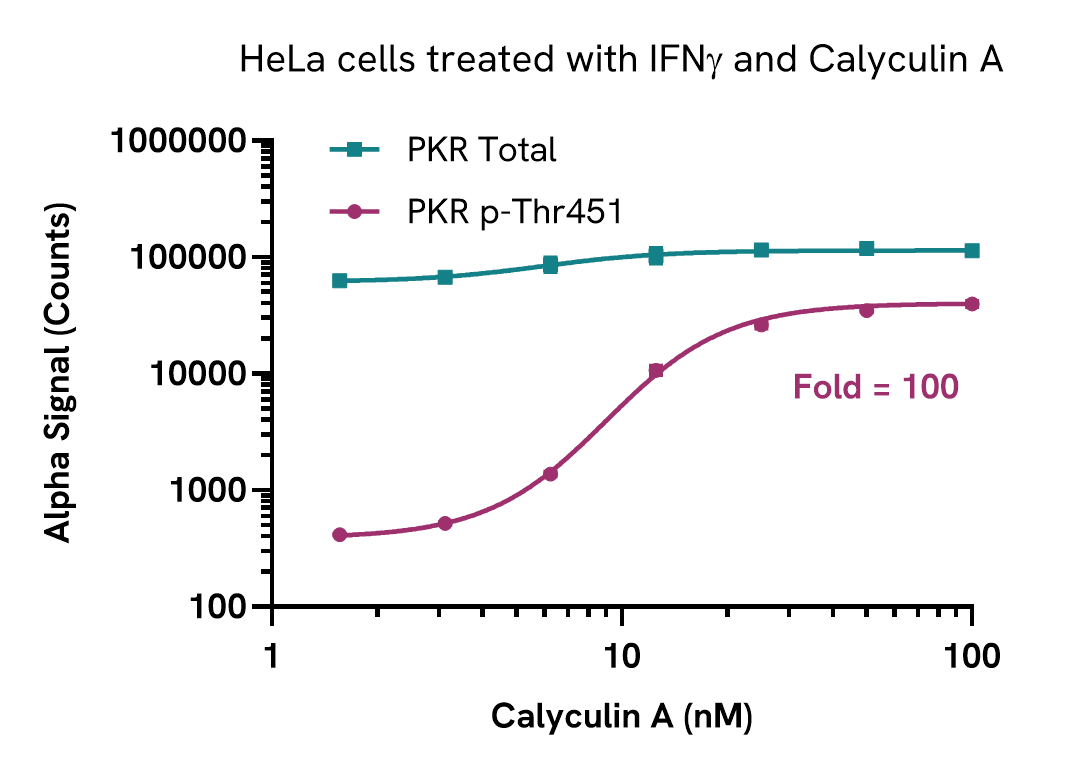
HeLa cells were seeded in a 96-well plate (20,000 cells/well) in complete medium and incubated overnight at 37°C, 5% CO2. The cells were pretreated with 10 ng/mL IFNγ for 24 hours, then treated with increasing concentrations of Calyculin A for 30 minutes.
After treatment, the cells were lysed with 100 µL of Lysis Buffer for 10 minutes at RT with shaking (350 rpm). PKR Phospho (Thr451) and Total levels were evaluated using respective AlphaLISA SureFire Ultra assays. For the detection step, 10 µL of cell lysate (approximately 2,000 cells) was transferred into a 384-well white OptiPlate, followed by 5 µL of Acceptor mix and incubated for 1 hour at RT. Finally, 5 µL of Donor mix was then added to each well and incubated for 1 hour at RT in the dark. The plate was read on an Envision using standard AlphaLISA settings.
As expected, pre-stimulation with IFNγ and subsequent treatment with Calyculin A increased phosphorylation of PKR (Thr451) with a 100-fold induction, with no significant changes to Total PKR levels.
Assay specificity/selectivity
Specificity of Phospho PKR (Thr451) assay
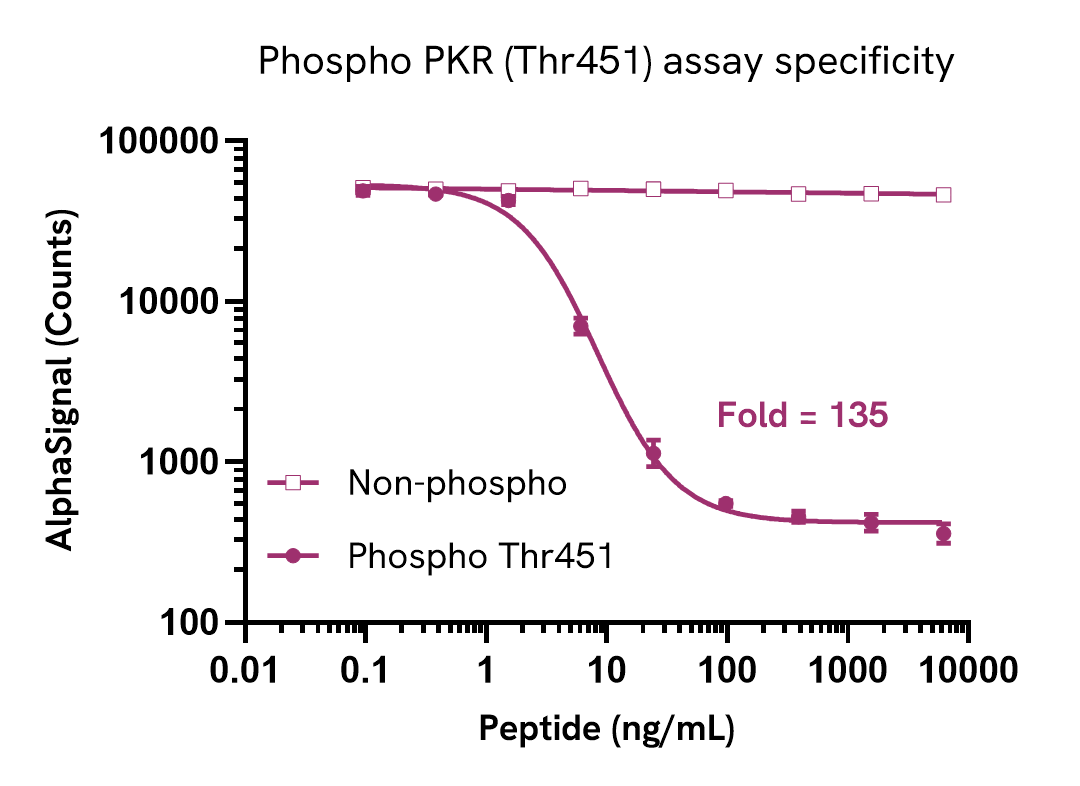
Specificity of the Phospho PKR (Thr451) assay was assessed by peptide competition.
Phospho (Thr451) and non-phospho PKR peptides were titrated into a fixed concentration of a positive control lysate (AN3 CA cells treated with Calyculin A for 4 hours).
Each peptide was then assessed for its ability to block antibody binding to the PKR Phospho site Thr451 using the Phospho (Thr451) PKR AlphaLISA SureFire Ultra assay kit. For the detection step, 10 µL of prepared lysate was transferred into a 384-well white OptiPlate, followed by 5 µL of Acceptor mix and incubated for 1 hour at room temperature. Finally, 5 µL of Donor mix was then added to each well and incubated for 1 hour at RT in the dark. The plate was read on an Envision using standard AlphaLISA settings.
PKR Phospho (Thr451) assay signal was blocked only by the Phospho Thr451 peptide, with no change in signal with Non-Phospho peptide, demonstrating assay specificity.
Assay sensitivity
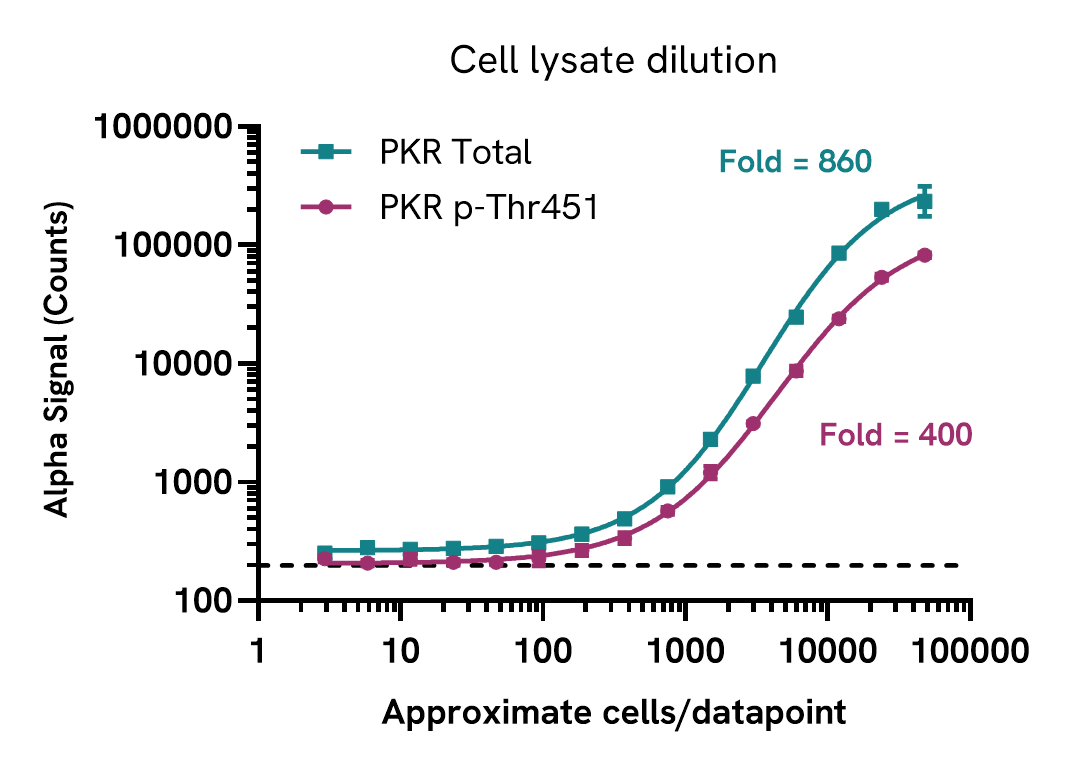
Assay sensitivity - cell lysate dilution
Cell lysate was prepared from AN3 CA cells cultured to confluency in T175 flasks at 37°C, 5% CO2. Cells were treated with 20 ng/mL of Calyculin A for 4 hours and then lysed in 5 mL of Lysis Buffer for 10 minutes at RT with shaking.
Lysate was serially diluted in Lysis Buffer and Total PKR and Phospho (Thr451) levels were evaluated by AlphaLISA SureFire Ultra. For the detection step, 10 µL of lysate was transferred into a 384-well white OptiPlate, followed by 5 µL of Acceptor mix and incubated for 1 hour at room temperature. Finally, 5 µL of Donor mix was then added to each well and incubated for 1 hour at RT in the dark. The plate was read on an Envision using standard AlphaLISA settings.
Approximate number of cells per datapoint is indicated. The dotted line represents assay background. The assay can detect PKR levels down to 1,000 cells/datapoint.
Specifications
| Application |
Cell Signaling
|
|---|---|
| Automation Compatible |
Yes
|
| Brand |
AlphaLISA SureFire Ultra
|
| Cellular or Signaling Pathway |
RIG-I / MDA5 antiviral sensing signaling
|
| Detection Modality |
Alpha
|
| Lysis Buffer Compatibility |
Lysis Buffer
|
| Molecular Modification |
Phosphorylation
|
| Product Group |
Kit
|
| Protocol Time |
2h at RT
|
| Sample Volume |
30 µL
|
| Shipping Conditions |
Shipped in Blue Ice
|
| Target |
PKR
|
| Target Class |
Phosphoproteins
|
| Target Species |
Human
|
| Technology |
Alpha
|
| Therapeutic Area |
Central Nervous System
Metabolic
Oncology
|
| Unit Size |
100 assay points
|
Video gallery
AlphaLISA SureFire Ultra Human Phospho-PKR (Thr451) Detection Kit, 100 Assay Points
Resources
Are you looking for resources, click on the resource type to explore further.

Guide
AlphaLISA SureFire Ultra assay optimization
This guide outlines further possible optimization of cellular and immunoassay parameters to ensure the best possible results are...
Guide
AlphaLISA SureFire Ultra: the ultimate guide for successful experiments
The definitive guide for setting up a successful AlphaLISA SureFire Ultra assay
Several biological processes are regulated by...
Loading...


How can we help you?
We are here to answer your questions.