


JP

Revvity Sites Globally
Select your location.
*e-commerce not available for this region.


 Video
Video
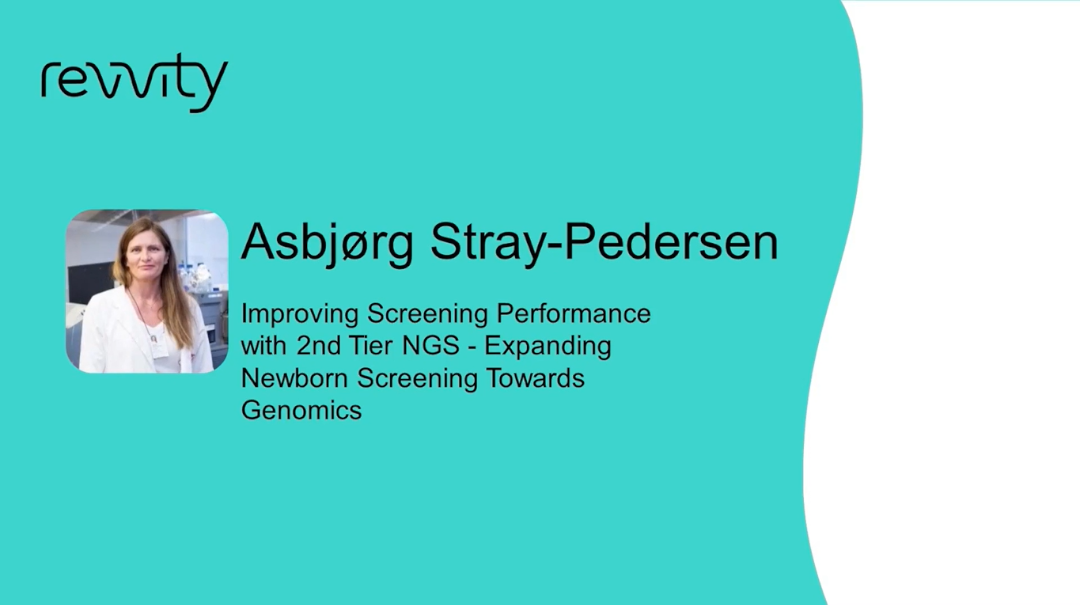
Improving screening performance with 2nd tier NGS - expanding newborn screening towards genomics
Discusses the integration of second-tier genetic testing into newborn screening programs, highlighting the advancements, challenges, and benefits of incorporating genomic sequencing.
Talk description:
Application of second-tier strategies in newborn screening (NBS) allows for increased specificity and consecutively a higher positive predictive value (PPV). Second-tier strategies can include analysis of specific biochemical biomarkers, DNA-based biomarkers or sequencing for molecular confirmation of diagnosis. The NBS laboratories have evolved from being exclusively a biochemical screening laboratory to include diagnostic confirmation by rapid molecular analyses on DNA from dried blood spots (DBS) with turnaround times of 2–3 working days. Both qPCR, digital droplet PCR (ddPCR), Sanger sequencing and next generation sequencing (NGS) can be performed on DNA extracted from the NBS DBS. The NGS techniques includes both predesigned customized amplicon-based gene panels and whole genome sequencing (WGS) with in-silico filtered gene panels. Second-tier targeted NGS on the same DBS DNA as the first-tier TREC test provides instant confirmation or exclusion of severe combined immunodeficiency (SCID), and has made it possible to use a less stringent TREC cut-off value, allowing for the detection of leaky SCIDs, and simultaneously reduced the number of new control samples, referrals and false positives (PMID: 32754152). And 2nd tier ddPCR rapidly confirms SMN1 and SMN2 copies in NBS for spinal muscular atrophy (SMA), providing 100% diagnostic accuracy prior to referrals and follow-up of the child.The PPV increased from 0.43 to 0.74 with NGS implemented in the cystic fibrosis (CF) NBS workflow. The combination of biochemical and molecular methods doubled the PPV for the inborn errors of metabolism included in our screening program (PMID: 33123633). NBS in Norway: CF screening was introduced in 2012, NGS in 2015. SCID screening was introduced in 2018, NGS was part of the algorithm. SMA screening started in 2021. NGS was implemented in 2016 for the IEM screening disorders. As of 2024, 26 disorders plus 3 urea cycle disorders, remethylation defects, sickle cell anemia and metachromatic leukodystrophy (MLD) are included in the Norwegian NBS program. The experience with integration of WGS in NBS supplementing biomarker testing, pave the way for genomic testing as 1st tier for other severe and treatable congenital disorders which do not have any testable biomarkers.
Biography:
Asbjørg Stray-Pedersen is a medical doctor and certified specialist in medical genetics and works as a clinical consultant and researcher at the Norwegian National Unit for Newborn Screening at Oslo University Hospital. Her PhD was in immunogenetics. The last 25 years she has dedicated her work to diagnostics and treatment of rare disorders.