


The small RNA transcriptome is often dominated by a limited number of highly expressed species. A single abundant molecule can substantially dominate sequencing output and reduce the effective depth available for low-abundance transcripts. In humans, for instance, a handful of miRNAs can account for the majority of reads in a given tissue, compressing the dynamic range available for detecting lower-abundance species.
In Drosophila melanogaster, this challenge takes a distinct form: a ribosomal RNA whose length falls directly within the small RNA size window and whose abundance can severely skew library composition.
Unlike most model organisms, where size selection is sufficient to reduce rRNA contamination, this is not the case in Drosophila. Dipterans harbor an additional rRNA species arising from processing of the 28S rRNA precursor. In D. melanogaster, the 28S rRNA is cleaved into two fragments (28Sα and 28Sβ), with the ~30-nucleotide 2S rRNA generated as a separate fragment during this process. The 2S rRNA remains associated with the large ribosomal subunit as part of the mature ribosome. It is one of the most abundant RNA species in the cell1,2.
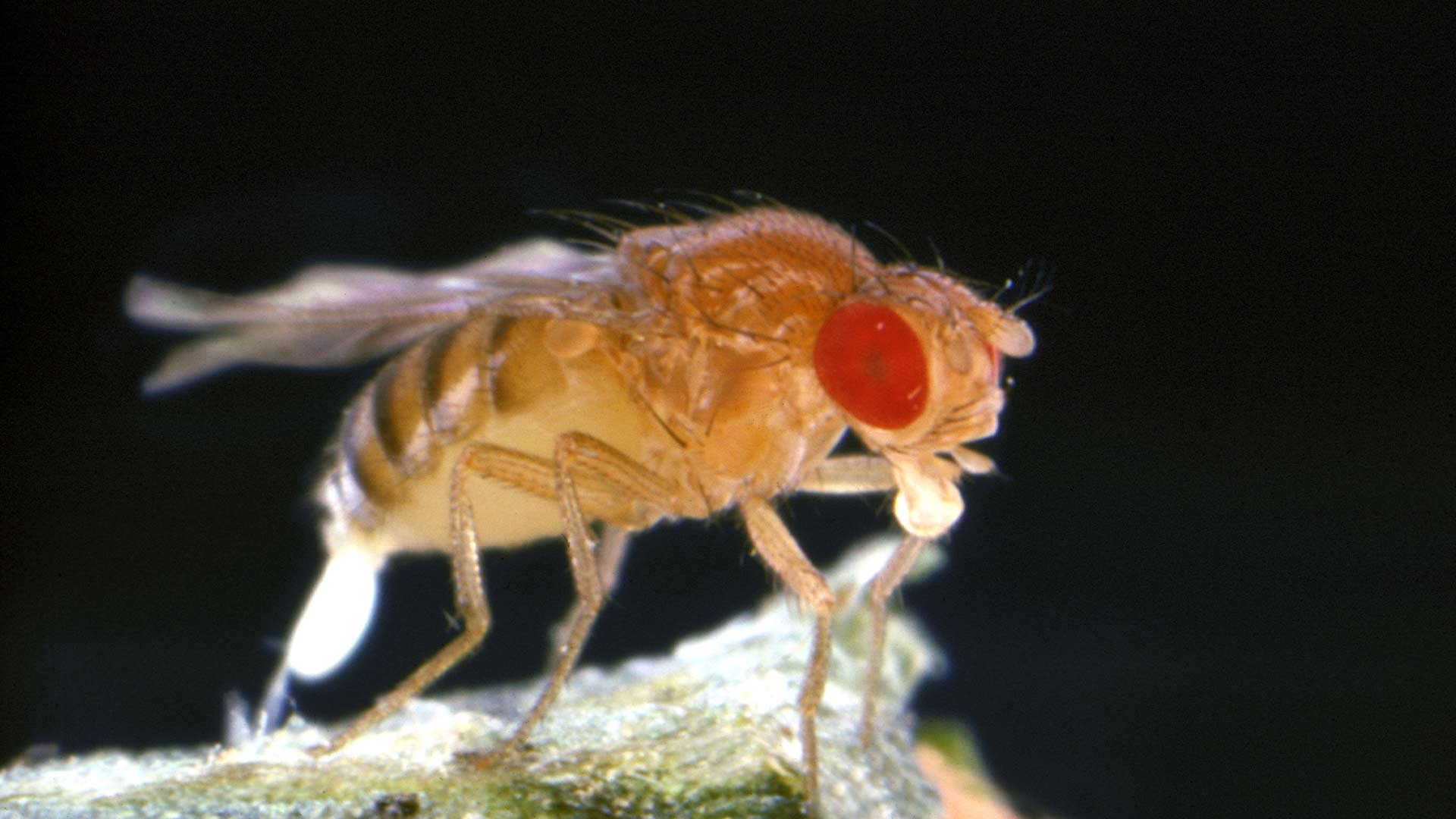
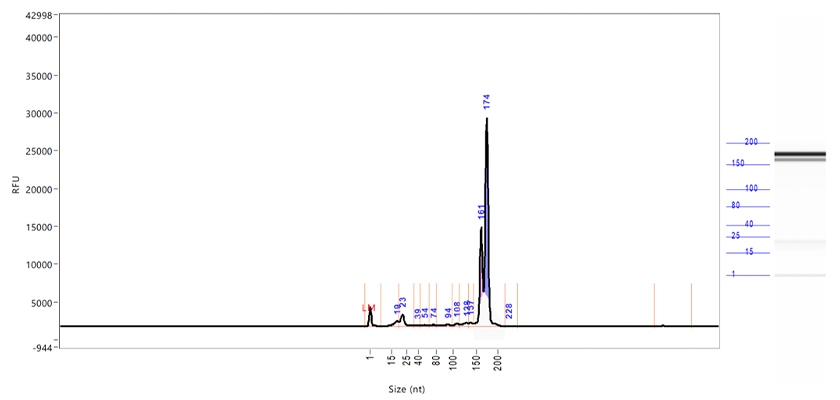
Figure 1. Small RNA libraries were prepared using as input high-quality RNA extracted from whole-body wild-type, adult D. melanogaster males.
Because 2S rRNA is ~30 nucleotides long, it falls within the size range targeted by small RNA library preparation protocols. Consistent with its origin, it is expected to carry a 5′ monophosphate, which can enable efficient adapter ligation in standard small RNA-seq workflows
Libraries generated with the NEXTFLEX™ Small RNA-seq Kit v4 from RNA extracted from whole-body adult male Drosophila by Microsynth, in Switzerland (Figure 1) showed that >75% of reads mapped to the 2S rRNA locus.
2S rRNA blocking
To increase the proportion of usable reads in Drosophila small RNA-seq libraries, a NEXTFLEX Custom Small RNA blocker was designed against the full-length 2S rRNA sequence of D. melanogaster. These blockers are complementary oligonucleotides that hybridize to the target RNA and prevent efficient adapter ligation, thereby excluding the molecule from library construction. This approach selectively targets the undesired species without enzymatic depletion or upstream manipulation of the input RNA and can be readily incorporated into the standard workflow. A similar strategy has previously been applied to highly abundant miRNA species in human blood3.
In unblocked libraries, reads mapping to the 2S rRNA reference in the target size range accounted for over 75% of total sequencing output. Following application of the blocker, that fraction fell to below 0.5%, a reduction of >150-fold.
The impact of blocking is also reflected in FastQC per-base sequence content profiles. In unblocked libraries, the 2S rRNA sequence drives a strong positional nucleotide bias across read positions, consistent with a dominant overrepresented template. After blocking, base composition becomes more balanced across positions, consistent with a more diverse small RNA population. This shift is concordant with the reduction in 2S-mapping reads observed in the alignment data (Figure 2).
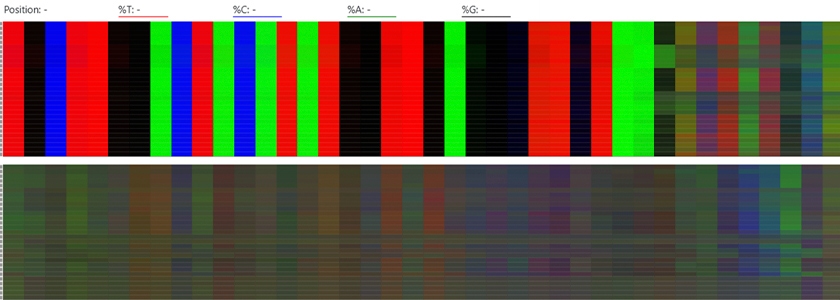
Figure 2. Per-base sequence content (FastQC). Before 2S rRNA blocking (top), base composition is dominated by the 2S rRNA sequence, causing strong positional bias. After blocking (bottom), this bias is markedly reduced, consistent with effective 2S rRNA removal.
Conclusion
This case highlights a structural limitation of small RNA sequencing in D. melanogaster: the 2S rRNA is an abundant, endogenous ribosomal fragment that co-migrates with the small RNA fraction and cannot be effectively removed by size selection or standard depletion approaches. When a large fraction of reads map to this species, the effective sequencing depth available for other small RNAs is substantially reduced.
The results demonstrate that blocking can effectively mitigate dominant small RNA species and improve library composition in systems where standard approaches are insufficient. Because blocker design is sequence-specific, this approach is inherently species-agnostic and applicable beyond canonical model organisms.
References:
- Pavlakis, G.N., et al. (1979). Sequence and secondary structure of Drosophila melanogaster 5.8S and 2S rRNAs and of the processing site between them. Nucleic Acids Res. 7(8):2213–2238. doi:10.1093/nar/7.8.2213.
- Jordan, B.R., et al. (1976). Late steps in the maturation of Drosophila 26S ribosomal RNA: generation of 5.8S and 2S RNAs by cleavages occurring in the cytoplasm. J Mol Biol. 101(1):85–105. doi:10.1016/0022-2836(76)90067-x.
- Juzenas, S, et al. (2020). Depletion of erythropoietic miR-486-5p and miR-451a improves detectability of rare microRNAs in peripheral blood-derived small RNA sequencing libraries. NAR Genom Bioinform. 2(1):lqaa008. doi: 10.1093/nargab/lqaa008.
For research use only. Not for use in diagnostic procedures.