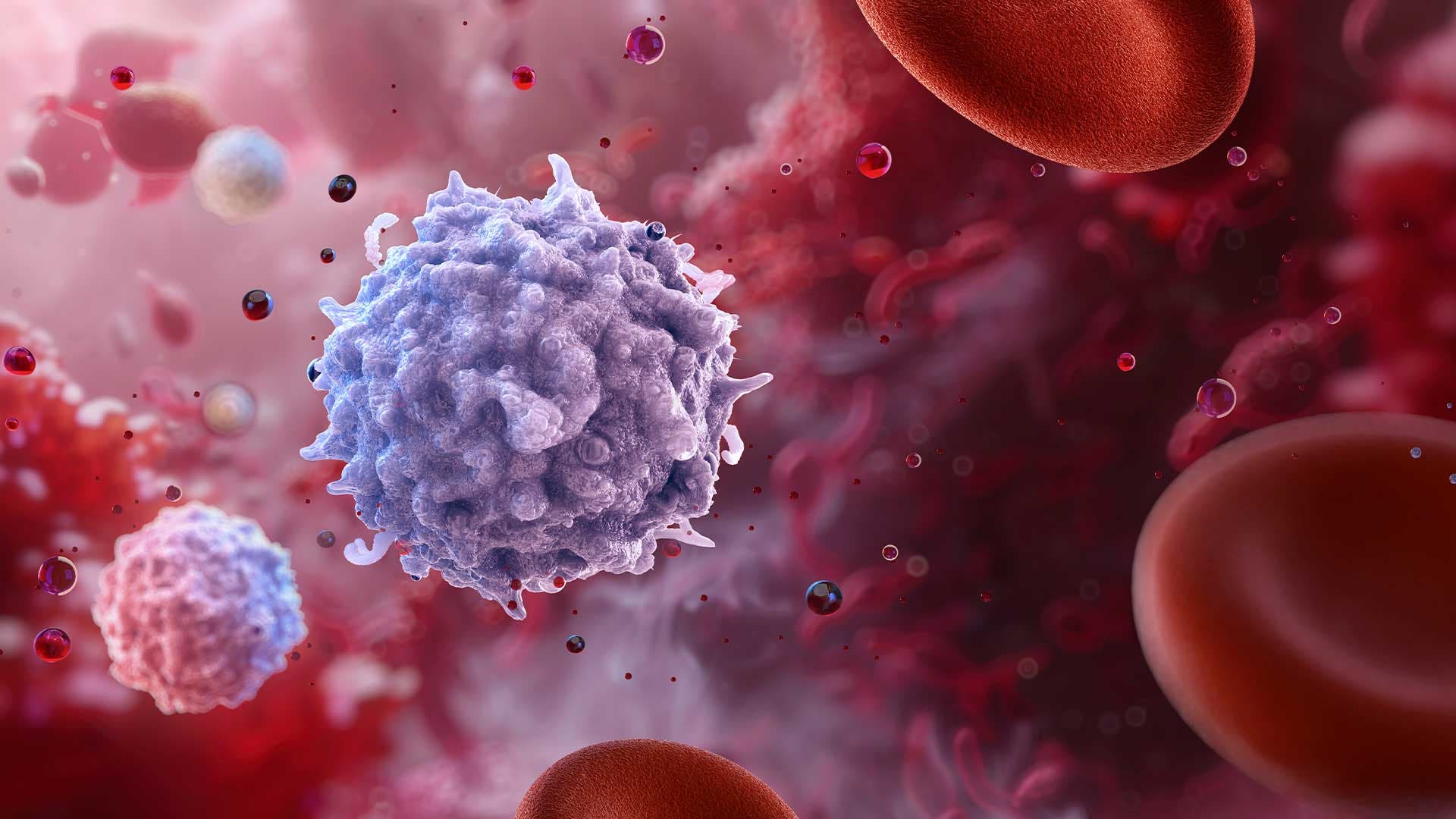

T cells are arguably the most important cells in the adaptive immune system, playing a central role in orchestrating almost all adaptive immune responses. T cells are responsible for killing infected or cancerous cells, recruiting immune cells to mount large immune responses, building up a memory of a pathogen to prevent reinfection, and activating B cells to generate antibody responses. T cell responses also form the basis of an immune response to vaccination which can protect against infection or disease.
Key takeaways:
- T cells are powerful diagnostic tools: They're central to immune responses and vaccine effectiveness, making them valuable for clinical testing.
- Whole blood interferes with accuracy: Medications, cytokines, and other blood components can skew results, so T cell isolation and washing are essential.
- Automation makes T cell testing scalable: Magnetic bead technology, using the T-Cell Select™ reagent kit, now enables labs to automate PBMC isolation, reducing manual work and expanding access.
- T cell diagnostics are expanding rapidly: COVID-19 sparked renewed interest in T cell-based testing for infectious diseases and immune conditions.
Whilst the role of T cells in immune responses has been investigated for many years, research aimed at understanding immune responses to SARS-CoV-2 infection and vaccination has reinforced that the measurement of T cell responses could be incredibly powerful as a research, clinical or diagnostic tool. However, measuring T cell responses comes with some specific challenges, which in the past have limited the use of T cells in a clinical setting.
One of the key challenges involved in assessing T cell responses is that to get the most accurate results from T cell testing, the T cells must be extracted from the blood. This is because there are factors present in the blood that can alter T cell responses and impact T cell tests. For example, medications that are present in the blood, non-specific responses, toxins and many more factors. It is a standard research practice to isolate T cells from whole blood before testing, however it has made scaling up T cell testing a challenge in a clinical setting.
What is in a sample of whole blood?
Whole blood consists of four main components: plasma, red blood cells, white blood cells, and platelets:
- Plasma is the liquid component of the blood and is a mixture of water, sugar, fat, protein and salts. Its main job is to transport blood cells throughout your body.
- The red blood cells are the most abundant cell type found in whole blood, and they contain haemoglobin, which helps to carry oxygen from the lungs to the rest of the body, and then carry carbon dioxide back to the lungs so that it can be exhaled.
- The white blood cells are the cells that protect the body from infection. The most common type of white blood cell is the neutrophil, which is the body’s first defender against a pathogen. The other major type of white blood cells is the lymphocytes. Lymphocytes are either T lymphocytes (or T cells), or B lymphocytes (or B cells), which are responsible for making antibodies.
- The final component of blood is the platelets. Platelets are small fragments of cells that support with the blood clotting process by gathering at the site of an injury and promoting healing.
So immediately we can see that a blood sample contains far more than just T cells, however it doesn’t stop here. The blood is also impacted by many things that could occur within the body.
For example, if someone is taking medication, that medication is transported to the relevant tissues and organs of the body through the blood. Similarly, if an immune response is happening somewhere in the body, the blood will be full of cytokines and innate immune cells that are moving to different tissues in the body to try and recruit more immune cells to join in the immune response. The blood is also responsible for transporting our hormones, waste products, antibodies and many other proteins to support the normal functioning of the body.
In other words, samples of whole blood are full of things that could impact the results of T cell testing, so getting the T cells out of whole blood and giving them a good wash is the best way to get accurate results from T cell testing. This often involves isolating a fraction of cells known as peripheral blood mononuclear cells from the whole blood. Peripheral blood mononuclear cells are cells that have one nucleus that are found in the peripheral blood, the biggest component of which is the T cells.
A new age of T cell testing?
Revvity has been highlighting the benefits of isolating peripheral blood mononuclear cells and washing them as part of routine T cell testing for over 20 years. Now we are focused on ensuring that this high precision T cell testing is available to more labs and patients. Using magnetic bead technology and positive selection, the process of extracting T cells from the whole blood and washing them can now be automated by labs in order to reduce hands-on time and simplify the lab process, by using the T-Cell Select™ reagent kit.
Advances like these are helping to make T cell testing more high-throughput, and this together with the COVID-19 pandemic highlighting the importance of T cell responses, has led to increased interest in assessing highly accurate T cell-based diagnostics for a range of infectious diseases and other immune conditions. The future of T cell testing is really exciting, even if it involves a lot more washing!
For in vitro diagnostic use. This product is only available where licensed in accordance with the law. Please contact your local representative for availability.
Revvity Inc. does not endorse or make recommendations with respect to research, medication, or treatments. All information presented is for informational purposes only and is not intended as medical advice. For country specific recommendations, please consult your local health care professionals.