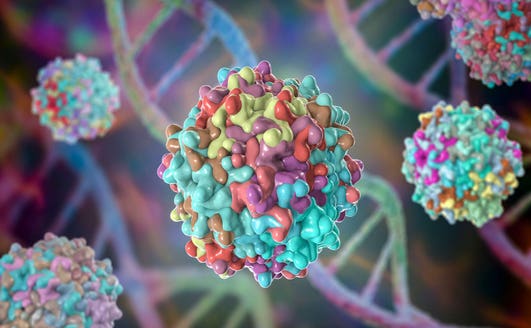




Base editing has long been described as one of the most promising advances in genome engineering. For several years, much of the conversation focused on what might be achievable. But now the discussion is shifting from possibility to early clinical evidence.
“Base editing is no longer just a promising platform, it is a reality,” says Pablo Perez Duran, Manager, R&D at Revvity. “It is a clinically validated technology in certain contexts, and we now have human proof-of-concept.”
An important milestone came with the first personalized “N-of-1” base editing therapy in an infant with severe carbamoyl phosphate synthetase 1 (CPS1) deficiency. The reported correction of the pathogenic mutation provided early clinical evidence that base editing can translate into therapeutic benefit in humans.
This sense of progress was reflected at the 2026 Deaminet meeting, where researchers gathered to discuss advances in the field. Here, the focus was not on whether base editing works, but on how to apply it safely, effectively, and at scale.
From possibility to predictability
Early excitement around base editing focused on its ability to introduce single nucleotide changes without inducing double-strand DNA breaks or requiring donor templates. By combining CRISPR-Cas targeting with programmable deaminase activity, base editors enable direct base conversion within defined editing windows.
As the field matures, the emphasis is shifting toward reliability and reproducibility. “The real story is that base editing works,” says Pablo. “It is predictable and efficient for certain mutation classes.”
This growing body of evidence is influencing how development programs are designed. Rather than focusing solely on proof-of-concept, researchers are beginning to structure therapeutic strategies around a clearer understanding of editing windows, target scope, and expected outcomes.
Regulatory thinking is evolving in parallel. As clinical experience with precision editing technologies expands, regulatory frameworks are adapting to address their unique characteristics, ensuring that innovation and safety develop hand in hand.
Precision, safety, and delivery
With the core functionality of base editing now well established, the field is entering a more demanding phase of development. The primary questions are no longer around whether editing can be achieved, but rather how to precisely control it, how to characterize and monitor safety, and how to deliver editing machinery efficiently to the intended tissues and cell types.
“It’s paramount to be extremely precise. Safety must be closely monitored. And delivery of the editor to the right tissue and the right genes remains a key bottleneck,” says Pablo.
At the meeting, Revvity shared data demonstrating how the modularity of the Pin-point™ base editing platform enables increased precision while maintaining a strong safety profile. Pablo observed that the data resonated with the audience because it addressed shared technical challenges, particularly around the need to better understand, control, and modulate editing outcomes.
Addressing these challenges requires continued progress not only in enzyme engineering, but also in the analytical tools and delivery approaches that allow editing performance to be measured, understood, and reproduced across different targets and biological contexts.
As base editing progresses toward broader therapeutic investigation, the ability to engineer with precision and to document safety with rigor is becoming as important as the editing components themselves. Robust characterization, reproducibility, and carefully designed delivery strategies are central to supporting responsible clinical development.
From tool providers to scientific partners
Pablo also noted a broader shift at the ecosystem level. At meetings such as Deaminet, the traditional boundaries between academic researchers, therapeutic developers, and technology providers appear less distinct. Progress in base editing increasingly depends on collaboration across these groups, bringing together complementary expertise in enzyme design, delivery systems, analytics, and translational strategy.
Conversations throughout the event highlighted the depth of common challenges facing the field. Interest was not limited to new datasets but extended to how different technologies and approaches can work together to support development pathways.
This reflects a broader evolution in how enabling technologies are viewed. Rather than being stand-alone tools, platforms that offer flexibility, modularity, and control over editing outcomes are increasingly being integrated into therapeutic development strategies. In this environment, the ability of a technology provider to function as a scientific partner, contributing expertise and infrastructure, has become a meaningful differentiator in advancing base editing toward clinical application.
Bridging the gap between academic innovation and clinical reality
Pablo also highlighted the complexity involved in translating academic discoveries into viable clinical applications. Academic laboratories are often the source of important advances in genome engineering. However, moving from discovery to a therapeutic candidate introduces additional layers of consideration, including intellectual property strategy, regulatory planning, scalability, and long-term development pathways.
Early awareness of the intellectual property landscape and proactive planning for clinical translation can significantly influence downstream success. “Future-proofing your technology and having a clear path toward clinical development are among the most important considerations,” says Pablo.
Platforms designed with flexibility and adaptability in mind can help support this transition. Technologies that accommodate evolving targets and emerging therapeutic opportunities may ease the transition from early discovery to later-stage development, contributing to a more coherent path toward clinical investigation.
Shaping the next phase of development
The discussion at Deaminet reflected a field in transition, where base editing is moving from early validation toward a phase of careful clinical expansion. The focus now is on how to apply the scientific foundations with consistency, control, and long-term oversight.
Progress will depend on continued advances in enzyme design, delivery systems, and strategic planning. Just as importantly, it will rely on collaboration across researchers, therapeutic developers, and technology partners who can help address shared technical and regulatory challenges.
The next chapter will be shaped less by proof of possibility and more by the work required to translate precision genome engineering into responsible and scalable clinical applications.
Pin-point™ Reagents & Platform: Pin-point™ base editing reagents are available for research use only and are not for diagnostic use or direct administration into humans or animals. The Pin-point™ base editing platform technology is available for clinical or diagnostic study and commercialization under a commercial license from Revvity.