


Common challenges for organizations in CLD
Cell line development (CLD) is one of the most critical and time-intensive stages in biologics and cell therapy workflows. From identifying single-cell clones to validating monoclonality and optimizing transfection efficiency, researchers must balance speed, accuracy, and scalability while managing large numbers of samples.
Key takeaways:
- Traditional CLD workflows struggle to meet the speed, scale, and documentation demands of modern biologics and cell therapy development.
- Automated whole-well imaging reduces subjectivity in clonality assessment and increases confidence in clone selection decisions.
- The Celigo™ image cytometer consolidates monoclonality verification, transfection optimization, and longitudinal growth monitoring within a single platform.
Regulatory expectations require clear evidence that production cell lines originate from a single progenitor cell. Traditional limiting dilution and manual microscopy methods can be labor-intensive and subjective, especially when screening hundreds or thousands of wells. Researchers must identify wells containing a single cell on day 0 and confirm that only one colony emerges during outgrowth.
In many cases, poor imaging quality or suboptimal analysis software can make clonality assessment difficult and increase the risk of false positives or missed candidates.
Maintaining cell viability and productivity throughout the development process presents an additional challenge. Cells can respond unpredictably to transfection, selection pressure, or adaptation to suspension culture, leading to variability in growth rates and protein expression. Even clones that initially appear promising may lose productivity over time due to genetic instability or metabolic stress.
Ensuring long-term stability therefore requires repeated monitoring, characterization, and confirmation across multiple passages, as high-producing clones must not only express the desired protein but also demonstrate stable growth and scalability.
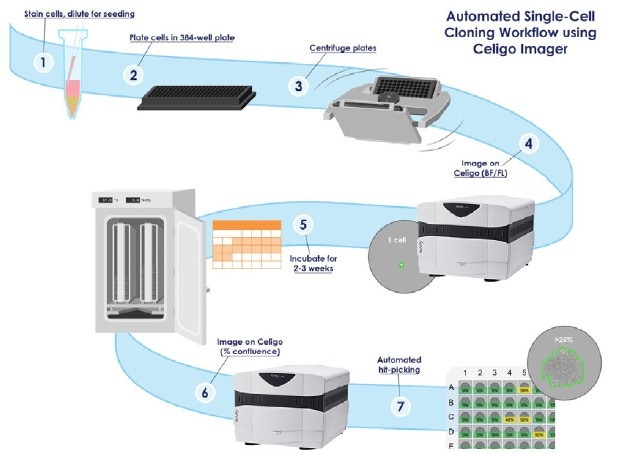
Figure 1: Automated single-cell cloning workflow using the Celigo image cytometer.
Data management and workflow complexity also present significant obstacles in CLD. Modern workflows generate large volumes of imaging, growth, and productivity data that must be tracked across multiple instruments, time points, and experimental conditions. Integrating imaging systems, automated liquid handling, and analytics platforms can substantially improve efficiency.
Modernizing CLD workflows with high-throughput imaging
Addressing these challenges requires imaging platforms capable of whole-well analysis, automated data capture, and seamless workflow integration. The Celigo image cytometer from Revvity is designed with these requirements in mind, combining brightfield and multi-channel fluorescence imaging for both adherent and suspension cells on microwell plates.
The F-theta lens hardware enables the system to conduct label-free analysis of the entire well surface directly in culture vessels without disturbing the cells, supporting formats ranging from 6-well to 1536-well plates, as well as T-flasks and dishes. This flexibility allows researchers to apply imaging across early clone screening and later-stage characterization workflows.
Automated image analysis can streamline workflows by identifying single-cell wells, monitoring colony formation over time, and overlaying single-cell and single-colony maps to validate clonality. Brightfield and fluorescence imaging used simultaneously can identify cells in a well, gate GFP-positive populations, and automatically calculate transfection efficiency. This allows rapid comparison of experimental conditions across 96- or 384-well plates while preserving cell viability and workflow continuity.
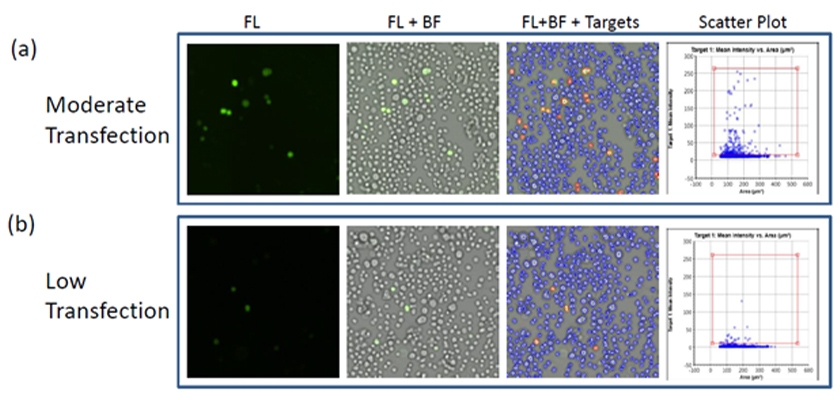
Figure 2: Identifying GFP transfected cells at low concentrations using Celigo image cytometer
High-producing clones must not only express the desired protein but also demonstrate stable growth and scalability. Longitudinal imaging on the Celigo system enables monitoring of the same wells over time, generating growth curves, confluence measurements, and cell counts without removing cells from culture.
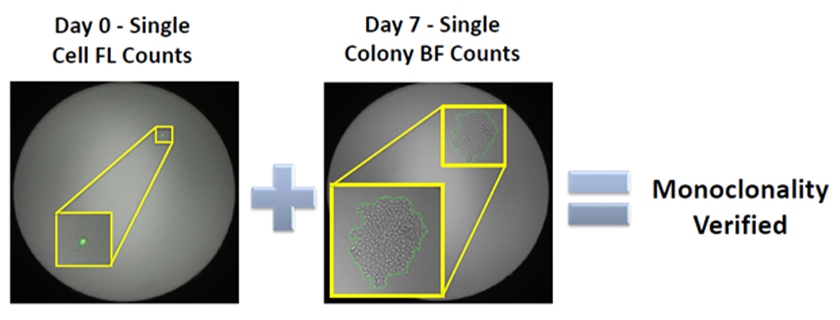
Figure 3: Time course capture of colony formation from a single cell after 7 days
Compatibility with liquid handlers, robotic arms, and automated incubators means the Celigo image cytometer can function as part of a broader automated pipeline, making it well-suited to high-throughput screening environments. By supporting monoclonality verification, transfection optimization, and longitudinal growth monitoring within a single platform, the Celigo system can help reduce manual effort while increasing confidence in clone selection decisions.
As CLD workflows continue to demand higher throughput and stronger documentation, imaging-based platforms like the Celigo image cytometer are becoming increasingly valuable tools for modern CLD laboratories.