メニュー
Revvity logo
Contact us
JP
Revvity Sites Globally

Select your location.

*e-commerce not available for this region.

australia.webp Australia
austria.webp Austria
belgium.webp Belgium
brazil.webp Brazil *
canada.webp Canada
china.webp China *
denmark.webp Denmark
finland.webp Finland
france.webp France
germany.webp Germany
hong-kong.webp Hong Kong (China) *
india.webp India *
ireland.webp Ireland
italy.webp Italy
japan.webp Japan *
luxembourg.webp Luxembourg
mexico.webp Mexico *
netherlands.webp Netherlands
norway.webp Norway
philippines.webp Philippines *
republic of korea.webp Republic of Korea *
singapore.webp Singapore *
spain.webp Spain
sweden.webp Sweden
switzerland.webp Switzerland
thailand.webp Thailand *
uk.webp United Kingdom
usa.webp United States
Breadcrumb
...
  • ホーム
  • Resources
  • Knowledge Base
  • CellCountingSub Section
  • Automated Imaging and Detection of Cytolytic Plaques
Cell Counting and Image Cytometry

Automated Imaging and Detection of Cytolytic Plaques

Section
Modern Virology Assays
Celigo Applications
Cell Counting Method Selection
Cell Counting and Image Cytometry FAQs
Cell-based Assays for Bioprocessing
Cell-based Assays for Gene Therapy Development
Cellometer Applications
Modern Virology Assays
Sub Section
Antibody Neutralization
Antibody Binding Inhibition
Antibody Neutralization
Cytopathic Effects
Viral Titre
Topic
Automated Imaging and Detection of Cytolytic Plaques
Automated Focus Reduction Neutralization Test Using GFP-expressing RSV
Automated Imaging and Detection of Cytolytic Plaques
Cytomegalovirus Neutralization Assay Using Fluorescence
Zika Virus Microneutralization Assay
Cytomegalovirus Neutralization Assay Using Brightfield
  1. A monolayer of host cells are seeded into a 6-, 12-, or 24-well plate
  2. Mixtures of the virus and various dilutions of the antibodies are produced and allowed to incubate for 2 hours
  3. After incubation, the different mixtures are then added to the host cells and incubated for another 2 hours
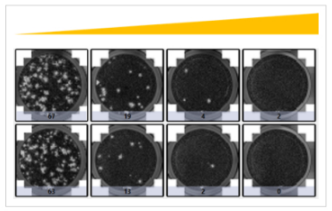
  4. The results showed a dose dependent decrease in the formation of cytolytic plaques as the antibody concentration increased
  5. In addition, plaque number and size information can be directly exported into Microsoft Excel for additional plotting and analysis
img-automated-imaging-and-detection-of-cytolytic-plaques-1.PNG

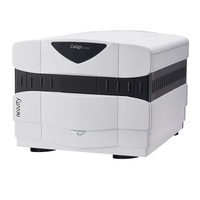
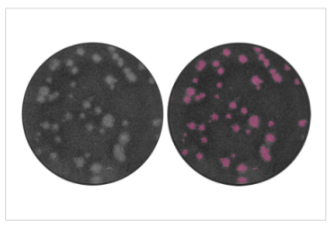
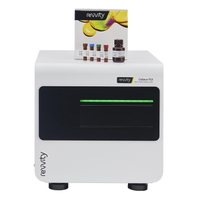
The Celigo™ image cytometer can directly count
cytolytic plaques in plate
img-automated-imaging-and-detection-of-cytolytic-plaques-2.PNG

Plate-view of counted cytolytic plaques treated with different antibody concentrations in a 12-well plate

Plaque count

67

19

4

2

63

13

2

0

Plaque size (µm2)

453017.801

478668.211

375579.65

58492.7559

481462.961

313941.745

382699.547

NaN

Plaque counts and size measurement from the Celigo

For research use only. Not for use in diagnostic procedures.

ON THIS PAGE
Revvity Logo

©2025 Revvity - All rights reserved

Revvity is a trademark of Revvity, Inc. All other trademarks are the property of their respective owners.