
JP

Revvity Sites Globally
Select your location.
*e-commerce not available for this region.

HTRF Human Phospho-ULK1 (Ser758) Detection Kit, 500 Assay Points

HTRF Human Phospho-ULK1 (Ser758) Detection Kit, 500 Assay Points

generic HTRF phospho primary image
The phospho-ULK1 (Ser757 mouse / Ser758 human) kit enables the cell-based detection of phosphorylated ULK1, one of the readouts for the AKT/mTOR pathway.
| Feature | Specification |
|---|---|
| Application | 細胞シグナル伝達 |
| Sample Volume | 16 µL |
The phospho-ULK1 (Ser757 mouse / Ser758 human) kit enables the cell-based detection of phosphorylated ULK1, one of the readouts for the AKT/mTOR pathway.
Product variants
Unit Size: 500 assay points
Part #:
64ULKPEG
Unit Size: 10,000 assay points
Part #:
64ULKPEH
Unit Size: 50,000 assay points
Part #:
64ULKPEY
For research use only. Not for use in diagnostic procedures. All products to be used in accordance with applicable laws and regulations including without limitation, consumption, and disposal requirements under European REACH regulations (EC 1907/2006).
HTRF Human Phospho-ULK1 (Ser758) Detection Kit, 500 Assay Points
generic HTRF phospho primary image
Loading...
Product information
Overview
This Phospho-ULK1 cell-based assay is designed to monitor the modulation of ULK1 phosphorylated either on Serine 757 in mouse or Serine 758 in human. It is hallmark of autophagy, which is the processs of cellular eating.
HTRF assays offer many advantages over other technologies:
- Homogeneous add-and-read format
- No wash steps
- Low background
- Straightforward miniaturization from 96- or 384-well microplates to high density assay formats such as 384-well low volume and 1536-well plates
- Stable signal, providing flexibility in time of readout or size of assays
How it works
Phospho-ULK1 (Ser757mouse/Ser758human) assay principle
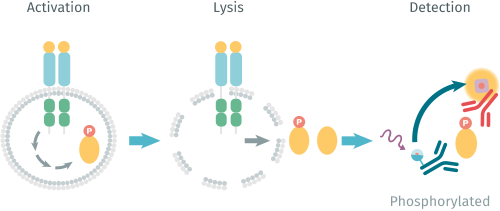
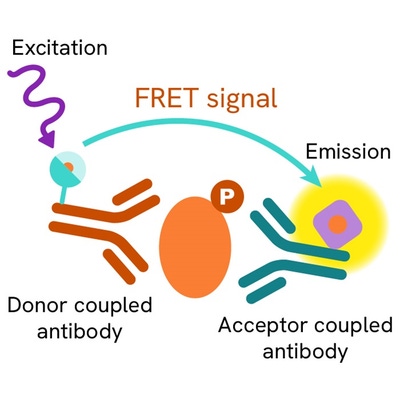
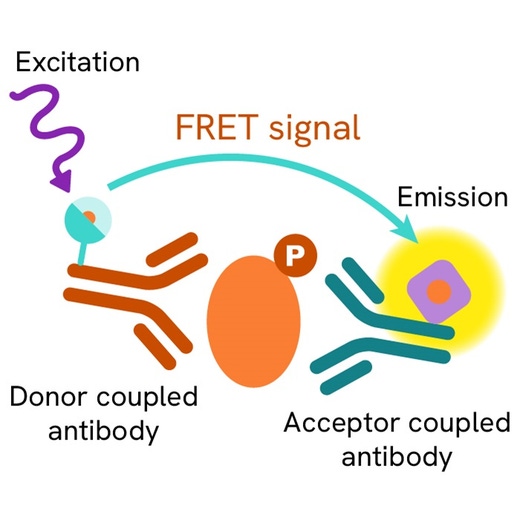
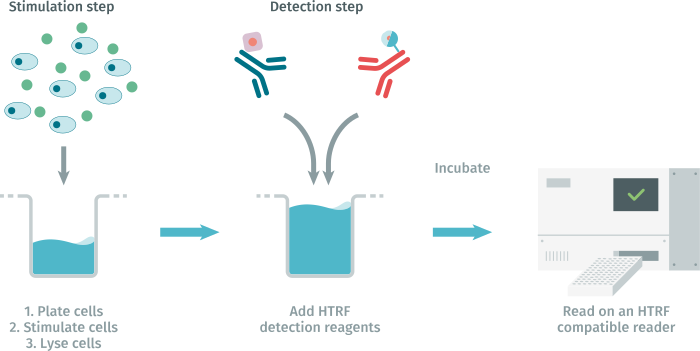
The Phospho-ULK1 (Ser757mouse/Ser758human) assay measures ULK1 when phosphorylated at Ser757mouse/Ser758human. Contrary to Western Blot, the assay is entirely plate-based and does not require gels, electrophoresis or transfer. The Phospho-ULK1 (Ser757mouse/Ser758human) assay uses 2 labeled antibodies: one with a donor fluorophore, the other one with an acceptor. The first antibody is selected for its specific binding to the phosphorylated motif on the protein, the second for its ability to recognize the protein independent of its phosphorylation state. Protein phosphorylation enables an immune-complex formation involving both labeled antibodies and which brings the donor fluorophore into close proximity to the acceptor, thereby generating a FRET signal. Its intensity is directly proportional to the concentration of phosphorylated protein present in the sample, and provides a means of assessing the proteins phosphorylation state under a no-wash assay format.
Phospho-ULK1 (Ser757mouse/Ser758human) 2-plate assay protocol
The 2 plate protocol involves culturing cells in a 96-well plate before lysis then transferring lysates to a 384-well low volume detection plate before adding Phospho-ULK1 HTRF detection reagents. This protocol enables the cells' viability and confluence to be monitored.
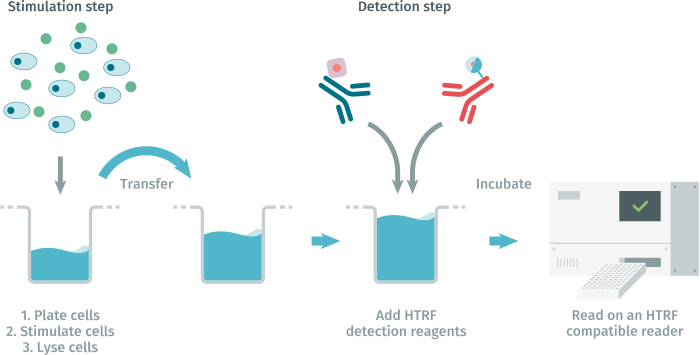
Phospho-ULK1 (Ser757mouse/Ser758human) 1-plate assay protocol
Detection of Phosphorylated ULK1with HTRF reagents can be performed in a single plate used for culturing, stimulation and lysis. No washing steps are required. This HTS designed protocol enables miniaturization while maintaining robust HTRF quality.
Assay validation
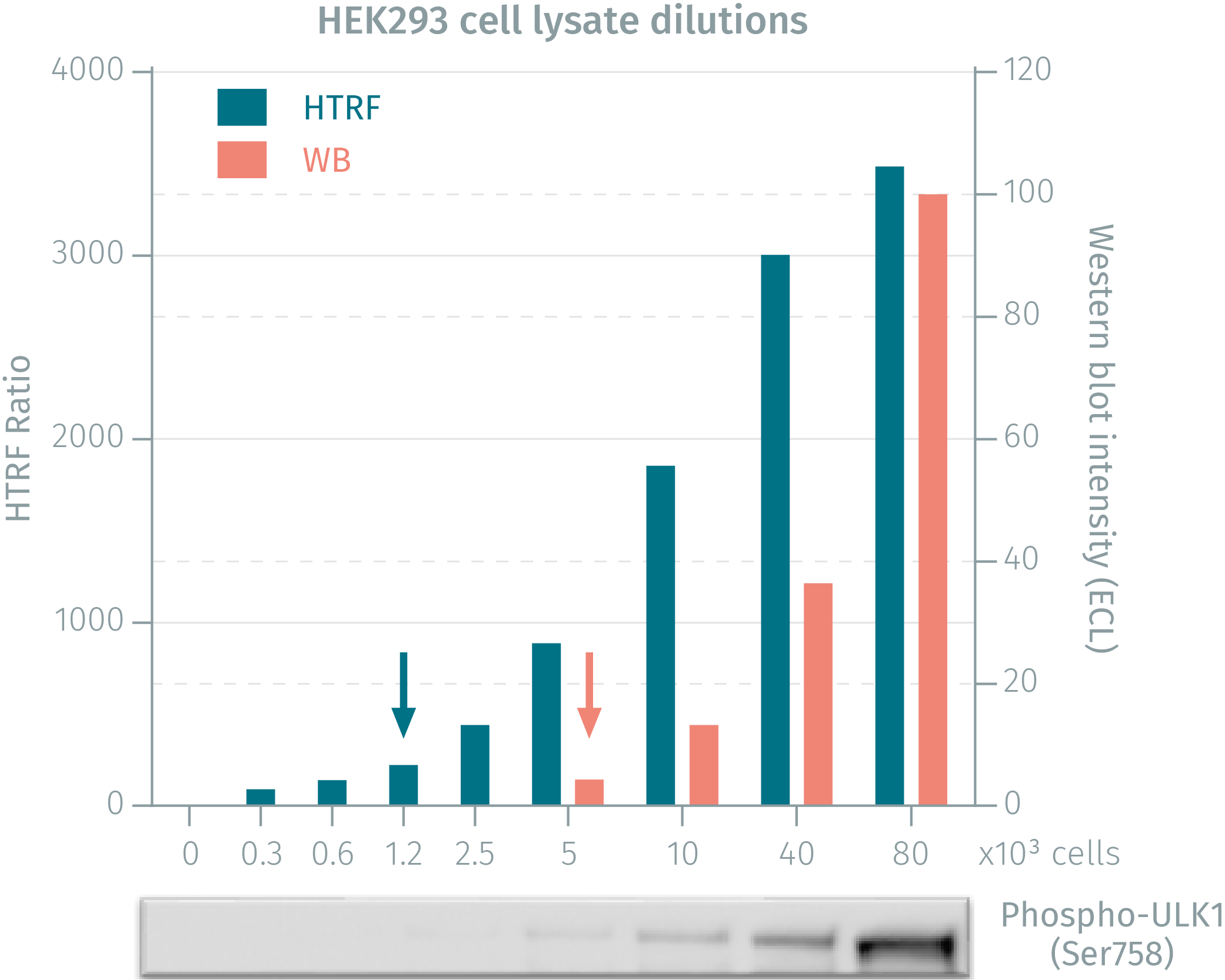
HTRF assay vs Western Blot using phospho-ULK1 cellular assay
HEK293 human embryonic kidney cells were cultured for 2 days at until 80% confluency was reached. The cells were then lysed with supplemented lysis buffer and soluble supernatants were collected via centrifugation. Serial dilutions of the cell lysate were performed in the supplemented lysis buffer and transferred into a 384-well low volume white microplate before finally adding HTRF phospho-ULK1 kit reagents. A side by side comparison of Western Blot and HTRF demonstrated the HTRF assay is 4-fold more sensitive than the Western Blot.
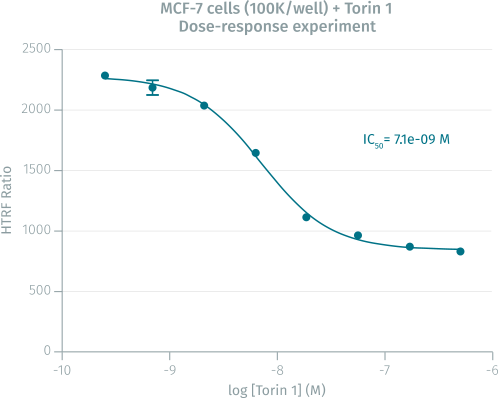
Autophagy upregulation in MCF-7 human breast cancer cells using the mTOR inhibitor Torin 1
MCF-7 cells were plated at 100,000 cells/well in a 96-well plate, and incubated for 24h at 37°C, 5% CO2. After treatment for 5 hours with increasing concentrations of Torin 1, the medium was removed and cells were lysed with 50 µL of supplemented lysis buffer #4 for 30 minutes at RT under gentle shaking. 16 µL of lysate were transferred into a 384-well low volume white microplate and 4 µL of the HTRF phospho-ULK1 (Ser758) detection reagents were added. The HTRF signal was recorded after an overnight incubation.
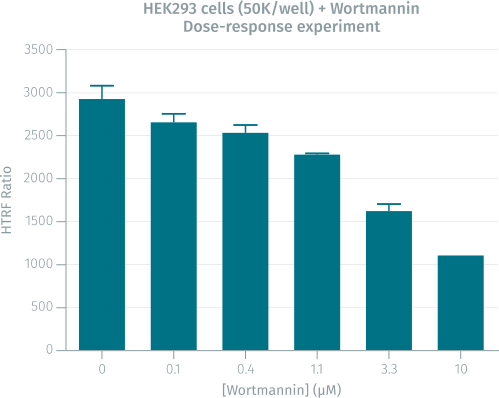
Autophagy upregulation in HEK293 human embryonic kidney cells using the PI3K inhibitor Wortmannin
HEK293 cells were plated at 50,000 cells/well in a 96-well plate, and incubated for 24h at 37°C, 5% CO2. After treatment for 5 hours with increasing concentrations of Wortmannin, the medium was removed and cells were lysed with 50 µL of supplemented lysis buffer #4 for 30 minutes at RT under gentle shaking. 16 µL of lysate were transferred into a 384-well low volume white microplate and 4 µL of the HTRF phospho-ULK1 (Ser758) detection reagents were added. The HTRF signal was recorded after an overnight incubation
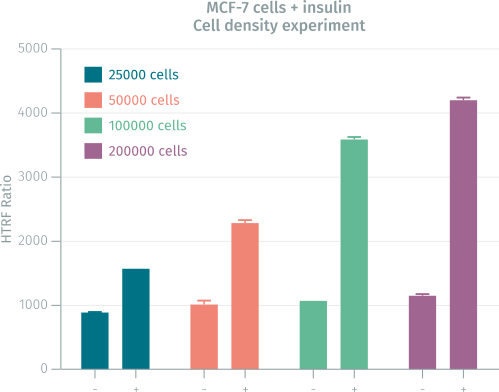
Autophagy downregulation in MCF-7 human breast cancer cells using insulin
MCF-7 cells were plated at different cell densities in a 96-well plate and incubated for 24h at 37°C, 5% CO2. After a 3 hour serum-starvation step, cells were treated with 200 nM insulin for 30 minutes. The medium was then removed and cells were lysed with 50 µL of supplemented lysis buffer #4 for 30 minutes at RT under gentle shaking. 16 µL of lysate were transferred into a 384-well low volume white microplate and 4 µL of the HTRF phospho-ULK1 (Ser758) detection reagents were added. The HTRF signal was recorded after an overnight incubation.
Simplified pathway
Function and regulation of the ULK1 kinase complex
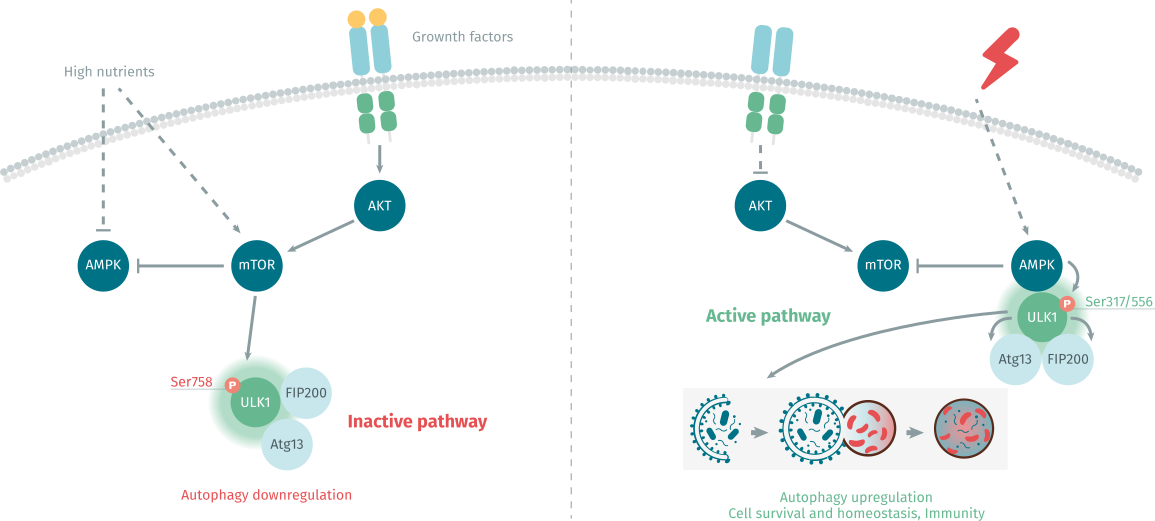
ULK1 is a Ser/Thr kinase which forms a complex with the Atg13 and FIP200 proteins. This complex is the most upstream component of the core autophagy machinery, and is therefore the key initiator of autophagy in mammalian cells. ULK1 is regulated by the key nutrient/energy-sensitive kinases mTOR and AMPK, which are both able to phosphorylate ULK1 and directly regulate its kinase activity.
Specifications
| Application |
Cell Signaling
|
|---|---|
| Automation Compatible |
Yes
|
| Brand |
HTRF
|
| Cellular or Signaling Pathway |
AMPK signaling
|
| Detection Modality |
HTRF
|
| Lysis Buffer Compatibility |
Lysis Buffer 1
Lysis Buffer 3
Lysis Buffer 4
Lysis Buffer 5
|
| Molecular Modification |
Phosphorylation
|
| Product Group |
Kit
|
| Sample Volume |
16 µL
|
| Shipping Conditions |
Shipped in Dry Ice
|
| Target |
ULK1
|
| Target Class |
Phosphoproteins
|
| Target Species |
Human
|
| Technology |
TR-FRET
|
| Therapeutic Area |
Cardiovascular
Infectious Diseases
Metabolism/Diabetes
Neuroscience
Oncology & Inflammation
|
| Unit Size |
500 assay points
|
Video gallery
HTRF Human Phospho-ULK1 (Ser758) Detection Kit, 500 Assay Points
Resources
Are you looking for resources, click on the resource type to explore further.

eBook
Autophagy regulation eBook
Taking autophagy regulation research a step further
Autophagy regulation is a key molecular process involved in recycling long...

Brochure
HTRF assays and reagents product list
Discover the versatility and precision of Homogeneous Time-Resolved Fluorescence (HTRF) technology. Our HTRF portfolio offers a...

Guide
HTRF solutions, guide to major applications
This guide provides you an overview of HTRF applications in several therapeutic areas.
Guide
Protein degradation awareness in a single guide
An in-depth review of molecular and cellular pathways
The maintenance of proteostasis, the biological mechanisms that control the...

Whitepaper
Shifting the treatment paradigm: the promise of gene therapy for neurodegenerative diseases
Neurodegenerative diseases, such as Alzheimer’s, Parkinson’s, and Huntington’s, are complex disorders that affect millions...
Whitepaper
Targeted protein degradation: A novel therapeutic strategy for neurodegenerative diseases
Targeted protein degradation (TPD) offers a promising approach for treating neurodegenerative diseases by selectively degrading...
Loading...


How can we help you?
We are here to answer your questions.