
JP

Revvity Sites Globally
Select your location.
*e-commerce not available for this region.

HTRF Mouse Phospho-STING (Ser365) Detection Kit, 500 Assay Points
HTRF Mouse Phospho-STING (Ser365) Detection Kit, 500 Assay Points

generic HTRF phospho primary image
This HTRF kit enables the cell-based quantitative detection of mouse phosphorylated STING as a readout of the activation of the cGAS-STING pathway.
| Feature | Specification |
|---|---|
| Application | 細胞シグナル伝達 |
| Sample Volume | 16 µL |
This HTRF kit enables the cell-based quantitative detection of mouse phosphorylated STING as a readout of the activation of the cGAS-STING pathway.
Product variants
Unit Size: 500 assay points
Part #:
64MSTGPEG
Unit Size: 10,000 assay points
Part #:
64MSTGPEH
Unit Size: 50,000 assay points
Part #:
64MSTGPEY
For research use only. Not for use in diagnostic procedures. All products to be used in accordance with applicable laws and regulations including without limitation, consumption, and disposal requirements under European REACH regulations (EC 1907/2006).
HTRF Mouse Phospho-STING (Ser365) Detection Kit, 500 Assay Points
generic HTRF phospho primary image
Loading...
Product information
Overview
This HTRF cell-based assay conveniently and accurately quantifies mouse phosphorylated STING at Ser365. Following pathogen infection and binding of dsDNA to the cytoplasmic sensor cGAS, STING protein is phosphorylated by TBK1. This enables its binding to IRF3, which induces IFNs type 1 production and other immune responses. The STING pathway is then switched off by STING degradation involving autophagy.
HTRF assays offer many advantages over other technologies:
- Homogeneous add-and-read format
- No wash steps
- Low background
- Straightforward miniaturization from 96- or 384-well microplates to high density assay formats such as 384-well low volume and 1536-well plates
- Stable signal, providing flexibility in time of readout or size of assays
How it works
Mouse Phospho-STING (Ser365) assay principle
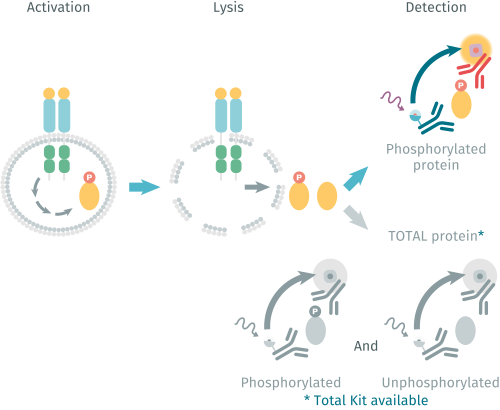
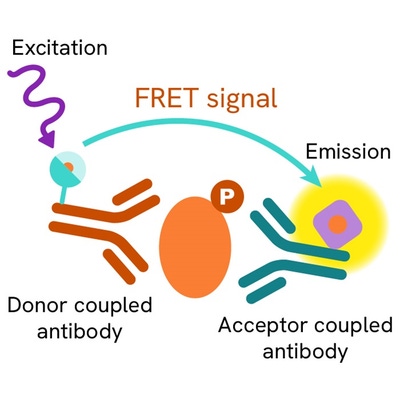
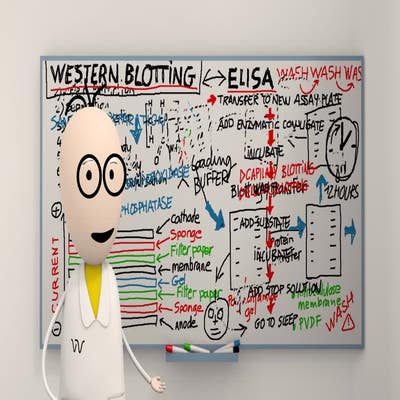
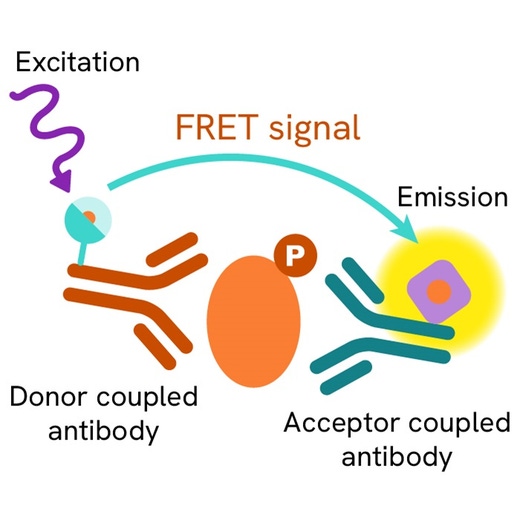
The Mouse Phospho-STING (Ser365) assay measures mouse STING when phosphorylated at Ser365. Unlike Western Blot, the assay is entirely plate-based and does not require gels, electrophoresis, or transfer. The Mouse Phospho-STING (Ser365) assay uses 2 labeled antibodies: one with a donor fluorophore, the other one with an acceptor. The first antibody is selected for its specific binding to the phosphorylated motif on the protein, the second for its ability to recognize the protein independent of its phosphorylation state. Protein phosphorylation enables an immune-complex formation involving the two labeled antibodies. This brings the donor fluorophore into close proximity to the acceptor, thereby generating a FRET signal. Its intensity is directly proportional to the concentration of phosphorylated protein present in the sample, and provides a means of assessing the protein's phosphorylation state under a no-wash assay format.
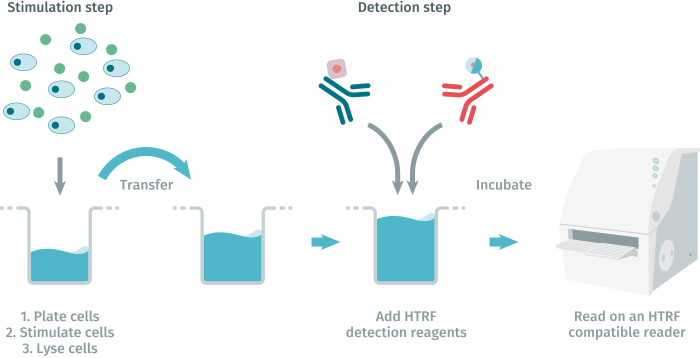
Mouse Phospho-STING (Ser365) two-plate assay protocol
The two-plate protocol involves culturing cells in a 96-well plate before lysis, then transferring lysates to a low volume detection plate (either HTRF 384-lv or 96-lv plate) before the addition of HTRF Mouse Phospho-STING (Ser365) detection reagents. This protocol enables the cells' viability and confluence to be monitored.
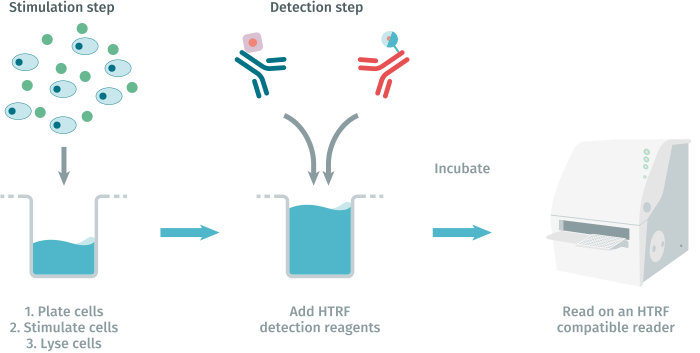
Mouse Phospho-STING (Ser365) one-plate assay protocol
Detection of Mouse Phosphorylated STING (Ser365) with HTRF reagents can be performed in a single plate used for culturing, stimulation, and lysis. No washing steps are required. This HTS designed protocol enables miniaturization while maintaining robust HTRF quality.
Assay validation
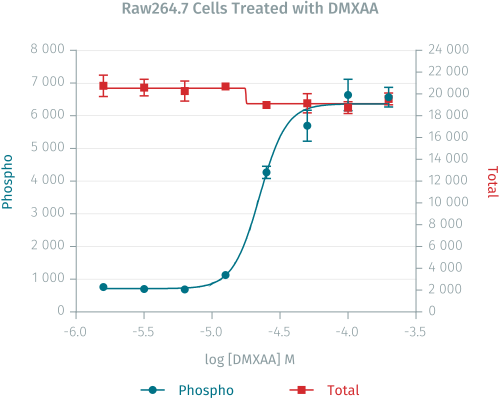
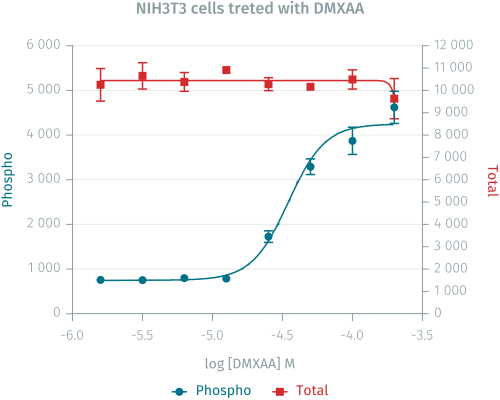
DMXAA induces Mouse STING phosphorylation in RAW 264.7 and NIH3T3 cells
Raw264.7 & NIH3T3 cells were plated under 50 µl in a 96-well plates (200,000 cells/well and 100,000 cells/well respectively) in complete culture medium and incubated overnight . The cells were stimulated with increasing concentrations of mouse specific ligand DMXAA (50µL for 1 hour). After treatment, cells were lysed with 50µl of supplemented lysis buffer #4 (1X) for 30 min at RT under gentle shaking. 16 µL of lysate were transferred into a 384 low volume white microplate before adding 4 µL of the HTRF phospho-Mouse STING or total Mouse STING detection antibodies. Finally, HTRF signals were recorded after 2 hours of incubation at RT. DMXAA induced a significant activation of the STING pathway, leading to a 8 and 6 -fold increase of STING phosphorylation in Raw264.7 and NIH3T3 cells respectively.
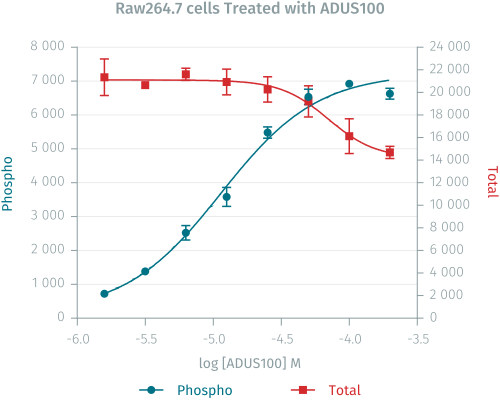
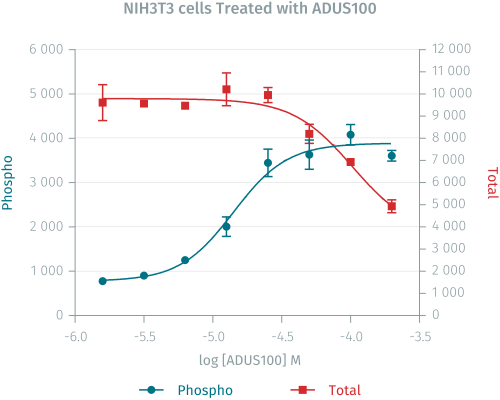
ADUS100 induces Mouse STING phosphorylation in RAW 264.7 and NIH3T3 cells
Raw264.7 & NIH3T3 cells were plated under 50 µl in a 96-well plates (200,000 cells/well and 100,000 cells/well respectively) in complete culture medium and incubated overnight . The cells were stimulated with increasing concentrations of c-di-AMP analog : ADU-S100 (50µL for 1 hour). After treatment, cells were lysed with 50µl of supplemented lysis buffer #4 (1X) for 30 min at RT under gentle shaking. 16 µL of lysate were transferred into a 384 low volume white microplate before adding 4 µL of the HTRF phospho-Mouse STING or total Mouse STING detection antibodies. Finally, HTRF signals were recorded after 2 hours of incubation at RT. ADUS100 induced a significant activation of the STING pathway, leading to a 9 and 5 -fold increase of STING phosphorylation in Raw264.7 and NIH3T3 cells respectively. Induced STING phosphorylation was associated with a down-regulation of its expression level, in agreement with autophagy mediated degradation.
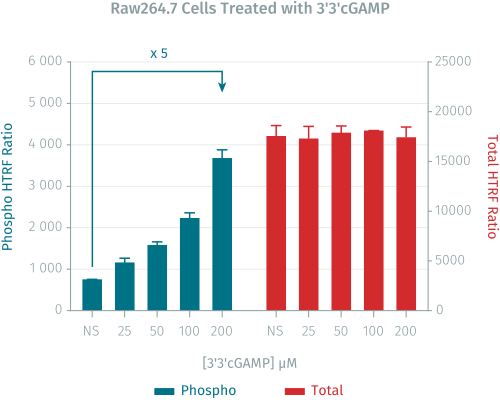
3’3’cGAMP induces Mouse STING phosphorylation in Raw264.7 cells
Raw264.7 cells were plated under 50 µl in a 96-well plates (200,000 cells/well) in complete culture medium and incubated overnight . The cells were stimulated with increasing concentrations of bacterial cyclic di-nucleotide ligand : 3'3'cGAMP (50µL for 1 hour). After treatment, cells were lysed with 50µl of supplemented lysis buffer #4 (1X) for 30 min at RT under gentle shaking. 16 µL of lysate were transferred into a 384 low volume white microplate before adding 4 µL of the HTRF phospho-Mouse STING or total Mouse STING detection antibodies. Finally, HTRF signals were recorded after 2 hours of incubation at RT. 3'3'cGAMP induced a significant activation of the STING pathway, leading to a 5 -fold increase of STING phosphorylation.
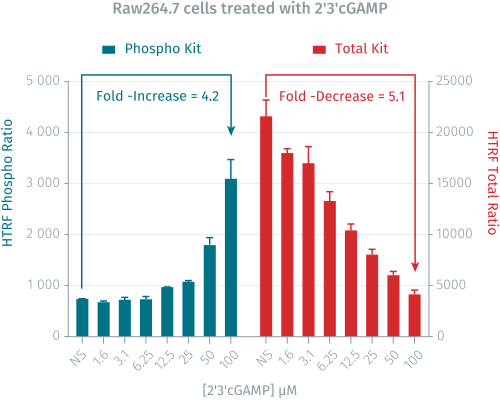
2’3’cGAMP induces Mouse STING phosphorylation in Raw264.7 cells
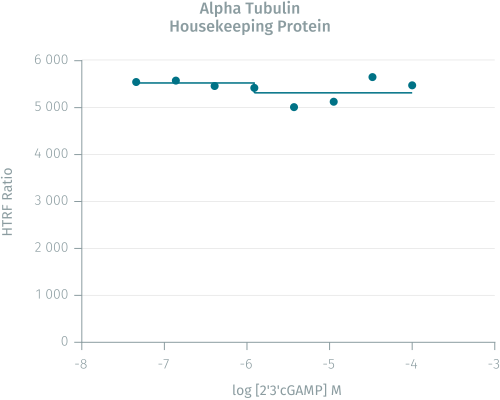
Raw264.7 cells were plated under 50 µl in a 96-well plates (200,000 cells/well) in complete culture medium and incubated overnight . The cells were stimulated with increasing concentrations of non-canonical cGAMP : 2'3'cGAMP (50µL for 1 hour). After treatment, cells were lysed with 50µl of supplemented lysis buffer #4 (1X) for 30 min at RT under gentle shaking. 16 µL of lysate were transferred into a 384 low volume white microplate before adding 4 µL of the HTRF phospho-Mouse STING or total Mouse STING detection antibodies. Finally, HTRF signals were recorded after 2 hours of incubation at RT. 3'3'cGAMP induced a significant activation of the STING pathway, leading to a 4 -fold increase of STING phosphorylation. Induced STING phosphorylation was associated with a down-regulation of its expression level, in agreement with autophagy mediated degradation, whereas alpha-tubulin remained stable under the same conditions.
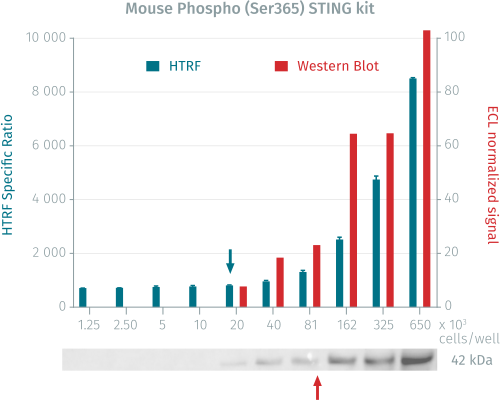
HTRF phospho- Mouse STING cellular assay compared to Western Blot
Raw264.7 cell line was seeded in a T175 flask in complete culture medium, and incubated for 2 days at 37°C, 5% CO2. Cells were then stimulated with 100 µM DMXAA for 1 hour and lysed with 3 mL of supplemented lysis buffer #4 for 30 minutes at RT under gentle shaking. Soluble supernatants were collected after a 10-minute centrifugation. Serial dilutions of the cell lysate were performed in the supplemented lysis buffer and 16 µL of each dilution were transferred into a low volume white microplate before the addition of 4 µL of HTRF phospho- Mouse STING detection reagents. Equal amounts of lysates were used for a side by side comparison between HTRF and Western Blot.
A side by side comparison of Western Blot and HTRF demonstrates that both technology give the same sensitivity under these experimental conditions.
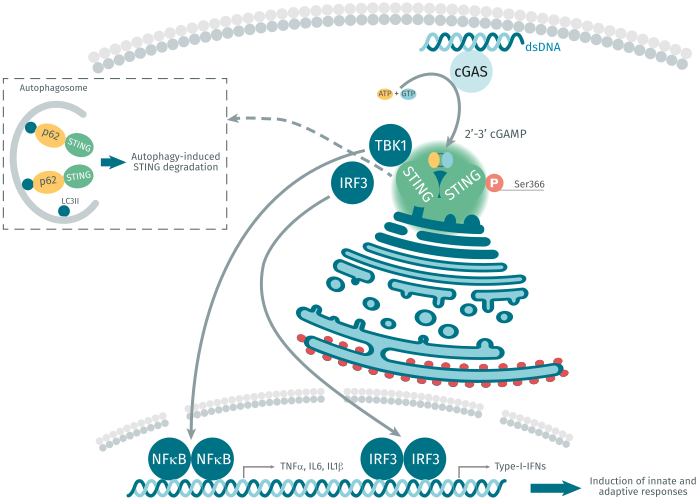
Simplified pathway
STING simplified pathway
STING, for STimulator of INterferon Genes, is a cytoplasmic homodimeric protein localized in the endoplasmic reticulum, which plays an essential role in innate immunity. Upon pathogen infection or mitochrondrial shrinking during apoptosis, floating dsDNAs bind and activate a DNA sensor, the cyclic GMP-AMP synthase (cGAS). Activated cGAS leads to the production of 2’-3’cGAMP, a cyclic dinucleotide, which then binds to STING proteins. In turn, phosphorylated STING interacts with TANK-binding-kinase-I (TBK1) leading to the recruitment and activation of active interferon regulatory factor (IRF3) dimer. Nuclear translocation of the IRF3 dimer leads to the transcription of genes encoding IFN-α/β. In addition, the STING pathway controls NF-κB dependent inflammatory cytokine expression. As a negative feedback loop, the DNA-stimulated cGAS-STING-TBK1 pathway also triggers STING protein degradation through p62 SQSTM1 associated autophagy, switching off IFNβ production.
Specifications
| Application |
Cell Signaling
|
|---|---|
| Automation Compatible |
Yes
|
| Brand |
HTRF
|
| Cellular or Signaling Pathway |
Inflammasome/Pattern Recognition Receptors (PRRs)
|
| Detection Modality |
HTRF
|
| Lysis Buffer Compatibility |
Lysis Buffer 4
|
| Molecular Modification |
Phosphorylation
|
| Product Group |
Kit
|
| Sample Volume |
16 µL
|
| Shipping Conditions |
Shipped in Dry Ice
|
| Target |
STING
|
| Target Class |
Phosphoproteins
|
| Target Species |
Mouse
|
| Technology |
TR-FRET
|
| Unit Size |
500 assay points
|
Video gallery
HTRF Mouse Phospho-STING (Ser365) Detection Kit, 500 Assay Points
Resources
Are you looking for resources, click on the resource type to explore further.

Guide
Benefit from an insight into the diversity of immune cells & signaling pathways
Get a useful overview of today’s immunity knowledge with this booklet
Immunity is a collection of complex processes involving...

Brochure
HTRF assays and reagents product list
Discover the versatility and precision of Homogeneous Time-Resolved Fluorescence (HTRF) technology. Our HTRF portfolio offers a...
Guide
HTRF solutions, guide to major applications
This guide provides you an overview of HTRF applications in several therapeutic areas.

Flyer
Reagent solutions for autoimmunity research.
Advance your autoimmune disease research and benefit from Revvity broad offering of reagent technologies
Loading...


How can we help you?
We are here to answer your questions.