
JP

Revvity Sites Globally
Select your location.
*e-commerce not available for this region.

HTRF Human Phospho-TIE2 (Tyr992) Detection Kit, 500 Assay Points
HTRF Human Phospho-TIE2 (Tyr992) Detection Kit, 500 Assay Points
TIE Phospho-Tyr992 Product image
This HTRF kit allows for the cell-based quantitative detection of Tie2 when phosphorylated at Tyr992.
| Feature | Specification |
|---|---|
| Application | 細胞シグナル伝達 |
| Sample Volume | 16 µL |
This HTRF kit allows for the cell-based quantitative detection of Tie2 when phosphorylated at Tyr992.
Product variants
Unit Size: 500 assay points
Part #:
64TIE2Y92PEG
Unit Size: 10,000 assay points
Part #:
64TIE2Y92PEH
For research use only. Not for use in diagnostic procedures. All products to be used in accordance with applicable laws and regulations including without limitation, consumption, and disposal requirements under European REACH regulations (EC 1907/2006).
HTRF Human Phospho-TIE2 (Tyr992) Detection Kit, 500 Assay Points
TIE Phospho-Tyr992 Product image
Loading...
Product information
Overview
Phospho-Tie assay kits are designed for the robust quantification of Tie modulation, phosphorylated on Tyr992, upon angiopoietin activation. The simple mix-and-read protocol eliminates all wash steps for faster analysis and high quality output.
Tie2 is a tyrosine-protein kinase found in endothelial cells, serving as a cell-surface receptor for angiopoietins. It plays a crucial role in regulating angiogenesis, cell migration, survival, adhesion, and proliferation, primarily ensuring vascular stability and maintenance. When Angiopoietin 1 is present, Tie2 receptors form homodimers, leading to the autophosphorylation of the C-terminal tails at Tyrosine 992 and the activation of downstream signaling pathways.
How it works
Phospho-Tie2 (Tyr992) assay principle
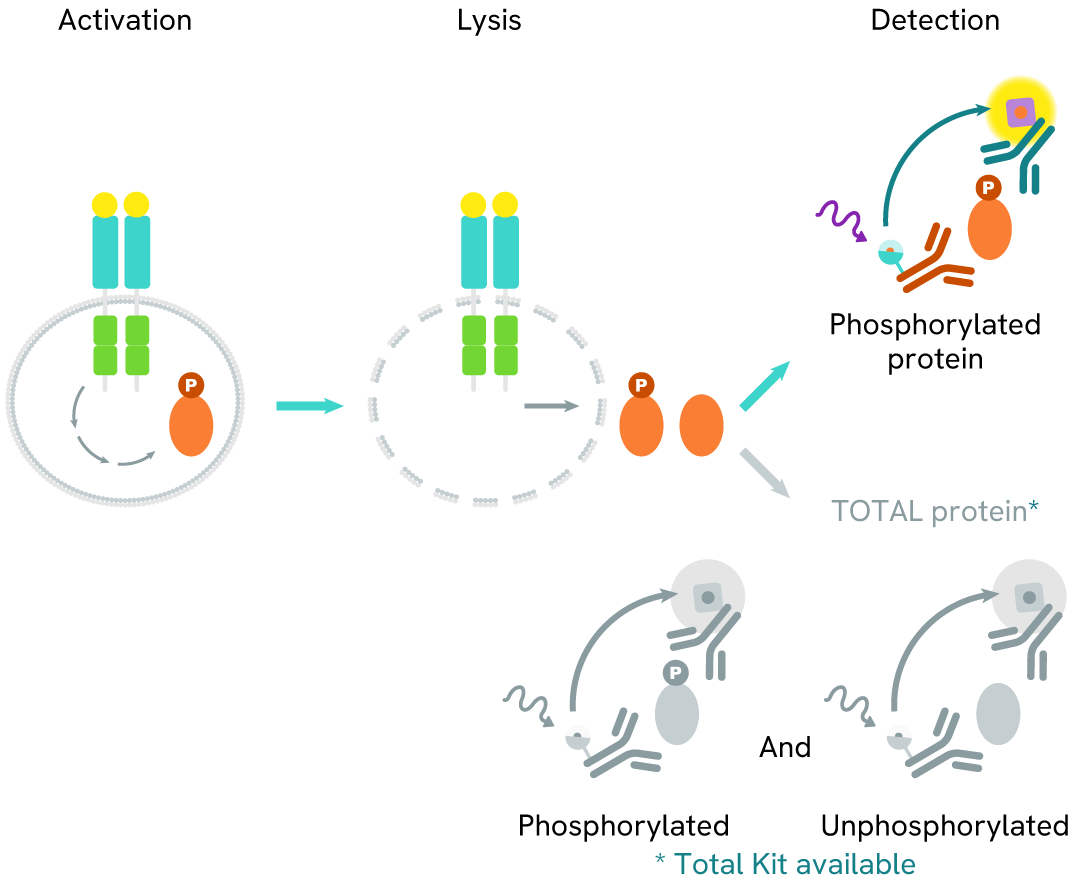
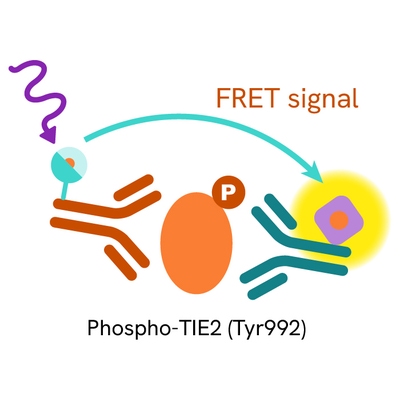
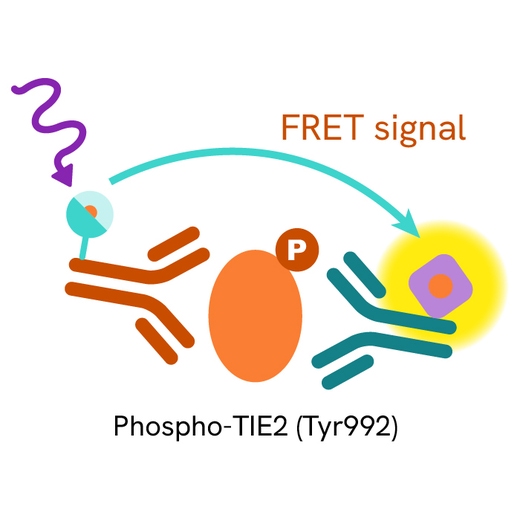
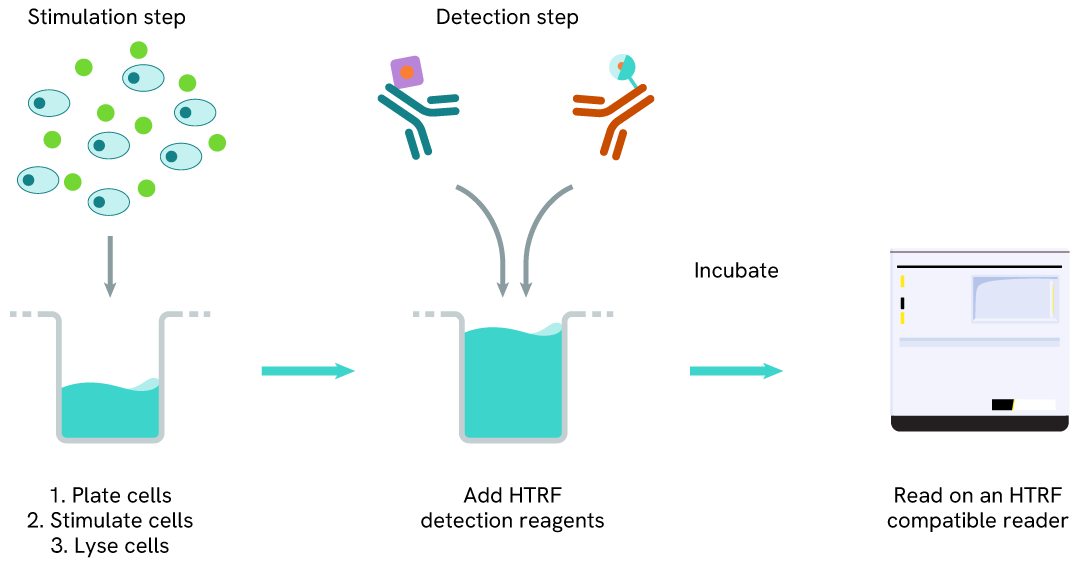
The Phospho-Tie2 (Tyr992) assay measures Tie2 when phosphorylated at Tyr992. Unlike Western Blot, the assay is entirely plate-based and does not require gels, electrophoresis, or transfer. The assay uses 2 antibodies, one labeled with a donor fluorophore and the other with an acceptor. The first antibody was selected for its specific binding to the phosphorylated motif on the protein, and the second for its ability to recognize the protein independently of its phosphorylation state. Protein phosphorylation enables an immune-complex formation involving both labeled antibodies, and which brings the donor fluorophore into close proximity to the acceptor, thereby generating a FRET signal.
Its intensity is directly proportional to the concentration of phosphorylated protein present in the sample, and provides a means of assessing the protein's phosphorylation state under a no-wash assay format.
Phospho-Tie2 (Tyr992) two-plate assay protocol
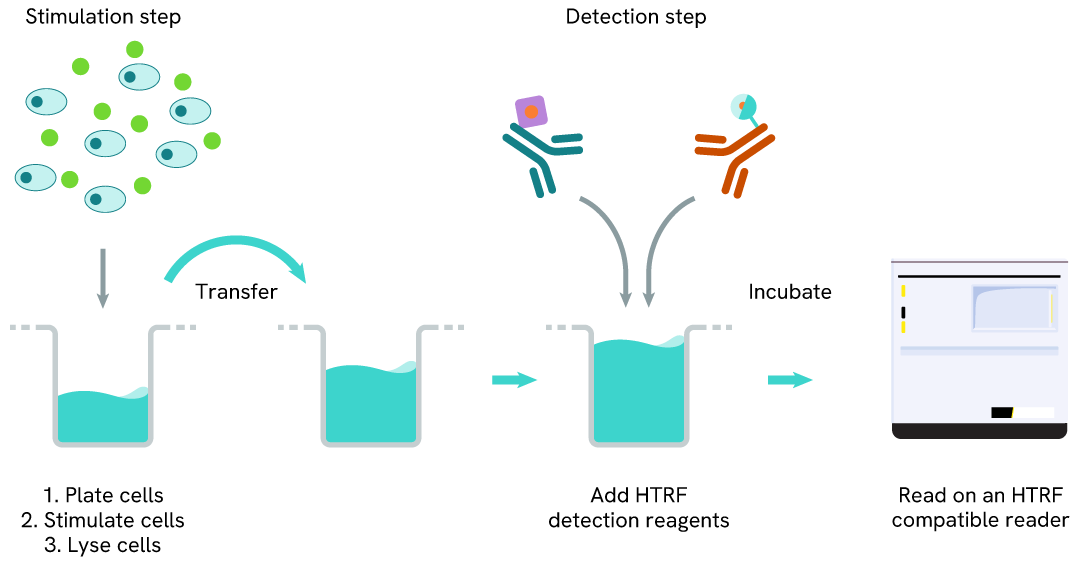
The two-plate protocol involves culturing cells in a 96-well plate before lysis, then transferring lysates into a 384-well low volume detection plate before the addition of Phospho-Tie2 (Tyr992) HTRF detection reagents. This protocol allows for the cells' viability and confluence to be monitored.
Phospho-Tie2 (Tyr992) one-plate assay protocol
Detection of phosphorylated Tie2 (Tyr992) with HTRF reagents can be performed in a single plate used for culturing, stimulation, and lysis. No washing steps are required. This HTS designed protocol allows miniaturization while maintaining robust HTRF quality.
Assay validation
Induction of Phospho-Tie2 (Tyr992) in a cellular model overexpressing Tie2
HEK293T cells were seeded in a 96-well culture-treated plate (12,500 cells/well) in complete culture medium and incubated overnight at 37°C, 5% CO2. The cells were transfected with the Tie2 plasmid or with an empty plasmid as a control.
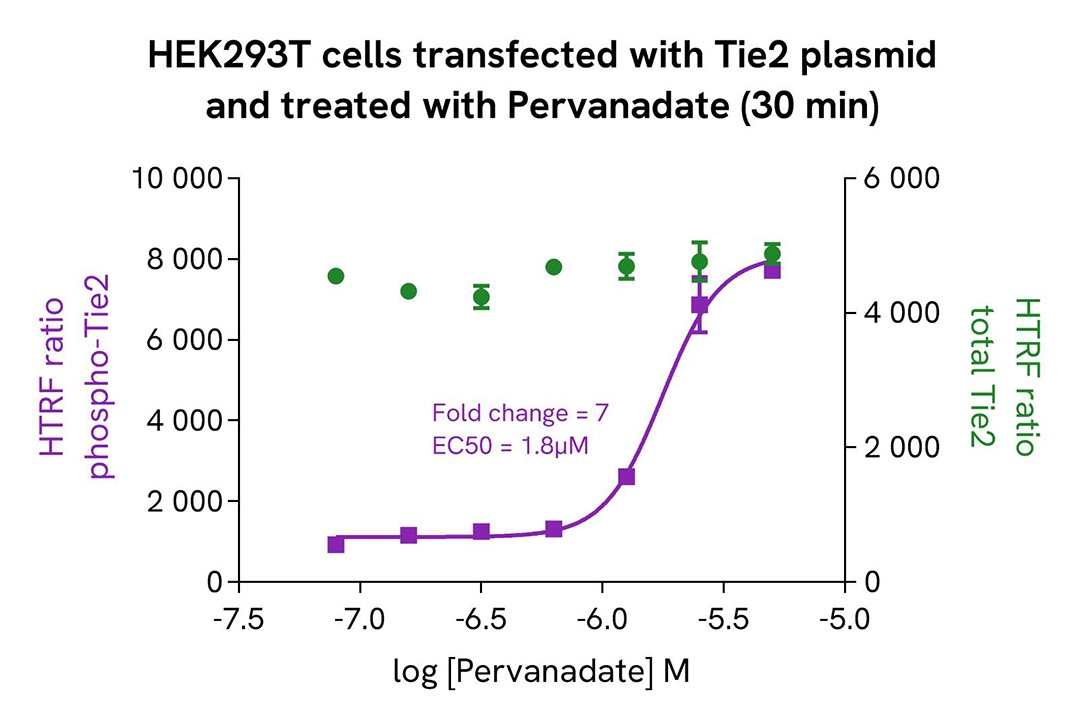
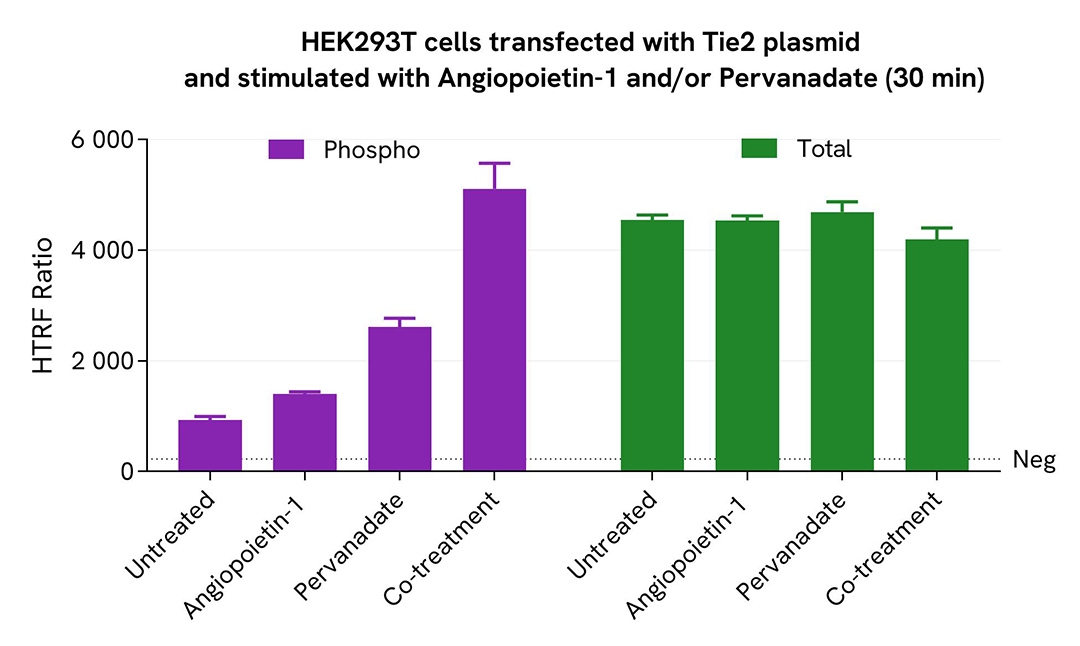
After 24 hours of incubation, the cells were treated with increasing concentrations of Pervanadate (dose response) or with Angiopoietin-1 alone (625 ng/mL) and/or Pervanadate (1.25 µM) for 30 minutes (histogram).
After treatment, the cells were lysed with 50 µL of supplemented lysis buffer #1 for 30 minutes at room temperature under gentle shaking. For the detection step, 16 µL of cell lysate were transferred into a 384-well low-volume white microplate, and 4 µL of the HTRF Phospho-Tie2 (Tyr992) or Total Tie2 detection reagents were added. The HTRF signal was recorded after an overnight incubation.
As expected, Angiopoietin-1 (an endogenous Tie2 receptor ligand) triggered an increase in the level of Phospho-Tie2 (Tyr992), potentiated by Pervanadate, while Total Tie2 remained stable.
Inhibition of Phospho-Tie2 (Tyr992) in a cellular model overexpressing Tie2
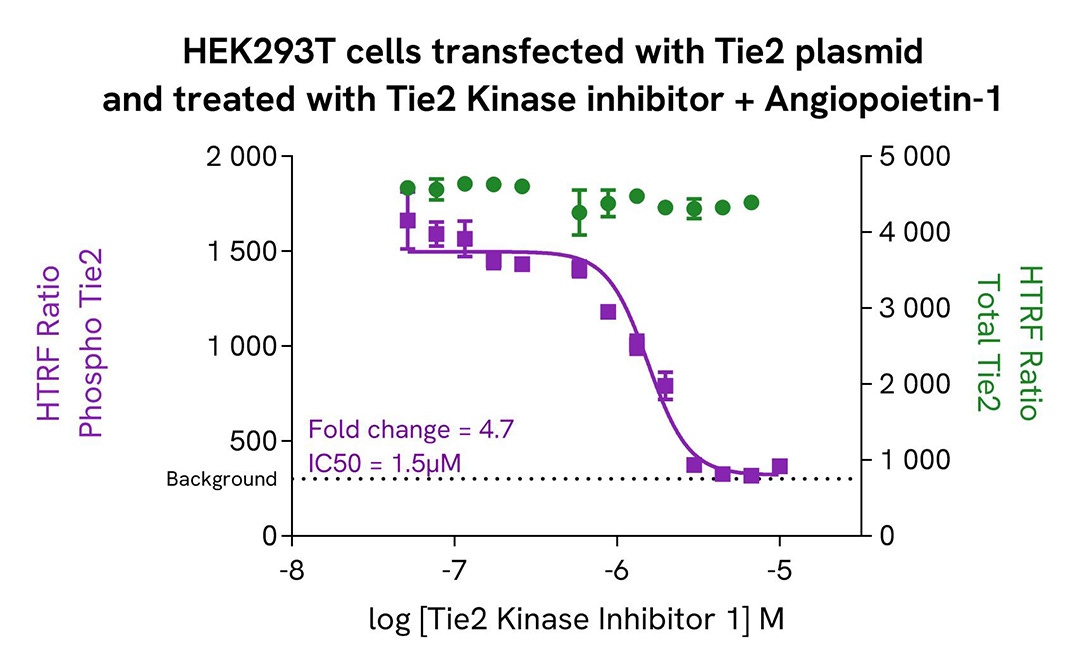
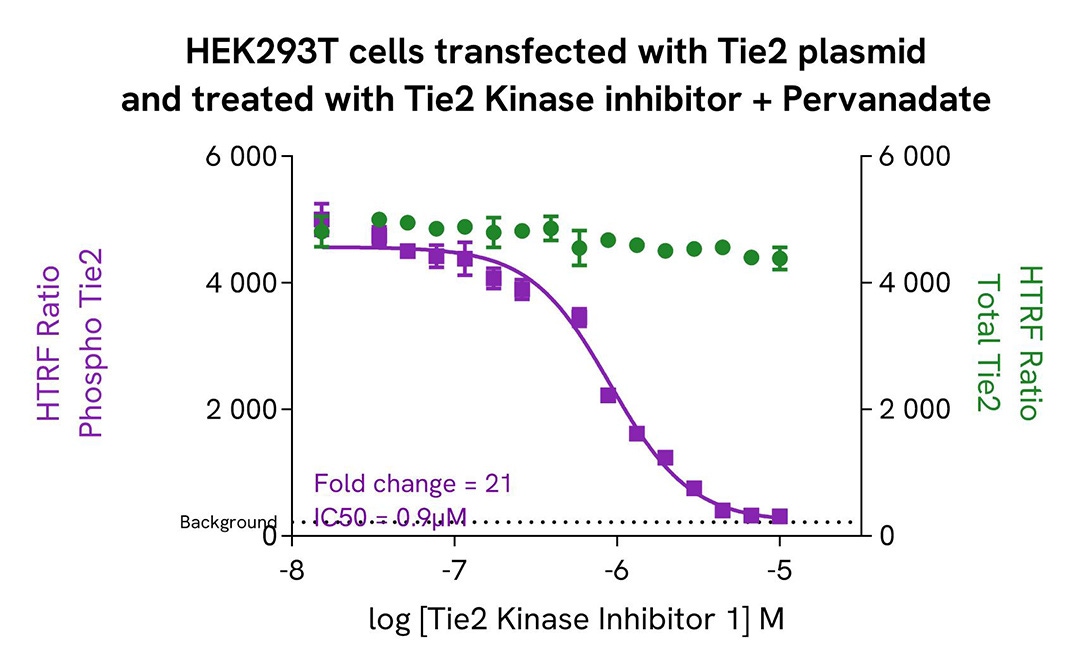
HEK293 cells were seeded in a 96-well culture-treated plate (12,500 cells/well) in complete culture medium and incubated overnight at 37°C, 5% CO2. The cells were transfected with the Tie2 plasmid. After 24 hours, the cells were treated for 1 hour with increasing doses of the Tie2 Tyrosine Kinase Inhibitor, and 600 ng/mL of Angiopoietin-1 or 1 µM of Pervanadate were added 30 minutes before the end of the treatment.
The cells were lysed with 50 µL of supplemented lysis buffer #1 for 30 minutes at room temperature under gentle shaking. For the detection step, 16 µL of cell lysate were transferred into a 384-well low-volume white microplate, and 4 µL of the HTRF Phospho-Tie2 (Tyr992) or Total Tie2 detection reagents were added. The HTRF signal was recorded after an overnight incubation.
As expected, the Tie2 kinase inhibitor led to a dose-dependent reduction in Tie2 phosphorylation, while not affecting the expression level of the receptor.
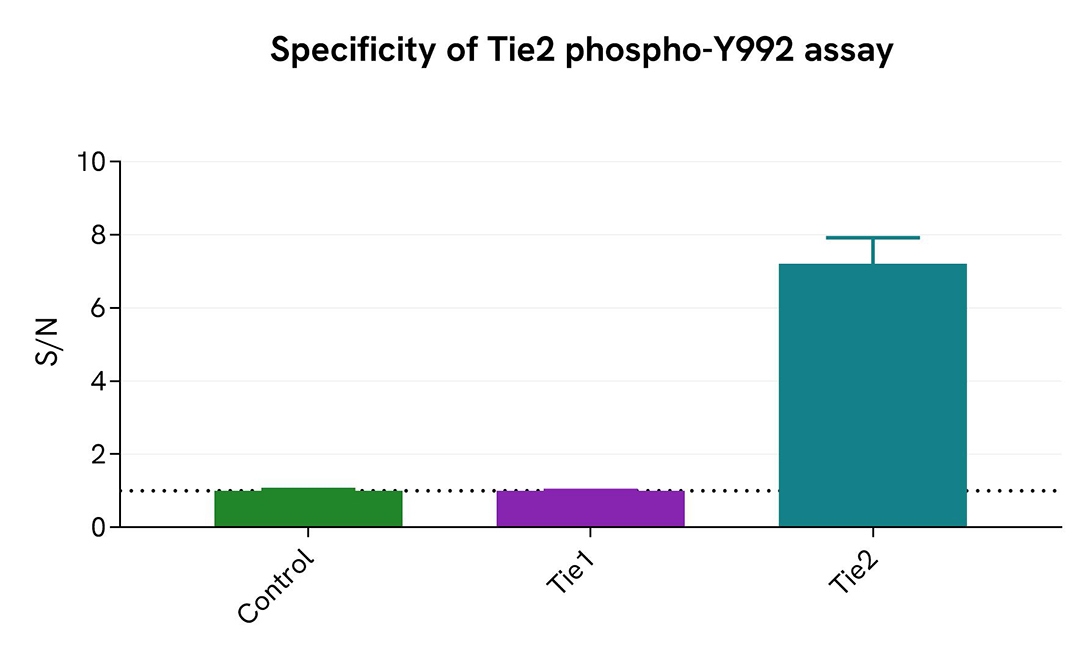
Specificity of Phospho-Tie2 (Tyr992) assay using transfection of Tie1 & Tie2
HEK293 cells were plated in a 96-well plate (12,500 cells/well) and cultured for 24 hours. The cells were then transfected with different plasmids, Tie1 and Tie2, as well as a negative control. After 24 hours of incubation, the cells were treated for 30 minutes with 100 µM of Pervanadate before being lysed with 50 µL of supplemented lysis buffer #1 (1X) for 30 minutes at room temperature under gentle shaking.
After cell lysis, 16 µL of lysates were transferred into a 384-well low-volume white microplate, and 4 µL of the HTRF Phospho-Tie2 detection antibodies were added. The HTRF signal was recorded after an overnight incubation.
Only cell transfection with Tie2 led to the detection of Phospho-Tie2 (Tyr992) compared to the negative control (untransfected). Transfection with Tie1 did not lead to any signal increase, demonstrating that the HTRF Phospho-Tie2 (Tyr992) assay is specific for Tie2, as expected, and does not cross-react with the Tie1 family member.
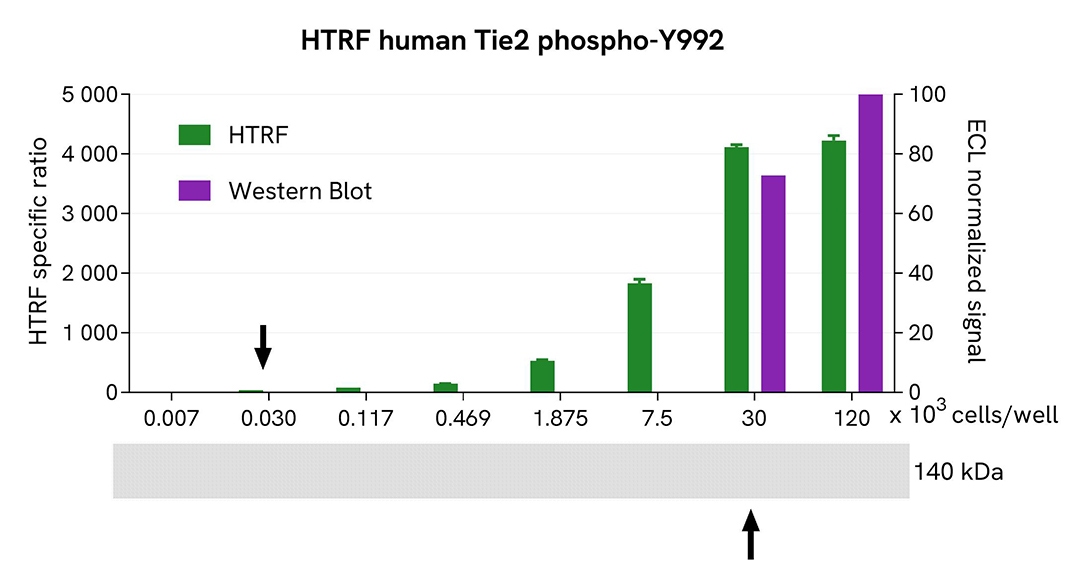
HTRF Phospho-Tie2 (Tyr992) assay compared to Western Blot
HEK293 cells were grown in a T175 flask in complete culture medium at 37°C, 5% CO2, until 80% confluence. The cells were then transfected with the Tie2 plasmid for 24 hours before Pervanadate treatment (100 µM, 30 minutes). After 24 hours of incubation, the cells were lysed with 3 mL of supplemented lysis buffer #1 (1X) for 30 minutes at room temperature under gentle shaking.
Serial dilutions of the cell lysate were performed using supplemented lysis buffer, and 16 µL of each dilution were transferred into a low-volume white microplate before the addition of 4 µL of HTRF Phospho-Tie2 (Tyr992) detection reagents. Equal amounts of lysates were used for a side-by-side comparison between HTRF and Western Blot.
Using the HTRF Phospho-Tie2 (Tyr992) assay, 30 cells/well were enough to detect a significant signal, while 30,000 cells were needed to obtain a minimal chemiluminescent signal using Western Blot. Therefore, under these conditions, the HTRF Phospho-Tie2 (Tyr992) assay was 1,000 times more sensitive than the Western Blot technique.
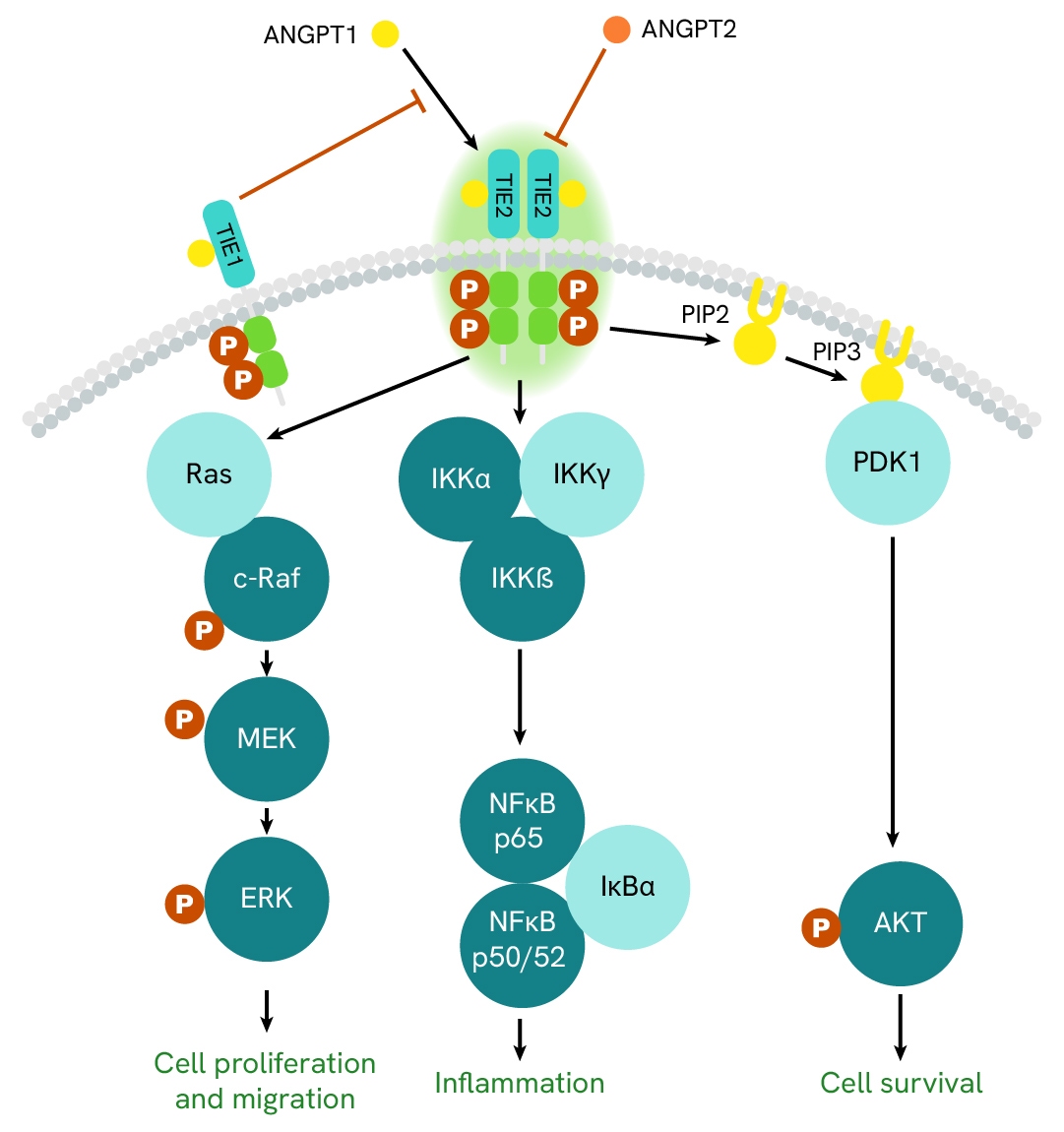
Simplified pathway
Tie2 signaling pathway
Tie2 (TEK receptor tyrosine kinase) protein induces angiogenesis and supports endothelial cell survival upon binding of an endothelial growth factor, angiopoietin-1 (Angpt1), to the receptor. In the presence of Angiopoietin 1, receptors form homodimers, followed by the autophosphorylation of the C-terminal tails at Tyrosine 992 and activation of downstream signaling pathways, including MEK/ERK, IKKβ/NFκB, and AKT. The overall activation results in the maintenance of vascular stability, cellular proliferation, reduction of inflammation, and cell survival. Downregulation is induced by two mechanisms: deactivation of active Tie2 by vascular endothelial protein tyrosine phosphatase (VE-PTP) and binding of the non-activating ligand angiopoietin-2 (Angpt2).
Specifications
| Application |
Cell Signaling
|
|---|---|
| Automation Compatible |
Yes
|
| Brand |
HTRF
|
| Cellular or Signaling Pathway |
Angiogenesis signaling
|
| Detection Modality |
HTRF
|
| Lysis Buffer Compatibility |
Lysis Buffer 1
|
| Molecular Modification |
Phosphorylation
|
| Product Group |
Kit
|
| Sample Volume |
16 µL
|
| Shipping Conditions |
Shipped in Dry Ice
|
| Target |
TIE2
|
| Target Class |
Phosphoproteins
|
| Target Species |
Human
|
| Technology |
TR-FRET
|
| Therapeutic Area |
Oncology
|
| Unit Size |
500 assay points
|
Resources
Are you looking for resources, click on the resource type to explore further.

Literature - Publication Review
Advanced immunoassay technologies for streamlined CMC development of biologics
Discover how Revvity's no-wash immunoassay technologies - including HTRF and AlphaLISA - streamline CMC processes for biologic...
Loading...


How can we help you?
We are here to answer your questions.