
Revvity Sites Globally
Select your location.
*e-commerce not available for this region.

HTRF Human Total PLK1 Detection Kit, 10,000 Assay Points

HTRF Human Total PLK1 Detection Kit, 10,000 Assay Points

generic HTRF total primary image
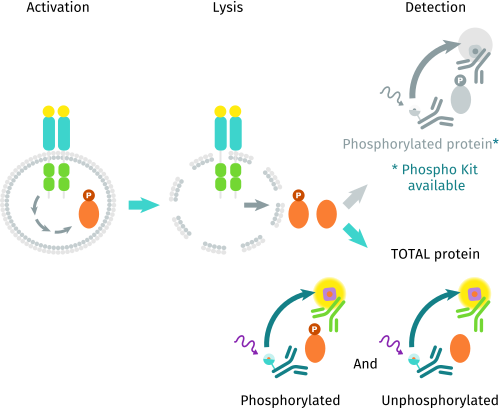
The Total PLK1 kit is designed to monitor the expression level of cellular human PLK1 and can be used as a normalization assay for the Phospho-human PLK1 Thr210 Detection Kit.
| Feature | Specification |
|---|---|
| Application | 細胞シグナル伝達 |
| Sample Volume | 16 µL |
The Total PLK1 kit is designed to monitor the expression level of cellular human PLK1 and can be used as a normalization assay for the Phospho-human PLK1 Thr210 Detection Kit.
Product variants
Unit Size: 500 assay points
Part #:
64PLKTPEG
Unit Size: 10,000 assay points
Part #:
64PLKTPEH
For research use only. Not for use in diagnostic procedures. All products to be used in accordance with applicable laws and regulations including without limitation, consumption, and disposal requirements under European REACH regulations (EC 1907/2006).
HTRF Human Total PLK1 Detection Kit, 10,000 Assay Points
generic HTRF total primary image
Loading...
Product information
Overview
This HTRF cell-based assay enables the rapid, quantitative detection of total PLK1 protein (phosphorylated or not). Polo-like kinase 1 (PLK1) is the principle member of the well conserved serine/threonine kinase family and is essential for cell division (mitosis). As such, it is a key regulator of the G2/M checkpoint of the cell cycle.
PLK1 activation for cell cycle regulation: PLK1 is activated by phosphorylation on Thr210 by AurA kinase. Activated PLK1 phosphorylates CDC25.
PLK1 is a critical protein responsible for mitosis and cell cycle progression/cell proliferation. This makes it an attractive cancer treatment target.
How it works
Total PLK1 assay principle
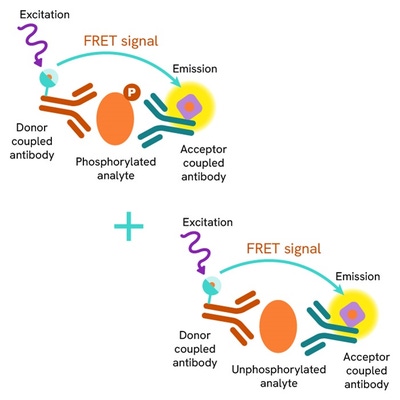
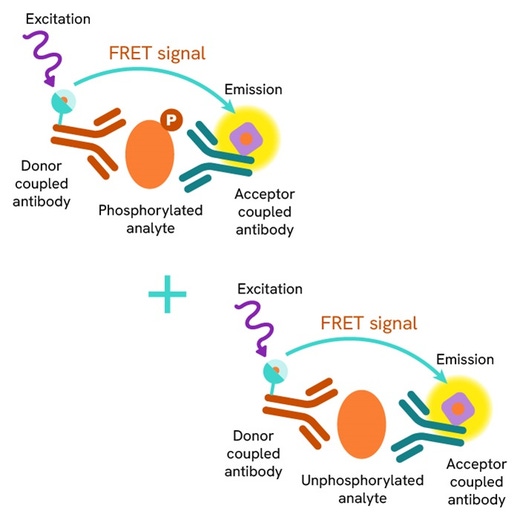
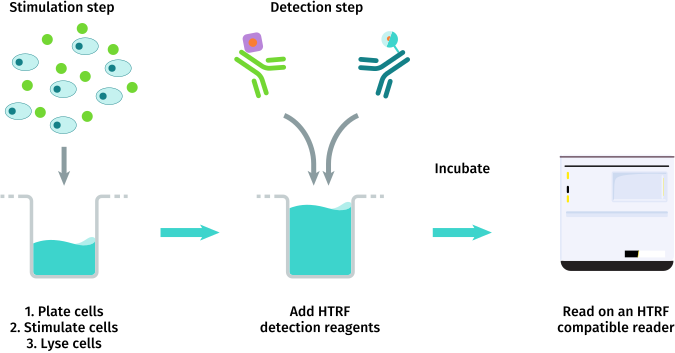
The Total-PLK1 assay quantifies the expression level of PLK1 in a cell lysate. Unlike Western Blot, the assay is entirely plate-based and does not require gels, electrophoresis, or transfer. The Total-PLK1 assay uses two labeled antibodies: one coupled to a donor fluorophore, the other to an acceptor. Both antibodies are highly specific for a distinct epitope on the protein. In presence of PLK1 in a cell extract, the addition of these conjugates brings the donor fluorophore into close proximity with the acceptor and thereby generates a FRET signal. Its intensity is directly proportional to the concentration of the protein present in the sample, and provides a means of assessing the protein’s expression under a no-wash assay format.
Total PLK1 two-plate assay protocol
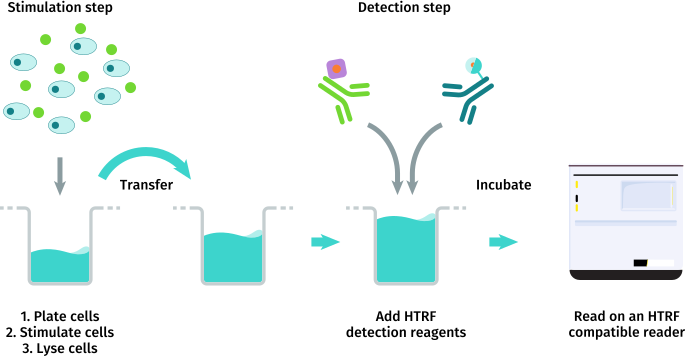
The two-plate protocol involves culturing cells in a 96-well plate before lysis, then transferring lysates into a 384-well low volume detection plate before the addition of the Total-PLK1 HTRF detection reagents. This protocol enables the cells' viability and confluence to be monitored.
Total PLK1 one-plate assay protocol
Detection of Total PLK1 with HTRF reagents can be performed in a single plate used for culturing, stimulation, and lysis. No washing steps are required.
This HTS-designed protocol enables miniaturization while maintaining robust HTRF quality.
Assay validation
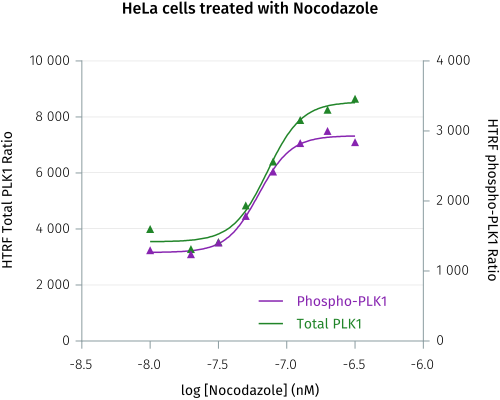
Activation of Total and Phospho PLK1 Thr210 measured on HeLa cells
HeLa cells were plated at 20,000 cells/ well in 96-well culture-treated plates in complete culture medium, and incubated overnight at 37°C, 5% CO2. Next, cells were treated with increasing concentrations of Nocodazole for 16h at 37°C, 5% CO2. They were then lysed with 50 µl of supplemented lysis buffer #1 (1X) for 30 min at RT under gentle shaking.
After cell lysis, 16 µL of lysate were transferred into a 384-well low volume white microplate, and 4 µL of the HTRF Total or Phospho PLK1 thr210 detection reagents were added. The HTRF signals were recorded after 18h of incubation at room temperature.
As expected, Nocodazole induced an increased dose-dependent expression and phosphorylation of PLK1 with equivalent EC50 at 60-70 nM.
Inhibitor characterization with Phospho-PLK1 (Thr210) and Total PLK1 on HeLa cells
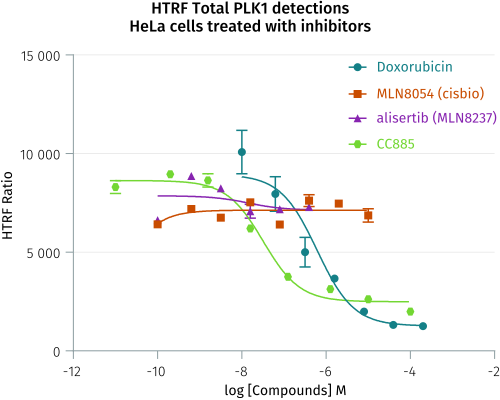
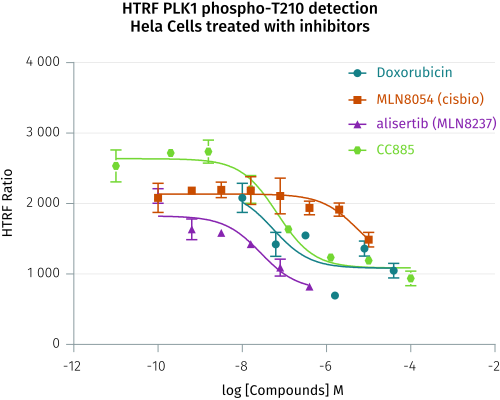
HeLa cells that express PLK1 were plated at 20,000 cells / well in a 96-well culture-treated plate in complete culture medium, and incubated overnight at 37°C, 5% CO2. Cells were co-treated with 200 nM of Nocozazole and increasing concentrations of the CHK1 activator Doxorubicin 8, the 2 AuroraA inhibitors MLN8054 & Alisertib, and the PROTAC compound CC885 for 16h at 37°C, 5% CO2. The medium was then removed, and the cells were lysed with 50 µl of supplemented lysis buffer #1 (1X) for 30 min at RT under gentle shaking.
After cell lysis, 16 µL of lysate were transferred into a 384-well low volume white microplate, and 4 µL of the HTRF Phospho PLK1 Thr210 or Total-PLK1 detection reagents were added. The HTRF signals were recorded after an overnight incubation at room temperature.
As expected, all of these compounds induced a decrease in PLK1 phosphorylation with different EC50: 54 nM for Doxorubicin, around 6 µM for MLN8054, 28 nM for Alisertib, and 68 nM for the PROTAC CC885.
Interestingly, the expression of PLK1 decreased in the same way for all the compounds except for MLN8054.
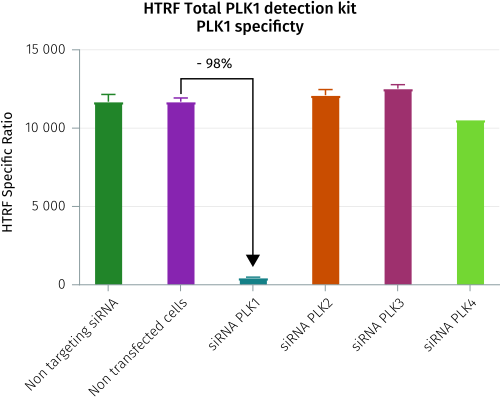
Specificity and selectivity of HTRF Total PLK1 assay using gene silencing (SiRNA)
HeLa cells were plated at 25,000 cells/well in a 96-well plate.
After an overnight incubation at 37°C, 5% CO2, the HAPI wt cells were treated with 25 nM of ON-TARGETplus siRNA (Horizon Discovery) specifically targeting PLK1, PLK2, PLK3, and PLK4, or with a non-targeting siRNA (included as a control). After an overnight incubation at 37°C, 5% CO2, the medium was changed for a complete culture medium, and then the cells were incubated for an additional 24h at 37°C.
After the incubation, the cells were lysed with 50 µL of supplemented lysis buffer #1 (1X), and 16 µL of lysates were transferred into a low volume white microplate before the addition of 4 µL of premixed HTRF Total PLK1 detection antibodies. The HTRF signal was recorded after an overnight incubation at RT.
Cell treatment with PLK1 SiRNA led to a significant downregulation of the Total PLK1 signal, with a 98% signal decrease compared to the cells transfected with the non-targeting SiRNA.
On the other hand, no decrease in signal was observed for cells treated with PLK2, PLK3, and PLK4 SiRNAs, demonstrating the specificity of the kit.
Validation on various Human and Mouse cell lines
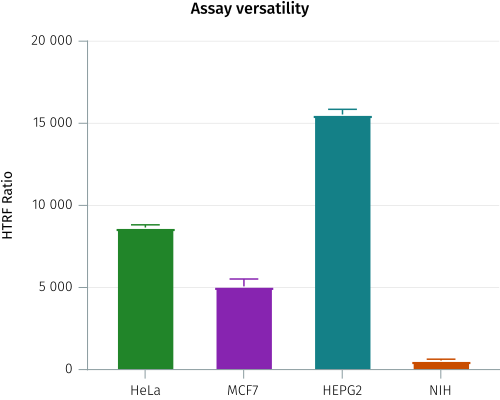
Adherent human & mouse cells HeLa, MCF7, Hep-G2, and NIH 3T3 were seeded at 25,000 cells / well in a 96-well microplate. After a 24H incubation, the cells were treated with 300 nM nocodazole for 16h at 37°C. The cells were then lysed with supplemented lysis buffer #1, and 16 µL of lysate were transferred into a 384-well low volume white microplate before the addition of 4 µL of the HTRF total PLK1 detection reagents. The HTRF signal was recorded after an overnight incubation.
The HTRF Total PLK1 assay efficiently detected PLK1 expression in various human cellular models expressing different levels of the protein but not in mouse cellular model.
HTRF Total PLK1 assay compared to Western Blot
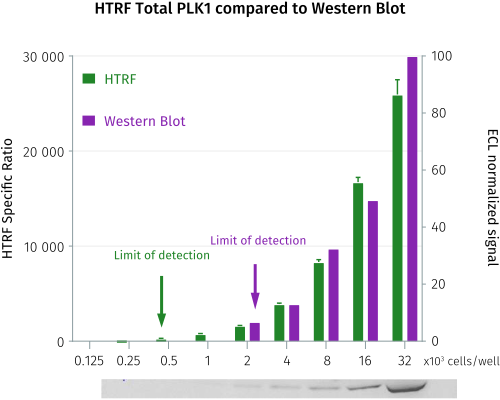
HeLa cells were cultured in a T175 flask in a complete culture medium for 24h at 37°C, 5% CO2. The cells were treated with 200 nM of Nocodazole compound for 16h at 37°C, 5% CO2. The cells were then lysed with 3 mL of supplemented lysis buffer #1 (1x) for 30 minutes at RT under gentle shaking.
Serial dilutions of the cell lysate were performed using supplemented lysis buffer #1 (1x), and 16 µL of each dilution were transferred into a low volume white microplate before the addition of 4 µL of HTRF Total PLK1 detection reagents.
Equal amounts of lysates were used for a side-by-side comparison between HTRF and Western Blot.
In these conditions, the HTRF Total PLK1 assay was 4 times more sensitive than the Western Blot technique.
Simplified pathway
PLK1 signaling pathway
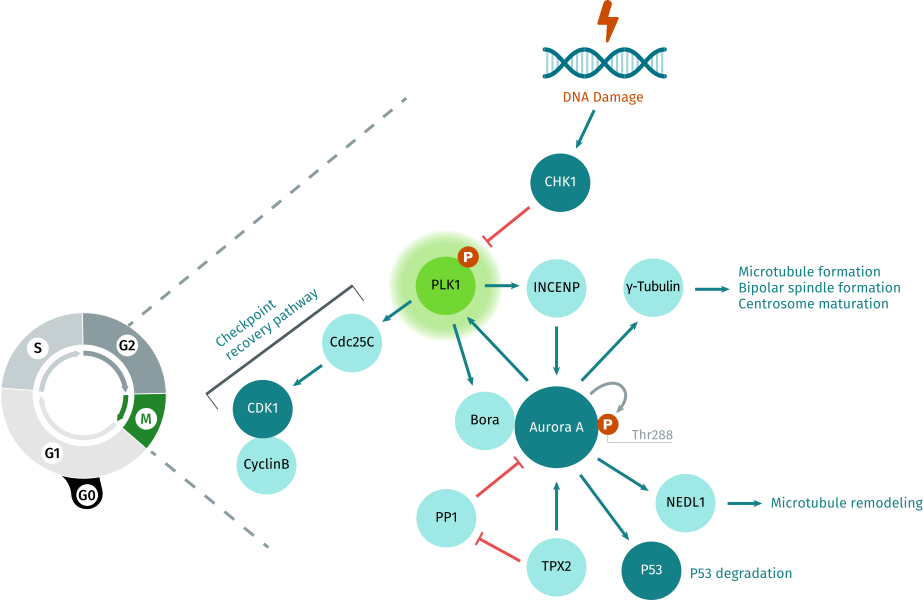
PLK1 for Polo-like kinase 1, has a key role in the progression of mitosis and recent evidence suggests its major involvement in regulating the G2/M checkpoint, in DNA damage and replication stress response, and in cell death pathways. The signaling mechanism is quite complex and involves several positive (Bora/AuroraA pathway) and negative feedback loops (CHK1/ATR or CHK2/ATM pathways). PLK1 activation for cell cycle regulation: PLK1 is activated by phosphorylation on Thr210 by AurA kinase. Then Activated PLK1 phosphorylates CDC25. In Autophagy/Apoptosis, PLK1 has been implicated in various cell death processes via various signaling pathways including mTOR, cmyc, and p53. Recently, new roles of PLK1 have been reported in literature. They concern its implication in the regulation of inflammation and immunological responses, including NFkB and RIG-I/MAV signaling. All these biological processes are altered in tumors and, considering that PLK1 is often found overexpressed in several tumor types, this overexpression is associated with poor patient prognosis. Consequently, its targeting has emerged as a promising anti-cancer therapeutic strategy.
Specifications
| Application |
Cell Signaling
|
|---|---|
| Automation Compatible |
Yes
|
| Brand |
HTRF
|
| Cellular or Signaling Pathway |
Cell cycle regulation
|
| Detection Modality |
HTRF
|
| Lysis Buffer Compatibility |
Lysis Buffer 1
Lysis Buffer 2
Lysis Buffer 3
Lysis Buffer 4
|
| Molecular Modification |
Total
|
| Product Group |
Kit
|
| Sample Volume |
16 µL
|
| Shipping Conditions |
Shipped in Dry Ice
|
| Target |
PLK1
|
| Target Class |
Phosphoproteins
|
| Target Species |
Human
|
| Technology |
TR-FRET
|
| Therapeutic Area |
cell_cycle_regulation
|
| Unit Size |
10,000 assay points
|
Video gallery
HTRF Human Total PLK1 Detection Kit, 10,000 Assay Points
Resources
Are you looking for resources, click on the resource type to explore further.

Guide
HTRF solutions, guide to major applications
This guide provides you an overview of HTRF applications in several therapeutic areas.
Loading...


How can we help you?
We are here to answer your questions.