
JP

Revvity Sites Globally
Select your location.
*e-commerce not available for this region.

HTRF cIAP1B3 Binding Kit, 500 Assay Points

HTRF cIAP1B3 Binding Kit, 500 Assay Points

Generic HTRF Ciap1 detection image
The cIAP1 BIR3 Binding Kit is designed to identify, characterize and profile compounds that bind to the BIR3 domain of the E3 ligase cIAP1 protein.
| Feature | Specification |
|---|---|
| Application | タンパク質間相互作用 |
| Sample Volume | 5 µL |
The cIAP1 BIR3 Binding Kit is designed to identify, characterize and profile compounds that bind to the BIR3 domain of the E3 ligase cIAP1 protein.
Product variants
Unit Size: 500 assay points
Part #:
64BDIAPB3PEG
Unit Size: 10,000 assay points
Part #:
64BDIAPB3PEH
For research use only. Not for use in diagnostic procedures. All products to be used in accordance with applicable laws and regulations including without limitation, consumption, and disposal requirements under European REACH regulations (EC 1907/2006).
HTRF cIAP1B3 Binding Kit, 500 Assay Points
Generic HTRF Ciap1 detection image
Loading...
Product information
Overview
A fast and easy way to identify and characterize new binders to cIAP1 protein targeting BIR3 domain.
cIAP1, also named BIRC2, is a member of the Inhibitor of Apoptosis Proteins (IAP) family. IAP proteins are involved in multiple biological processes, such as innate immunity and play an important role in apoptosis inhibition.
cIAP1 overexpression has been associated with cancer resistance, making it an attractive target in cancer therapy, where several therapeutic strategies are investigated such as SMAC mimetics. Moreover, cIAP1 displays E3 ligase activity and leads to targeted proteins ubiquitination and their subsequent degradation, such property being exploited through Proteolysis-targeting chimeras (PROTACs) strategy. Indeed, SNIPERs molecules (Specific and Non-genetic inhibitor of apoptosis protein [IAP]-dependent Protein Erasers) can induce the degradation of both the targeted proteins and IAPs and is expected to harness cancer cells killing.
Therefore, new compounds targeting cIAP1 which exhibit dual role i) inhibition of cIAP1 anti-apoptotic function and ii) induction of targeted protein degradation represent a promising therapeutic approach.
cIAP1, like other IAP family proteins, contains BIR domains which interact with IAP-binding motif of partners such as caspases. This interaction has been suggested to control pro- and anti-apoptotic activities.
cIAP1 compounds characterization on BIR2 and BIR3 domains enables accurate profiling and selectivity studies.
How it works
Assay principle
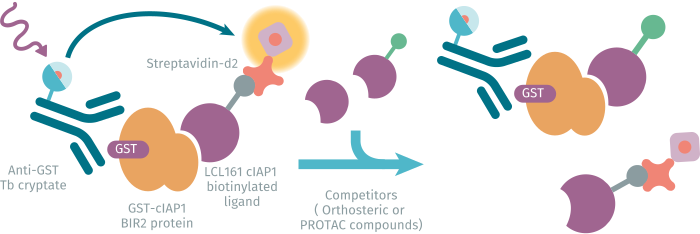
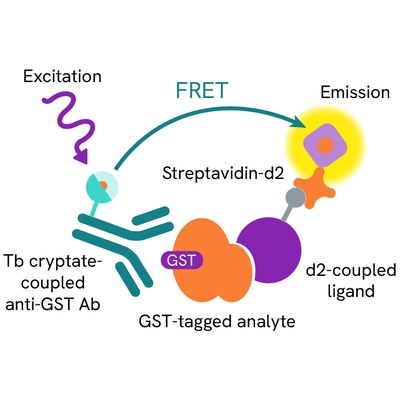
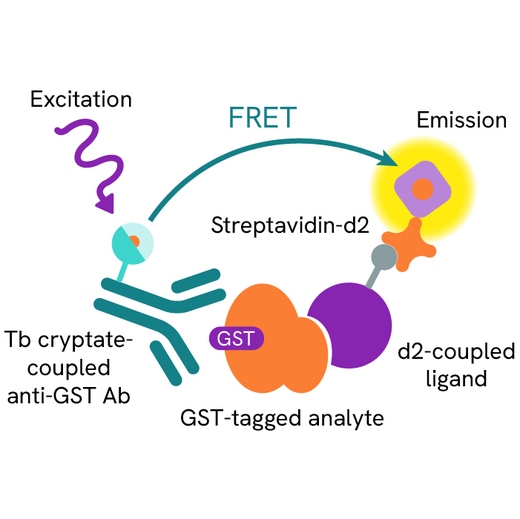
The HTRF cIAP1 BIR3 Binding Kit is a competitive assay format which uses LCL161 - Red Ligand as cIAP1 BIR3 ligand, a GST tagged human cIAP1 BIR3 binding domain, and an anti GST Terbium-labeled antibody. cIAP1 binding compounds compete with the LCL161 - Red Ligand and thereby prevent FRET from occurring.
Assay protocol
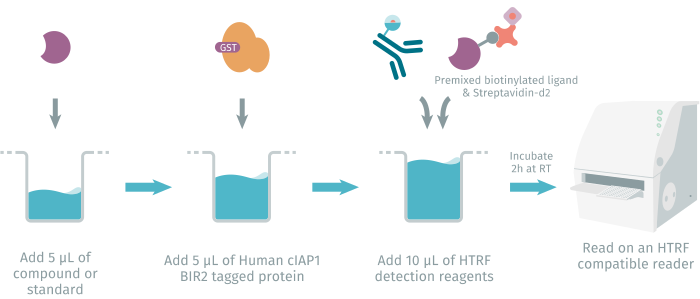
The cIAP1 BIR3 binding domain assay can be run in a 96- or 384-well low volume white plate (20 µL final). As described here, samples or standards are dispensed directly into the assay plate. The human GST-tagged cIAP1 BIR3 binding domain is then added, followed by the dispensing of the HTRF reagents: the anti GST antibody labeled with Terbium cryptate and the LCL161 - Red labeled with d2. The reagents labelled with HTRF fluorophores may be pre-mixed and added in a single dispensing step. No washing steps are needed. The protocol can be further miniaturized or upscaled by simply resizing each addition volume proportionally.
Assay validation
Screening of cIAP1 Orthosteric and PROTAC ligands
cIAP1 anti-cancer drugs either rely on SMAC mimetics (orthosteric cIAP1 compounds) or PROTAC/SNIPER compounds. These compounds have been shown to display lower binding affinity for BIR2 domain than for BIR3 domain or Full-length cIAP1 protein.
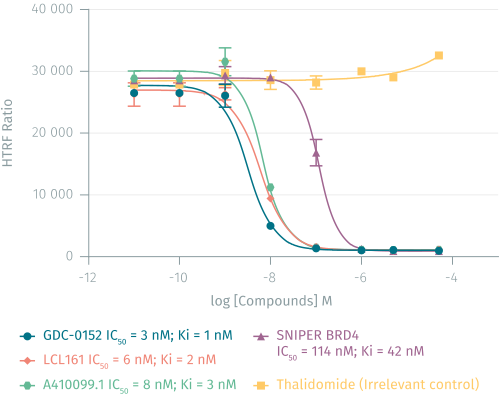
Figure 1 : Various cIAP1 compounds were characterized. Orthosteric compounds include LCL161 (assay standard), GDC-0152 and A4110099.1 and display similar Ki values in the nM range, demonstrating accurate determination of compounds’ potencies as well as pharmacological ranking for the cIAP1 BIR3 domain as expected. SNIPER-BRD4 compound (containing the cIAP1 LCL161 and the (+)-JQ-1 BRD4 ligand) shows potency around 100nM. An irrelevant compound Thalidomide (Cereblon E3 ligase orthosteric ligand) does not compete with the binding of cIAP1 fluorescent ligand, demonstrating the specificity of the kit for cIAP1 binders.
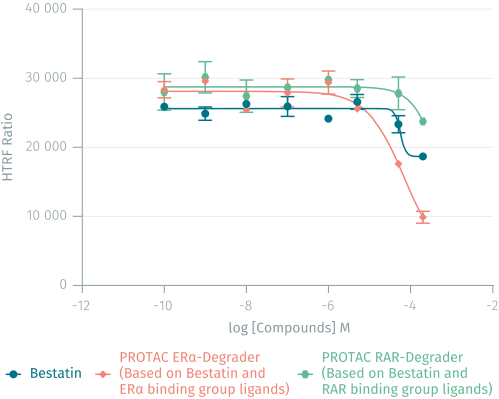
Figure 2 : Low affinity bestatin based PROTAC Compounds were tested. Bestatin is a cIAP1 orthosteric ligand known to display low binding affinity ranged between 100 µM – 1 mM. As expected Erα PROTAC Degrader and RAR PROTAC Degrader compounds, which include bestatin as cIAP1 Ligand, exhibit very low potencies with FRET competition detected from 100 µM.
Compounds profiling for cIAP1 BIR3 versus BIR2 domain
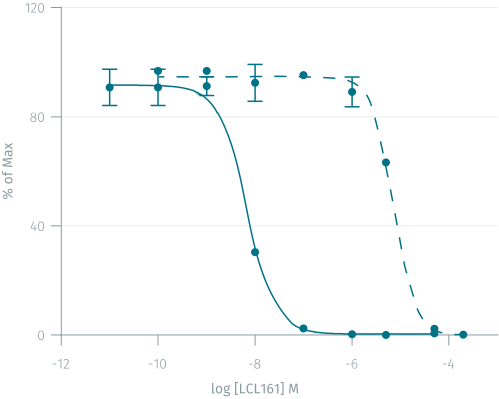
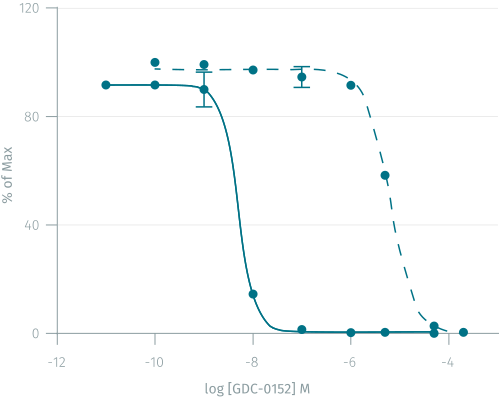
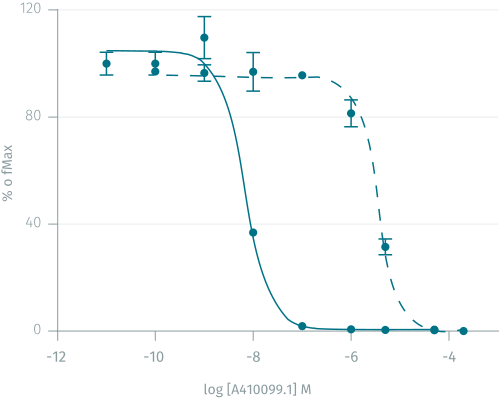
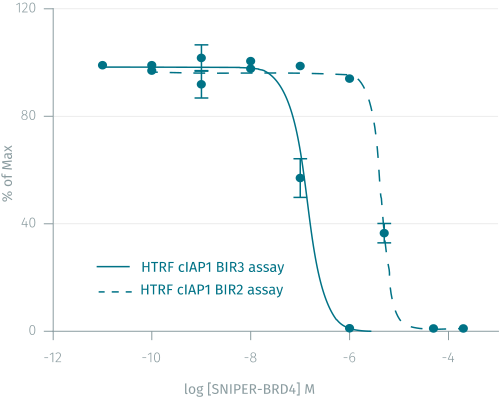
Various cIAP1 ligands were characterized. Orthosteric compounds : LCL161 (assay standard), GDC-0152 and A4110099.1 and SNIPER-BRD4 compound (containing the cIAP1 LCL161 and the (+)-JQ-1 BRD4 ligands) demonstrate expected selectivity profile for BIR3 (in the nM range) versus BIR2 domain (in the µM range).
DMSO effect on assay performance
Different percentages of DMSO were tested, from 0.4% to 2% (final per well). The results indicate that the assay window as well as the IC50 do not change significantly with the increasing percentages of DMSO (at least 2% final).
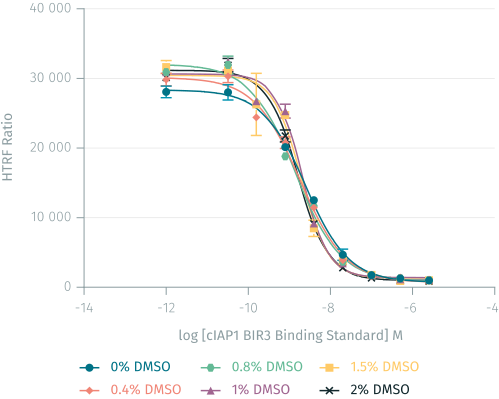
| DMSO effect on the cIAP1 BIR3 Binding Assay | ||||||
|---|---|---|---|---|---|---|
|
% DMSO in final assay volume (20 µl) |
0% | 0.4% | 0.8% | 1% | 1.5% | 2% |
|
% DMSO in compound working solution (5 µl) |
0% | 1.6% | 3.2% | 4% | 6% | 8% |
| IC50 (nM) | 2.5 | 1.8 | 1.4 | 2.0 | 2.0 | 1.7 |
Specifications
| Application |
Protein-Protein Interaction
|
|---|---|
| Automation Compatible |
Yes
|
| Brand |
HTRF
|
| Detection Modality |
HTRF
|
| Product Group |
Kit
|
| Sample Volume |
5 µL
|
| Shipping Conditions |
Shipped in Dry Ice
|
| Target |
cIAP1B3
|
| Target Class |
Binding Assay
|
| Technology |
TR-FRET
|
| Therapeutic Area |
Inflammation
Neuroscience
Oncology & Inflammation
|
| Unit Size |
500 assay points
|
Video gallery
HTRF cIAP1B3 Binding Kit, 500 Assay Points
Resources
Are you looking for resources, click on the resource type to explore further.

Flyer
HTRF and AlphaLISA solutions for targeted protein degradation
Uncover protein degradation mechanisms with our no-wash assay platforms

Brochure
HTRF assays and reagents product list
Discover the versatility and precision of Homogeneous Time-Resolved Fluorescence (HTRF) technology. Our HTRF portfolio offers a...

Guide
HTRF solutions, guide to major applications
This guide provides you an overview of HTRF applications in several therapeutic areas.
Flyer
Reagent solutions for targeted protein degradation
Proteolysis Targeting Chimaeras (PROTACs) are innovative small molecules that revolutionize drug discovery. They consist of two...
Loading...


How can we help you?
We are here to answer your questions.