
JP

Revvity Sites Globally
Select your location.
*e-commerce not available for this region.



AlphaLISA Anti-Human IgG4 Acceptor Beads, 250 µg
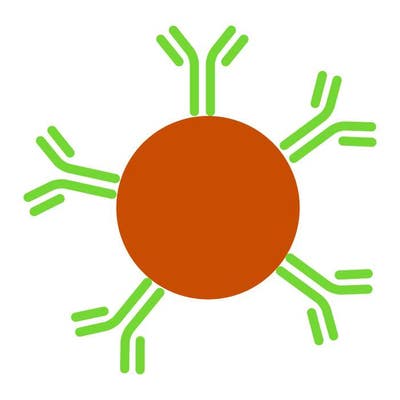

AlphaLISA Anti-Human IgG4 Acceptor Beads, 250 µg
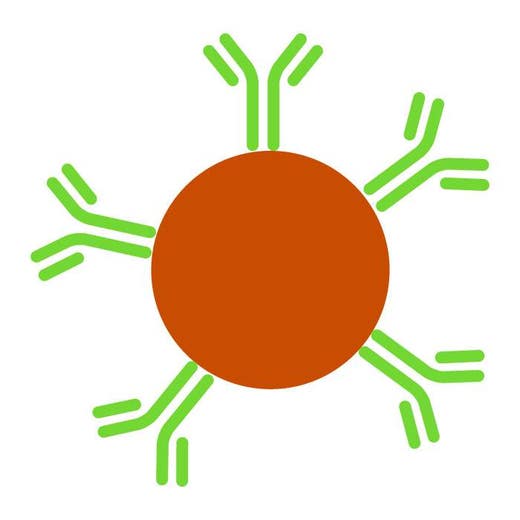

AlphaLISA Acceptor Bead Antibody Coated
AlphaLISA™ Acceptor beads conjugated to anti-human IgG4. These beads can be used in conjunction with Alpha Donor beads to create AlphaLISA no-wash assays for antibody binding studies, pharmacokinetics (PK), or detection of human IgG4 in different sample matrices, including monkey serum.
| Feature | Specification |
|---|---|
| Application | タンパク質間相互作用 |
AlphaLISA™ Acceptor beads conjugated to anti-human IgG4. These beads can be used in conjunction with Alpha Donor beads to create AlphaLISA no-wash assays for antibody binding studies, pharmacokinetics (PK), or detection of human IgG4 in different sample matrices, including monkey serum.
Product variants
Unit Size: 250 µg
Part #:
AL142C
Unit Size: 5 mg
Part #:
AL142M
Unit Size: 25 mg
Part #:
AL142R
For research use only. Not for use in diagnostic procedures. All products to be used in accordance with applicable laws and regulations including without limitation, consumption, and disposal requirements under European REACH regulations (EC 1907/2006).
AlphaLISA Anti-Human IgG4 Acceptor Beads, 250 µg
AlphaLISA Acceptor Bead Antibody Coated
Loading...
Product information
Overview
An AlphaLISA assay using these Acceptor beads allows the detection of human IgG4 in buffer, cell culture media, serum and plasma in a highly sensitive, quantitative, reproducible and user-friendly mode. These beads (along with a suitable Donor bead) permit antibody binding studies or detection of human IgG4 in different sample matrices, including monkey serum.
In a typical AlphaLISA assay, 1 mg of Acceptor beads is sufficient to run 1,000-2,000 wells using a 50 µL reaction volume.
Features:
- No-wash steps, no separation steps
- Ease-of-use: few addition steps, fast assay development
- Broad range of affinities: detect strong or weak interactions, from pM to mM affinity
- Distance: measure very large protein or antibody complexes – spanning up to 200 nm or more
- High avidity: multiple binding sites on each bead enables use of nanomolar concentrations of antibodies or proteins, as well as use of low affinity binders
Immunoglobulin G (IgG), a major effector molecule of the humoral immune response, accounts for about 75% of the total immunoglobulins in plasma of healthy individuals whereas IgM, IgA, IgD and IgE, each of which has characteristic properties and functions, constitute the remaining 25%. The basic IgG molecule has a four-chain structure, comprising two identical heavy (H) chains and two identical light (L) chains, linked together by inter-chain disulfide bonds. Four IgG subclasses have been identified: IgG1, IgG2, IgG3 and IgG4. Biotherapeutic antibody drugs, usually IgG1 or IgG4 molecules, are becoming increasingly important to treat debilitating diseases such as cancer and autoimmune disorders. Drug levels need to be accurately measured at various stages of drug development, including early antibody discovery, preclinical research in animals, and commercial manufacturing.
AlphaScreen® and AlphaLISA™ are bead-based assay technologies used to study biomolecular interactions in a microplate format. The acronym """"Alpha"""" stands for amplified luminescent proximity homogeneous assay. As the name implies, some of the key features of these technologies are that they are non-radioactive, homogeneous proximity assays. Binding of molecules captured on the beads leads to an energy transfer from one bead to the other, ultimately producing a luminescent/fluorescent signal. To understand how a signal is produced, one must begin with an understanding of the beads. AlphaScreen and AlphaLISA assays require two bead types: Donor beads and Acceptor beads. Each bead type contains a different proprietary mixture of chemicals, which are key elements of the AlphaScreen technology. Donor beads contain a photosensitizer, phthalocyanine, which converts ambient oxygen to an excited and reactive form of O2, singlet oxygen, upon illumination at 680 nm. Please note that singlet oxygen is not a radical; it is molecular oxygen with a single excited electron. Like other excited molecules, singlet oxygen has a limited lifetime prior to falling back to ground state. Within its 4 µsec half-life, singlet oxygen can diffuse approximately 200 nm in solution. If an Acceptor bead is within that proximity, energy is transferred from the singlet oxygen to thioxene derivatives within the Acceptor bead, subsequently culminating in light production at 520-620 nm (AlphaScreen) or at 615 nm (AlphaLISA). In the absence of an Acceptor bead, singlet oxygen falls to ground state and no signal is produced. This proximity-dependent chemical energy transfer is the basis for AlphaScreen's homogeneous nature.
Specifications
| Application |
Protein-Protein Interaction
|
|---|---|
| Automation Compatible |
Yes
|
| Bead Type or Material |
AlphaLISA Acceptor
|
| Brand |
AlphaLISA
|
| Conjugates |
Anti-human IgG4
|
| Detection Modality |
Alpha
|
| Host Species |
Human
|
| Product Group |
Beads
|
| Shipping Conditions |
Shipped in Blue Ice
|
| Target |
IgG4
|
| Target Class |
Biologics
|
| Target Species |
Human
|
| Technology |
Alpha
|
| Unit Size |
250 µg
|
Video gallery
AlphaLISA Anti-Human IgG4 Acceptor Beads, 250 µg
Resources
Are you looking for resources, click on the resource type to explore further.

Application Note
Biochemical binding ADCC assays utilizing AlphaLISA toolbox reagents for the characterization of hIgGs and FcγR1A
Fc Gamma Receptors (FcγRs) are critical for the function of therapeutic antibodies and mediate many effector functions.
Therapeutic...
Loading...


How can we help you?
We are here to answer your questions.