
Revvity Sites Globally
Select your location.
*e-commerce not available for this region.

AlphaLISA SureFire Ultra Human Total IκKβ Detection Kit, 500 Assay Points

 View All
AlphaLISA SureFire Ultra Human Total IκKβ Detection Kit, 500 Assay Points


AlphaLISA Surefire Ultra Total Protein
The AlphaLISA™ SureFire® Ultra™ Human Total IKKβ assay is a sandwich immunoassay for quantitative detection of total IKKβ in cellular lysates using Alpha Technology.
| Feature | Specification |
|---|---|
| Application | 細胞シグナル伝達 |
| Protocol Time | 2h at RT |
| Sample Volume | 10 µL |
The AlphaLISA™ SureFire® Ultra™ Human Total IKKβ assay is a sandwich immunoassay for quantitative detection of total IKKβ in cellular lysates using Alpha Technology.
Product variants
Unit Size: 500 assay points
Part #:
ALSU-TIKKB-A500
Unit Size: 10,000 assay points
Part #:
ALSU-TIKKB-A10K
Unit Size: 50,000 assay points
Part #:
ALSU-TIKKB-A50K
Unit Size: 100 assay points
Part #:
ALSU-TIKKB-A-HV
For research use only. Not for use in diagnostic procedures. All products to be used in accordance with applicable laws and regulations including without limitation, consumption, and disposal requirements under European REACH regulations (EC 1907/2006).
AlphaLISA SureFire Ultra Human Total IκKβ Detection Kit, 500 Assay Points
AlphaLISA Surefire Ultra Total Protein
Loading...
Product information
Overview
Inhibitor of nuclear factor kappa-B kinase subunit β (IKKβ) is a protein subunit of IkB kinase, which is an enzyme complex involved in propagating cellular response to inflammation. Activated IKKβ phosphorylates IkBα, preventing IkBα from inhibiting NF-kB which then frees NF-kB and allows it to enter the nucleus of the cell, where it activates various genes involved in inflammation and other immune responses. The IKKβ signaling pathway is associated with numerous therapeutic areas, including diseases such as multiple sclerosis, rheumatoid arthritis, psoriasis, and many types of cancers.
The AlphaLISA SureFire Ultra Human Total IKKβ Detection Kit is a sandwich immunoassay for the quantitative detection of total IKKβ in cellular lysates, using Alpha Technology.
Formats:
- The HV (high volume) kit contains reagents to run 100 wells in 96-well format, using a 60 μL reaction volume.
- The 500-point kit contains enough reagents to run 500 wells in 384-well format, using a 20 μL reaction volume.
- The 10,000-point kit contains enough reagents to run 10,000 wells in 384-well format, using a 20 μL reaction volume.
- The 50,000-point kit contains enough reagents to run 50,000 wells in 384-well format, using a 20 μL reaction volume.
AlphaLISA SureFire Ultra kits are compatible with:
- Cell and tissue lysates
- Antibody modulators
- Biotherapeutic antibodies
Alpha SureFire kits can be used for:
- Cellular kinase assays
- Receptor activation studies
- Screening
How it works
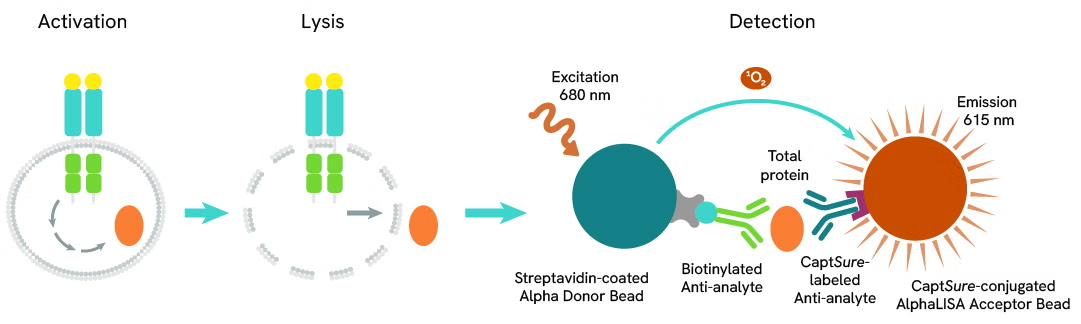
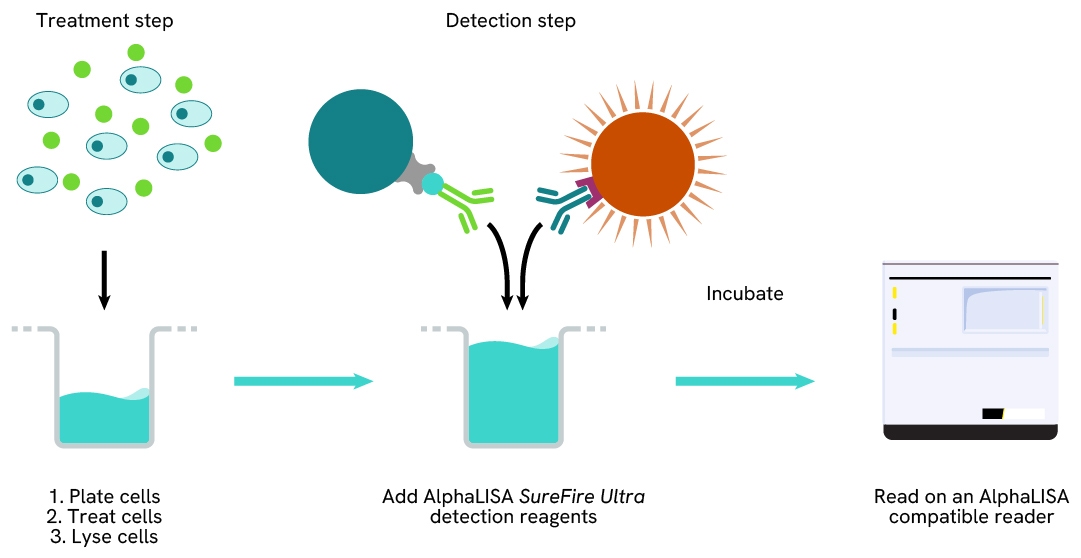
Total-AlphaLISA SureFire Ultra assay principle
The Total-AlphaLISA SureFire Ultra assay measures the expression level of a target protein in a biological sample (e.g. cell lysate).
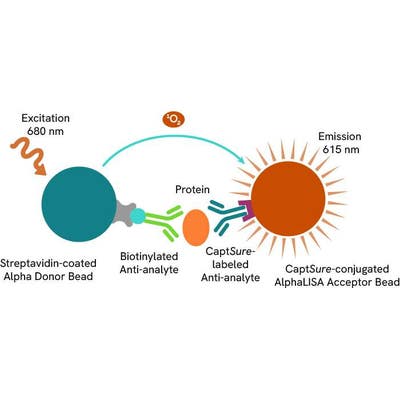
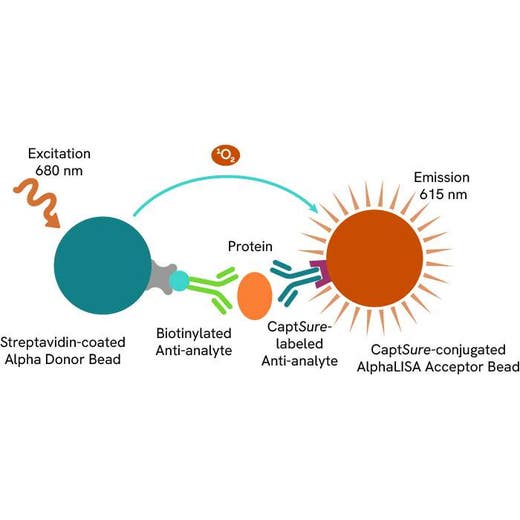
The Total-AlphaLISA SureFire Ultra assay uses two antibodies which recognize two different distal epitopes on the target protein. AlphaLISA assays require two bead types: Acceptor and Donor Beads. Acceptor Beads are coated with a proprietary CaptSure™ agent to specifically immobilize the assay specific antibody, labeled with a CaptSure tag. Donor Beads are coated with streptavidin to capture one of the detection antibodies, which is biotinylated. In the presence of target protein, the two antibodies bring the Donor and Acceptor Beads in close proximity whereby the singlet oxygen transfers energy to excite the Acceptor Bead, allowing for the generation of a luminescent Alpha signal. The amount of light emission is directly proportional to the quantity of protein present in the sample.
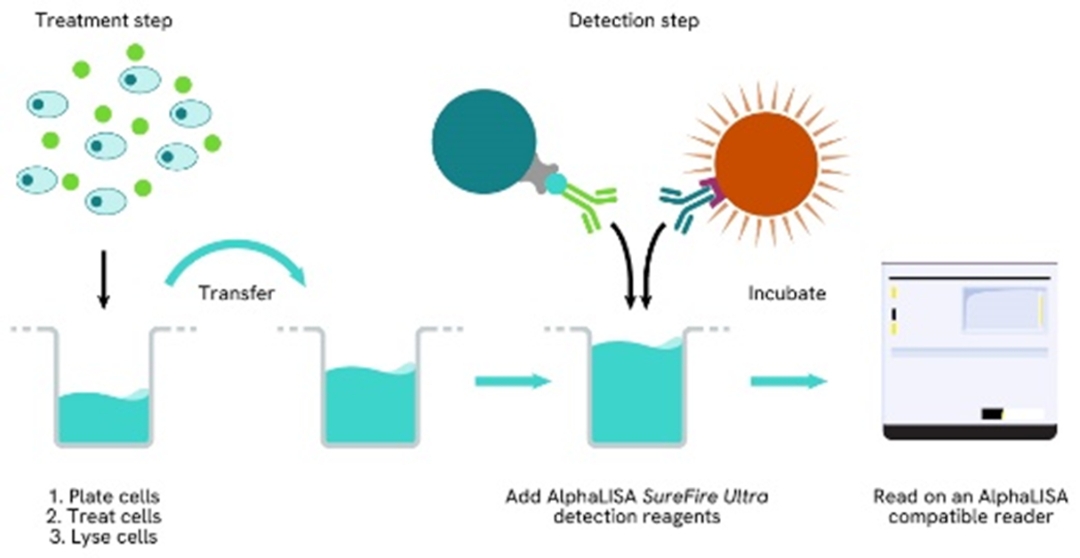
Total-AlphaLISA SureFire Ultra two-plate assay protocol
The two-plate protocol involves culturing and treating the cells in a 96-well plate before lysis, then transferring lysates into a 384-well OptiPlate™ plate before the addition of Total-AlphaLISA SureFire Ultra detection reagents. This protocol enables cell viability and confluence to be monitored. In addition, lysates from a single well can be used to measure multiple targets.
Total-AlphaLISA SureFire Ultra one-plate assay protocol
Detection of Total target protein with AlphaLISA SureFire Ultra reagents can be performed in a single plate used for culturing, treatment, and lysis. No washing steps are required. This HTS designed protocol allows for miniaturization while maintaining robust AlphaLISA SureFire Ultra quality.
Assay validation
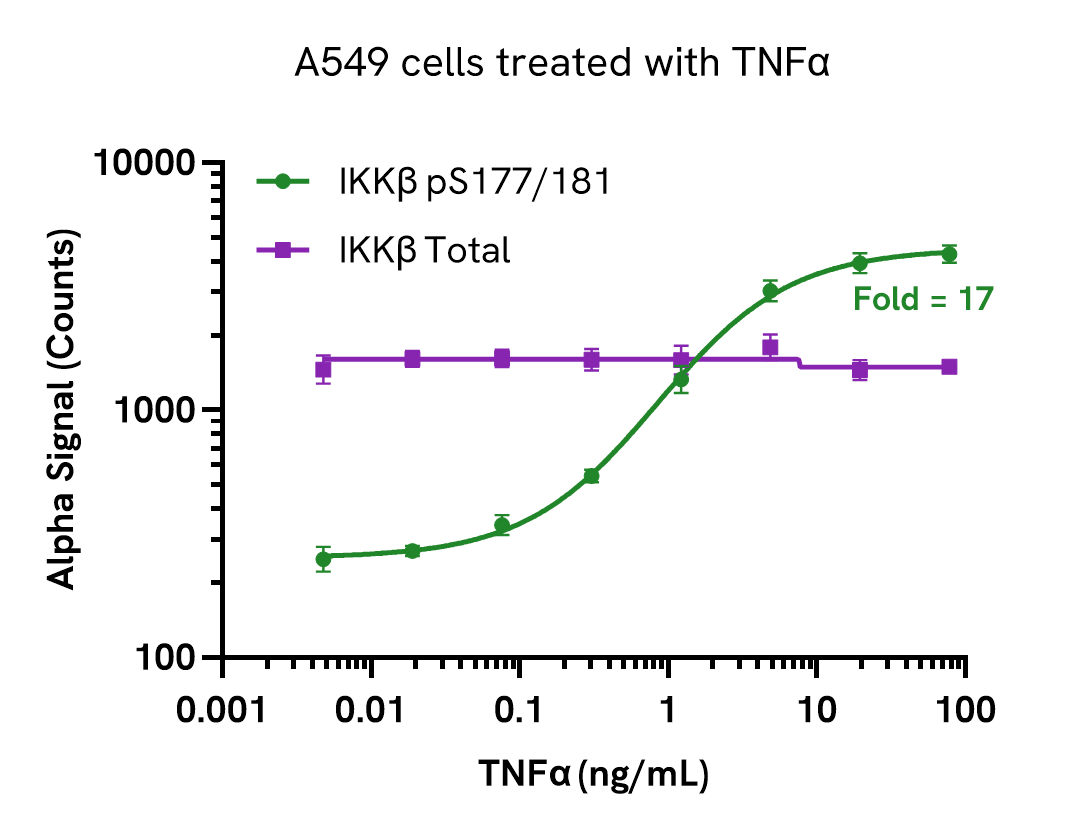
Induction of IKKb phosphorylation in TNFα treated cells
A549 cells were seeded in a 96-well plate (40,000 cells/well) in complete medium and incubated overnight at 37°C, 5% CO2. The cells were treated with increasing concentrations of TNFα for 10 minutes.
After treatment, the cells were lysed with 100 µL of Lysis Buffer for 10 minutes at RT with shaking (350 rpm). IKKβ Total and Phospho (Ser177/181) levels were evaluated using respective AlphaLISA SureFire Ultra assays. For the detection step, 10 µL of cell lysate (approximately 4,000 cells) was transferred into a 384-well white OptiPlate, followed by 5 µL of Acceptor mix and incubated for 1 hour at RT. Finally, 5 µL of Donor mix was then added to each well and incubated for 1 hour at RT in the dark. The plate was read on an Envision using standard AlphaLISA settings.
As expected, TNFα triggered a dose-dependent increase in the levels of Phospho (Ser177/181) IKKβ while Total levels remained unchanged.
Assay specificity/selectivity
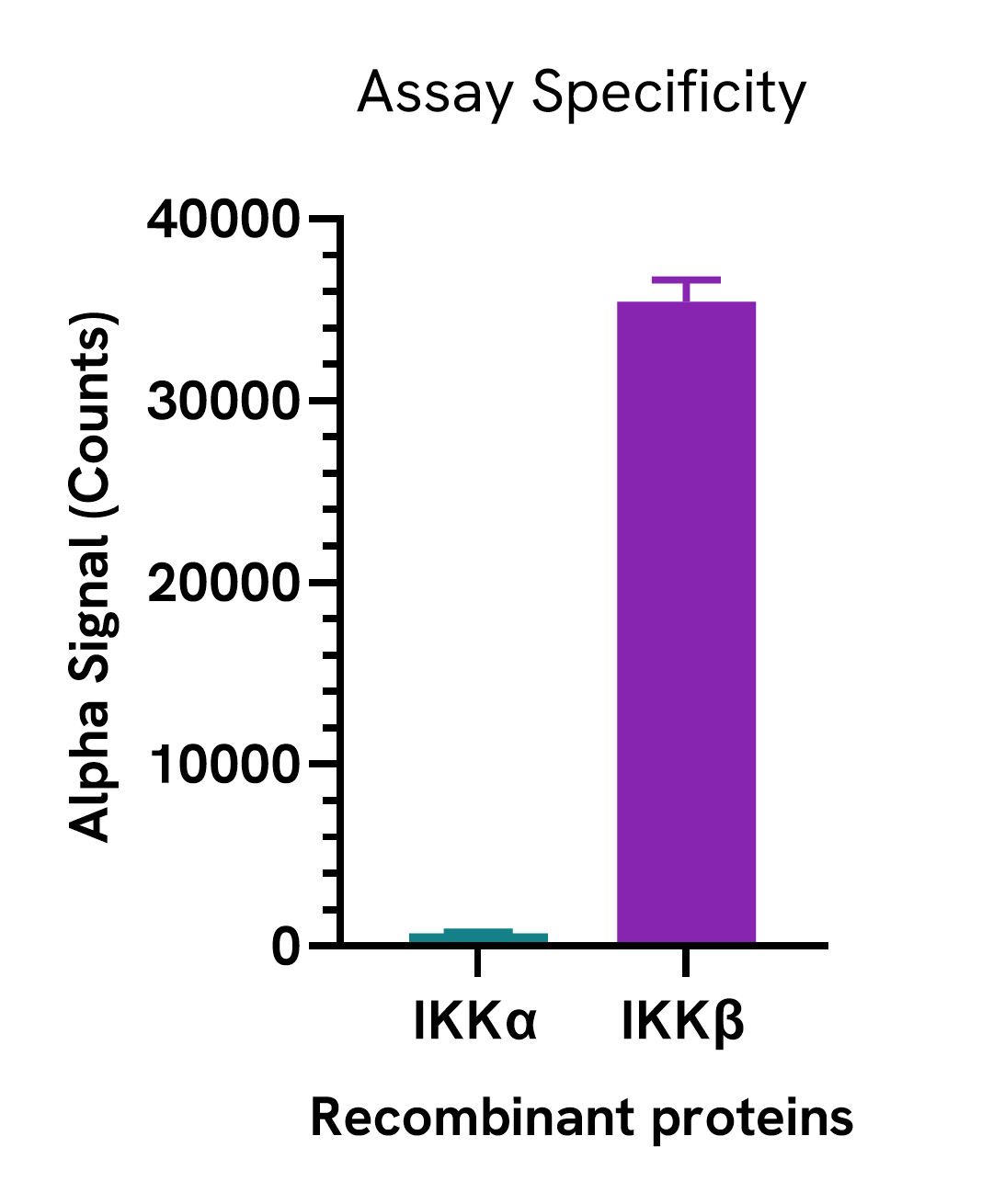
Specificity of the Phospho IKKβ assay
Specificity of the Total IKKβ assay was assessed by evaluating recombinant IKKα (Abcam, ab102103) and IKKβ (Millipore, 14-485) active recombinant proteins.
Both proteins were prepared at 15 ng/ml in Lysis Buffer, and IKKβ Total signal was evaluated using the AlphaLISA SureFire Ultra assay. For the detection step, 10 µL of protein was transferred into a 384-well white OptiPlate, followed by 5 µL of Acceptor mix and incubated for 1 hour at room temperature. Finally, 5 µL of Donor mix was then added to each well and incubated for 1 hour at RT in the dark. The plate was read on an Envision using standard AlphaLISA settings.
IKKβ Total signal was only detected with IKKβ recombinant protein demonstrating assay specificity.
Assay versatility
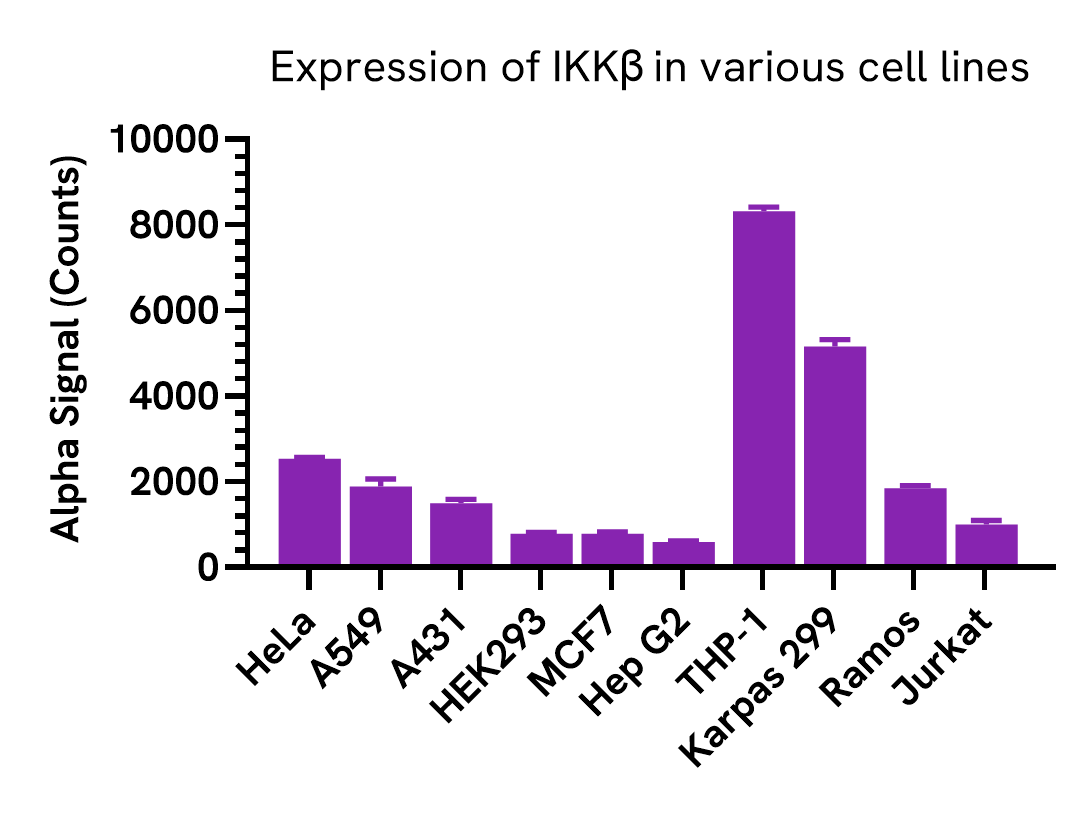
Expression of IKKβ in various cell lines
Adherent cells were grown to confluency in a T175 flask complete medium and were lysed with Lysis Buffer at a density of 1 x 10⁶ cells/mL. Suspension cells were harvested then washed in HBSS and lysed with Lysis Buffer at a density of 3.2 x 10⁶ cells/mL.
IKKβ Total levels were evaluated by AlphaLISA SureFire Ultra. For the detection step, 10 µL of cell lysate (5,000 adherent and 15,000 suspension) were transferred into a 384-well white OptiPlate, followed by 5 µL of Acceptor Mix and incubated for 1 hour at RT. Finally, 5 µL of Donor Mix was then added to each well and incubated for 1 hour at RT in the dark. The plate was read on an Envision using standard AlphaLISA settings.
As expected, IKKβ is expressed in a wide range of cell types.
Assay sensitivity
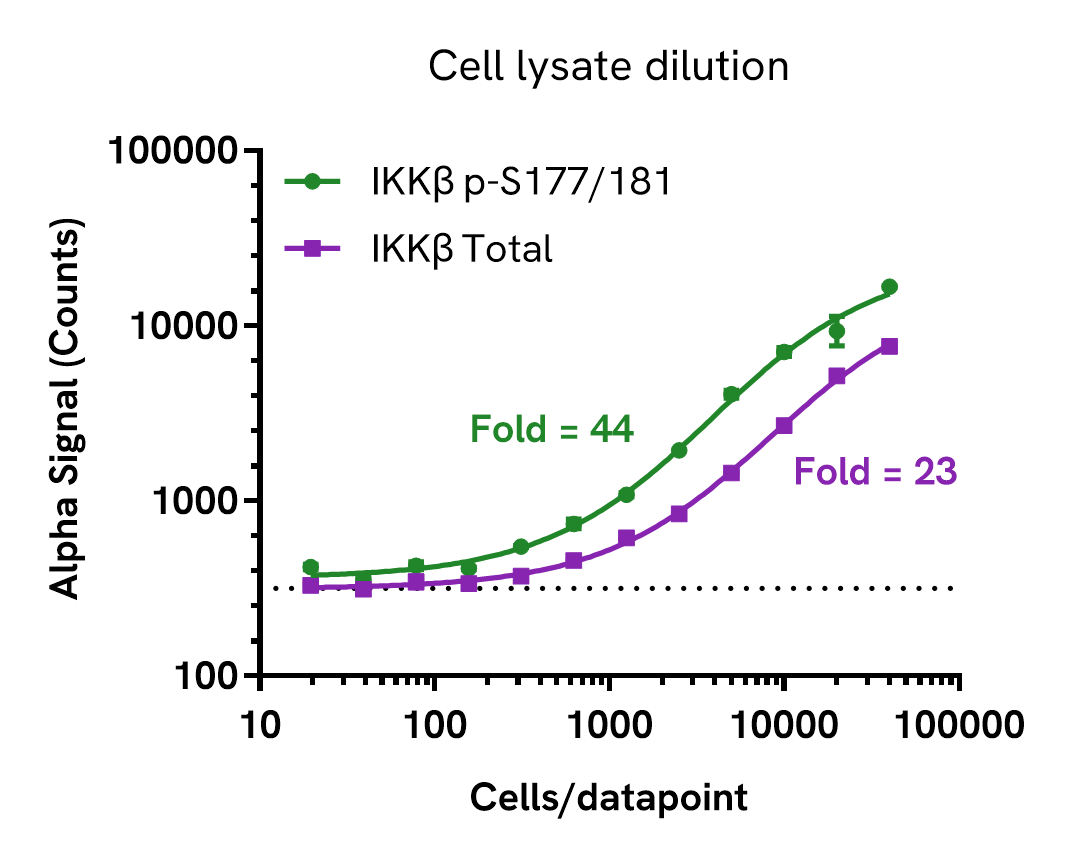
Assay sensitivity - cell lysate dilution
Cell lysate was prepared from Karpas 299 cells resuspended in HBSS and treated with 2 ng/mL IL-1β for 5 minutes and lysed with 5X Lysis Buffer at a final cell density of 8 x 10⁶ cells/mL for 10 minutes at RT with shaking.
Lysate was serially diluted in Lysis Buffer and IKKβ Total and Phospho (S177/181) levels were evaluated by AlphaLISA SureFire Ultra. For the detection step, 10 µL of lysate was transferred into a 384-well white OptiPlate, followed by 5 µL of Acceptor mix and incubated for 1 hour at room temperature. Finally, 5 µL of Donor mix was then added to each well and incubated for 1 hour at RT in the dark. The plate was read on an Envision using standard AlphaLISA settings.
Approximate number of cells per datapoint is indicated. The dotted line represents assay background. The assay can detect IKKβ expression in less than 2,500 cells/datapoint.
Specifications
| Application |
Cell Signaling
|
|---|---|
| Automation Compatible |
Yes
|
| Brand |
AlphaLISA SureFire Ultra
|
| Cellular or Signaling Pathway |
NF-κB signaling
|
| Detection Modality |
Alpha
|
| Lysis Buffer Compatibility |
Lysis Buffer
|
| Molecular Modification |
Total
|
| Product Group |
Kit
|
| Protocol Time |
2h at RT
|
| Sample Volume |
10 µL
|
| Shipping Conditions |
Shipped in Blue Ice
|
| Target |
IκKβ
|
| Target Class |
Phosphoproteins
|
| Target Species |
Human
|
| Technology |
Alpha
|
| Unit Size |
500 assay points
|
Video gallery
AlphaLISA SureFire Ultra Human Total IκKβ Detection Kit, 500 Assay Points
Resources
Are you looking for resources, click on the resource type to explore further.

Application Note
Characterizing chemokine receptor inhibitors with AlphaLISA SureFire Ultra, Alpha SureFire Ultra Multiplex and LANCE Ultra cAMP assays
The measurement of protein phosphorylation is a useful tool for measuring the modulation of receptor activation by both antibodies...
Loading...


How can we help you?
We are here to answer your questions.