
Revvity Sites Globally
Select your location.
*e-commerce not available for this region.

AlphaLISA SureFire Biotin-Free Human and Mouse Total KAT7 Detection Kit, 100 Assay Points
AlphaLISA SureFire Biotin-Free Human and Mouse Total KAT7 Detection Kit, 100 Assay Points
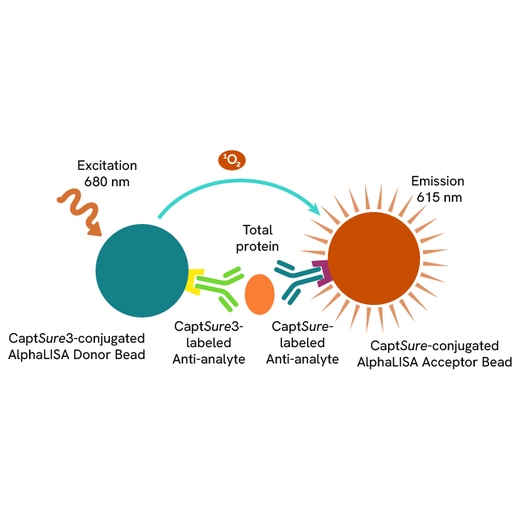
AlphaLISA SureFire Biotin Free Total Kit Schematic
The AlphaLISA™ SureFire® Biotin-Free Human and Mouse Total KAT7 assay is a sandwich immunoassay for quantitative detection of total KAT7 in cellular lysates using Alpha Technology.
| Feature | Specification |
|---|---|
| Application | 細胞シグナル伝達 |
| Protocol Time | 2h at RT |
| Sample Volume | 30 µL |
The AlphaLISA™ SureFire® Biotin-Free Human and Mouse Total KAT7 assay is a sandwich immunoassay for quantitative detection of total KAT7 in cellular lysates using Alpha Technology.
Product variants
Unit Size: 100 Assay Points
Part #:
ASBF-TKAT7-A-HV
Unit Size: 500 Assay Points
Part #:
ASBF-TKAT7-A500
Unit Size: 10,000 Assay Points
Part #:
ASBF-TKAT7-A10K
Unit Size: 50,000 Assay Points
Part #:
ASBF-TKAT7-A50K
For research use only. Not for use in diagnostic procedures. All products to be used in accordance with applicable laws and regulations including without limitation, consumption and disposal requirements under European REACH regulations (EC 1907/2006).
AlphaLISA SureFire Biotin-Free Human and Mouse Total KAT7 Detection Kit, 100 Assay Points
AlphaLISA SureFire Biotin Free Total Kit Schematic
Loading...
Product information
Overview
KAT7 (Lysine Acetyltransferase 7), also known as HBO1 (Histone Acetyltransferase Binding to ORC1), is a histone acetyltransferase (HAT) that catalyzes the acetylation of histone H3 and H4 at multiple lysine residues, including H3K14, H3K23, H4K5, H4K8, and H4K12. KAT7 is a member of the MYST family of HATs and plays crucial roles in regulating chromatin structure, gene expression, and DNA replication. KAT7-mediated acetylation of histones promotes an open, transcriptionally active chromatin state by weakening histone-DNA interactions and recruiting bromodomain-containing chromatin readers. KAT7 is essential for embryonic development, stem cell maintenance, and cell cycle progression, and its dysregulation has been implicated in the pathogenesis of various cancers. KAT7 functions as a transcriptional coactivator for key developmental regulators and cell cycle genes, and its aberrant activity contributes to the uncontrolled proliferation and genomic instability characteristic of cancer cells. Pharmacological inhibition of KAT7 is an active area of investigation for the treatment of KAT7-driven malignancies.
The AlphaLISA SureFire Biotin-Free Human and Mouse Total KAT7 Detection Kit is a sandwich immunoassay for the quantitative detection of total KAT7 in cellular lysates, using Alpha Technology.
Formats:
- The HV (high volume) kit contains reagents to run 100 wells in 96-well format, using a 60 μL reaction volume.
- The 500-point kit contains enough reagents to run 500 wells in 384-well format, using a 20 μL reaction volume.
- The 10,000-point kit contains enough reagents to run 10,000 wells in 384-well format, using a 20 μL reaction volume.
- The 50,000-point kit contains enough reagents to run 50,000 wells in 384-well format, using a 20 μL reaction volume.
AlphaLISA SureFire Biotin Free kits are compatible with:
- Cell and tissue lysates
- Antibody modulators
- Biotherapeutic antibodies
- Biotin rich samples
AlphaLISA SureFire Biotin Free kits can be used for:
- Cellular kinase assays
- Receptor activation studies
- High-throughput screening for preclinical studies
How it works
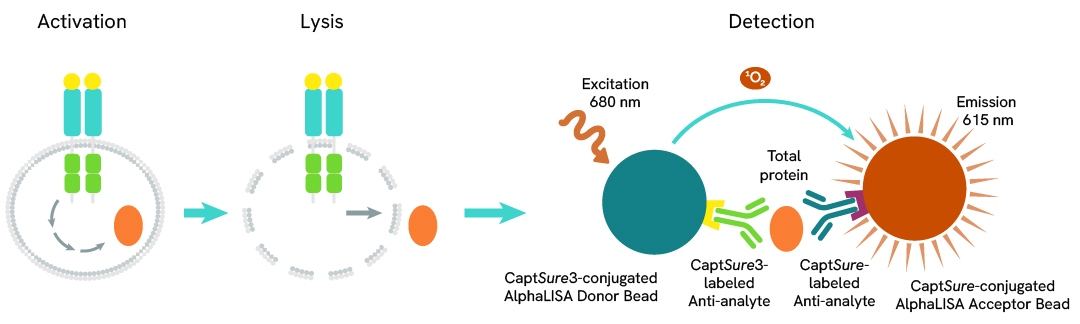
Total-AlphaLISA SureFire Biotin Free assay principle
The Total-AlphaLISA SureFire Biotin Free assay measures the expression level of a target protein in a biological sample (e.g. cell lysate).
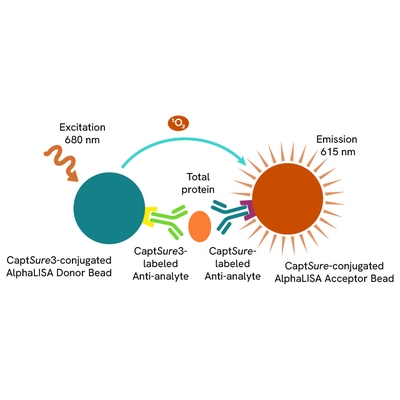
The Total-AlphaLISA SureFire Biotin Free assay uses two antibodies which recognize two different distal epitopes on the target protein. AlphaLISA assays require two bead types: Acceptor and Donor Beads. Acceptor Beads are coated with a proprietary CaptSure™ agent to specifically immobilize the assay specific antibody, labeled with a CaptSure tag. Donor Beads are coated with a proprietary CaptSure3 agent to capture one of the detection antibodies, which is labeled with the CaptSure3 tag. In the presence of target protein, the two antibodies bring the Donor and Acceptor Beads in close proximity whereby the singlet oxygen transfers energy to excite the Acceptor Bead, allowing for the generation of a luminescent Alpha signal. The amount of light emission is directly proportional to the quantity of protein present in the sample.
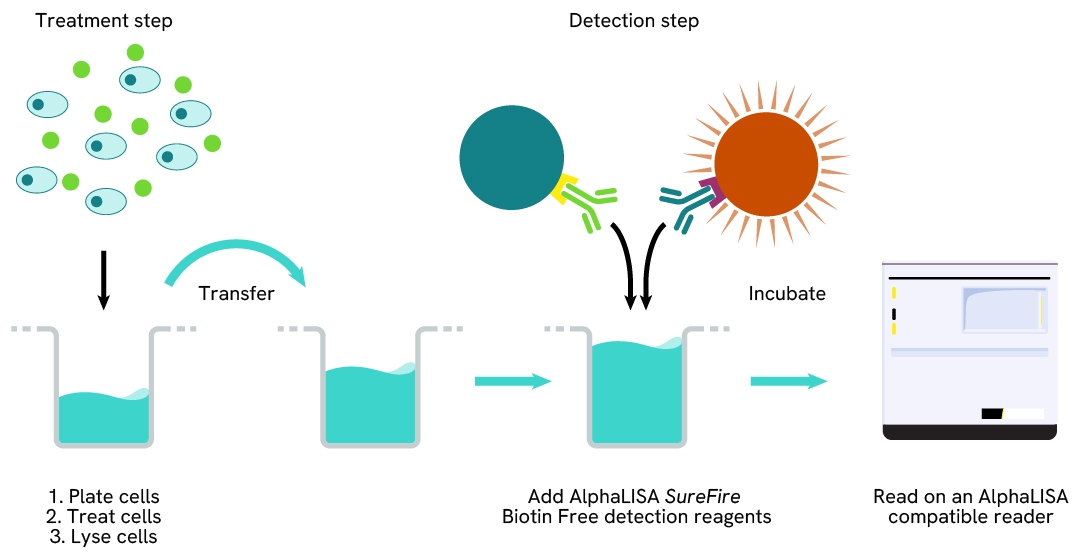
Total-AlphaLISA SureFire Biotin Free two-plate assay protocol
The two-plate protocol involves culturing and treating the cells in a 96-well plate before lysis, then transferring lysates into a 384-well OptiPlate™ plate before the addition of Total-AlphaLISA SureFire Biotin Free detection reagents. This protocol enables cell viability and confluence to be monitored. In addition, lysates from a single well can be used to measure multiple targets.
Total-AlphaLISA SureFire Biotin Free one-plate assay protocol
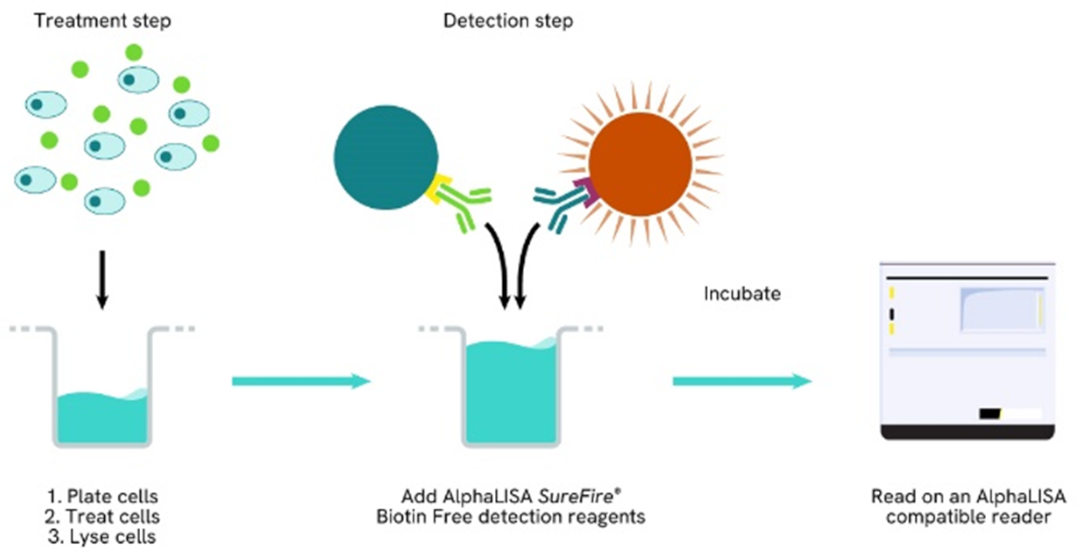
Detection of Total target protein with AlphaLISA SureFire Biotin Free reagents can be performed in a single plate used for culturing, treatment, and lysis. No washing steps are required. This HTS designed protocol allows for miniaturization while maintaining robust AlphaLISA SureFire quality.
Assay validation
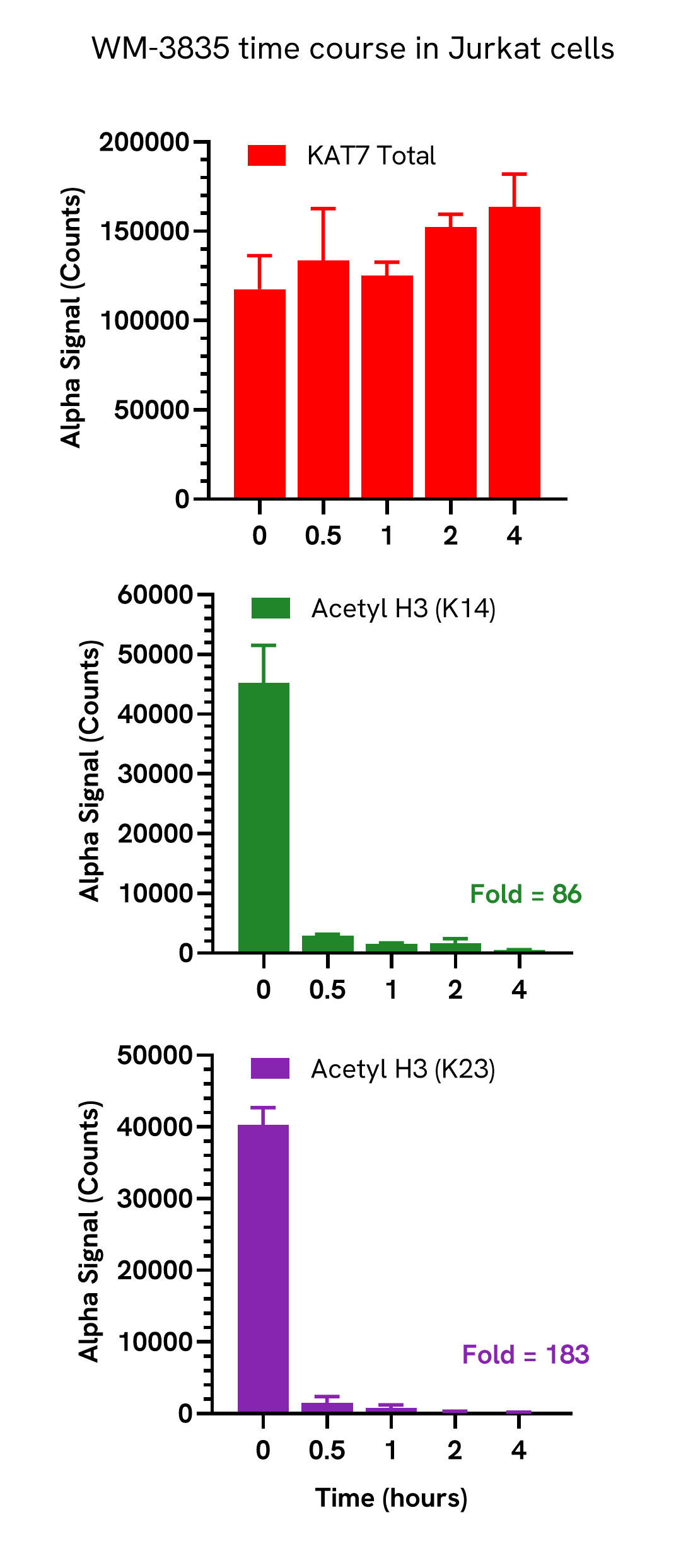
KAT7 regulation of Histone H3 acetylation
Jurkat cells were seeded in a 96-well plate (400,000 cells/well) in complete medium and treated with 10 µM WM-3835 (KAT7 inhibitor) for the indicated times at 37°C, 5% CO2.
After treatment, the cells were spun down and lysed with 100 µL of Lysis Buffer B for 30 minutes at RT with shaking (350 rpm). Lysates were further diluted and Total KAT7, Acetyl Histone H3 (K14) and (K23) levels were evaluated using respective AlphaLISA SureFireBiotin Freeassays. For the detection step, 10 µL of cell lysate (approximately 40,000 cells for KAT7 and 20,000 cells for Acetyl Histone H3 (K14) and (K23)). Finally, 5 µL of Donor mix was then added to each well and incubated for 1 hour at RT in the dark. The plate was read on an Envision using standard AlphaLISA settings.
As expected, treatment with a KAT7 inhibitor resulted in decreased levels of both K14 and K23 Histone H3 acetylation, with no significant changes in KAT7 levels.
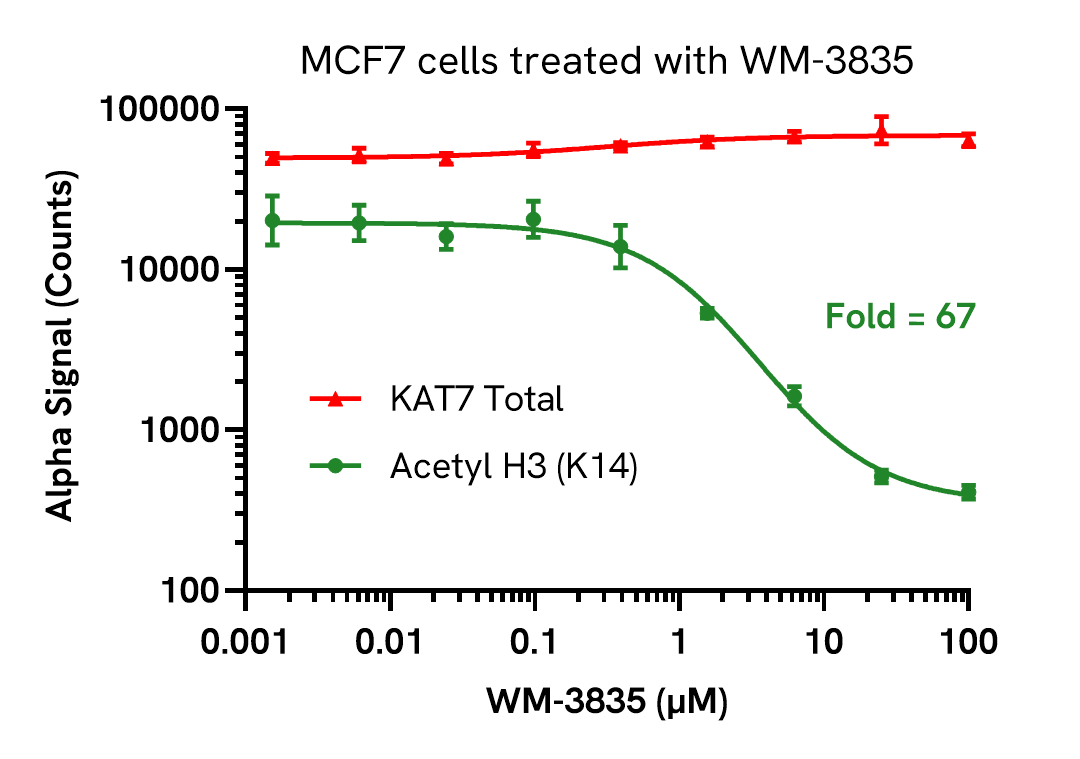
MCF7 cells were seeded in a 96-well plate (40,000 cells/well) in complete medium and incubated overnight at 37°C, 5% CO2. Cells were treated with increasing concentrations of WM-3835 for 4 hours at 37°C, 5% CO2.
After treatment, the cells were lysed with 100 µL of Lysis Buffer B for 30 minutes at RT with shaking (350 rpm). Lysates were further diluted and KAT7 and Acetyl Histone H3 (K14) levels were evaluated using respective AlphaLISA SureFireBiotin Freeassays. For the detection step, 10 µL of cell lysate (approximately 4,000 cells for KAT7, 500 cells for Acetyl Histone H3 (K14)) was transferred into a 384-well white OptiPlate, followed by 5 µL of Acceptor mix and incubated for 1 hour at RT. Finally, 5 µL of Donor mix was then added to each well and incubated for 1 hour at RT in the dark. The plate was read on an Envision using standard AlphaLISA settings.
As expected, treatment with a KAT7 inhibitor resulted in a dose dependent decrease of Acetyl Histone H3 (K14) while KAT7 Total levels remained unchanged.
Assay versatility
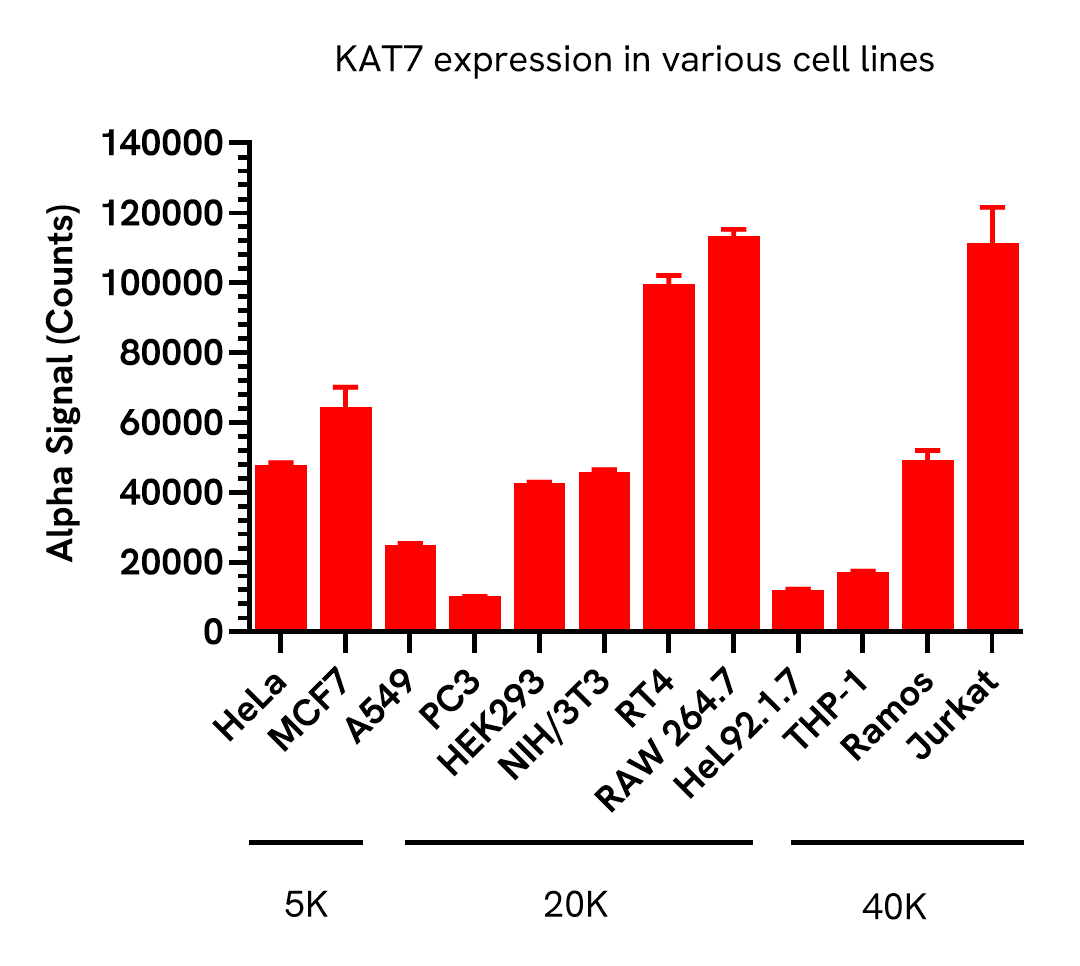
KAT7 expression in various cell lines
Adherent cells were cultured to confluence in T175 flasks at 37°C, 5% CO2 and lysed with Lysis Buffer B. Suspension cells were harvested and lysed with Lysis Buffer B at a density of 4 x 10⁶ cells/mL. For the detection step, 10 µL of cell lysate (cells/datapoint is indicated on the graph) was transferred into a 384-well white OptiPlate, followed by 5 µL of Acceptor Mix and incubated for 1 hour at RT. Finally, 5 µL of Donor Mix was then added to each well and incubated for 1 hour at RT in the dark. The plate was read on an Envision using standard AlphaLISA settings.
KAT7 is widely expressed in a range of cell lines.
Assay sensitivity
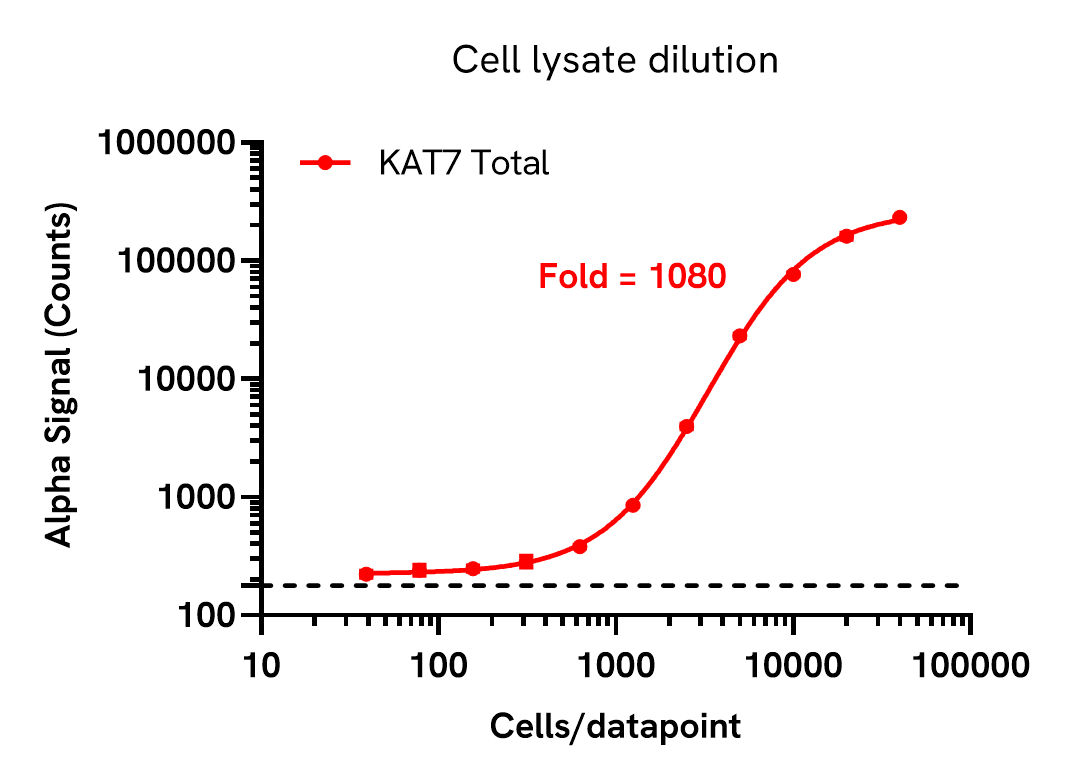
Assay sensitivity- cell lysate dilution
Cell lysate was prepared from Jurkat cells lysed at a density of 4 x 10⁶ mL in Lysis Buffer B for 30 minutes at RT with shaking.
Lysate was serially diluted and KAT7 levels were evaluated using the AlphaLISA SureFireBiotin Free assay. For the detection step, 10 µL of lysate was transferred into a 384-well white OptiPlate, followed by 5 µL of Acceptor mix and incubated for 1 hour at room temperature. Finally, 5 µL of Donor mix was then added to each well and incubated for 1 hour at RT in the dark. The plate was read on an Envision using standard AlphaLISA settings.
Approximate number of cells/datapoint is indicated. The dotted line represents assay background. This assay can detect KAT7 expression in less than 2,000 cells.
Specifications
| Application |
Cell Signaling
|
|---|---|
| Automation Compatible |
Yes
|
| Brand |
AlphaLISA SureFire Biotin-Free
|
| Detection Modality |
Alpha
|
| Product Group |
Kit
|
| Protocol Time |
2h at RT
|
| Sample Volume |
30 µL
|
| Shipping Conditions |
Shipped in Blue Ice
|
| Target |
KAT7
|
| Target Class |
Phosphoproteins
|
| Target Species |
Human
Mouse
|
| Technology |
Alpha
|
| Therapeutic Area |
Oncology
|
| Unit Size |
100 Assay Points
|
Resources
Are you looking for resources, click on the resource type to explore further.

Brochure
Alpha assays and reagents catalog
Alpha technolgy enables the rapid and straightforward mesaure of virtually any target. This includes enzymes, receptor-ligand...
Brochure
Alpha SureFire Ultra no-wash immunoassay catalog
Discover Alpha SureFire® Ultra™ assays, the no-wash cellular kinase assays leveraging Revvity's exclusive bead-based technology...
Brochure
Species compatibility for HTRF, AlphaLISA SureFire Ultra and Alpha SureFire Ultra Multiplex assays
This document includes detailed tables listing HTRF™, AlphaLISA™ SureFire® Ultra™, and Alpha SureFire® Ultra™ Multiplex assays...
Loading...


How can we help you?
We are here to answer your questions.