



Next-generation sequencing (NGS) has revolutionized genomics research, allowing scientists to explore the intricacies of DNA and RNA at scale. The quality of NGS data often depends on removing unwanted sequences that consume reads or bias quantification. Common targets include abundant ribosomal RNAs (rRNAs), host DNA, and other high-copy contaminants. Below, we outline widely used depletion approaches: hybridization, RNase H, CRISPR/Cas9, and kinetic folding, highlighting where each method fits and how to choose among them.
CRISPR/Cas9-based depletion
CRISPR/Cas9 can be applied at the double-stranded DNA (dsDNA) library stage. Guide RNAs
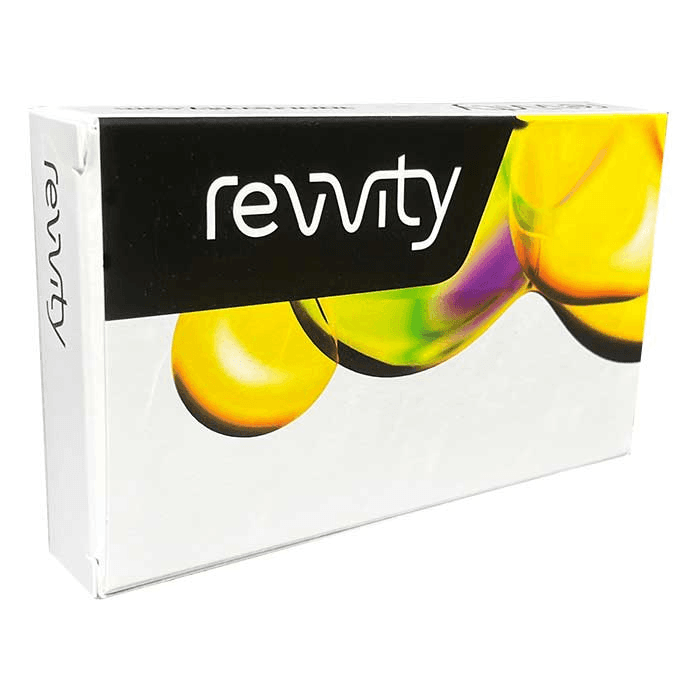 NEXTFLEX Cas9-gRNA rRNA Depletion Enzyme (HMR)
(gRNAs) target unwanted sequences in library molecules; Cas9 cleaves those molecules so they are not efficiently amplified or cluster-ready, and fragments can be removed during cleanup and size selection.
NEXTFLEX Cas9-gRNA rRNA Depletion Enzyme (HMR)
(gRNAs) target unwanted sequences in library molecules; Cas9 cleaves those molecules so they are not efficiently amplified or cluster-ready, and fragments can be removed during cleanup and size selection.
Advantages
- High targeting precision: gRNAs define exactly which sequences are cut.
- Flexible placement in workflow: Applied after second-strand synthesis or post-library prep, which avoids additional handling of fragile RNA.
- Broad conceptual scope: The approach extends beyond rRNA to other high-abundance sequences when appropriate guides are used in research workflows.
Limitations
- Guide design: Effective targeting requires thoughtful guide selection and validation.
rRNA depletion methods
Hybridization-based depletion
Hybridization uses complementary probes designed against rRNA. Probes are typically immobilized on beads or magnetic particles to capture and remove target molecules
NEXTFLEX RiboNaut rRNA Depletion Kit (Human / Mouse / Rat)
.
Advantages
- Specificity: Probe sets can be designed against defined rRNA species.
- Customizability: Panels can be tailored to different organisms or rRNA isoforms.
- Ease of use: Well-established workflows and formats.
Limitations
- Probe design coverage: Effectiveness depends on probe design and how well probes match rRNA sequence diversity across species and isoforms.
- Off-target depletion risk: Partial homology can pull down non-rRNA transcripts, which may bias expression estimates if not controlled.
RNase H–mediated depletion
RNase H cleaves RNA that is base-paired to DNA. Antisense DNA oligos (ASOs) are designed to hybridize to rRNA; RNase H then degrades the RNA strand in these RNA:DNA hybrids.
Advantages
- Targeted cleavage: Acts only on RNA within RNA:DNA hybrids.
- Simple reagent set: Enzyme plus ASOs.
- Cost-efficient: Often economical at scale.
Limitations
- Design sensitivity: Performance depends on ASO design, target accessibility, and rRNA isoform diversity.
- Fragmented inputs: Extensive fragmentation can reduce hybrid formation and yield variable depletion efficiency.
Kinetic folding–based depletion
These methods aim to block reverse transcription of abundant RNAs by exploiting RNA structure and temperature conditions during cDNA synthesis rather than physically removing molecules.
Advantages
- No capture probes: Uses inherent RNA properties.
- Simple concept: Minimal additional reagents.
Limitations
- Input quality sensitivity: Structured or fragmented RNAs can behave unpredictably.
- Coverage bias: GC-rich regions and heavily structured RNAs may be under-represented depending on RT conditions.
- Limited scope: Generally focused on rRNA and not applicable at the dsDNA library stage.
Conclusion
Depletion technologies are essential for enhancing the accuracy of NGS experiments. Researchers must choose the most suitable approach based on their specific goals and sample characteristics.
For research use only. Not for use in diagnostic procedures.
References:
- Wahl, A., Huptas, C. & Neuhaus, K. (2022) Comparison of rRNA depletion methods for efficient bacterial mRNA sequencing. Sci Rep 12, 5765
- Jang, J.S., Berg, B., Holicky, E. et al. (2020). Comparative evaluation for the globin gene depletion methods for mRNA sequencing using the whole blood-derived total RNAs. BMC Genomics 21, 890.
- Zhao, S., Zhang, B. (2015). A comprehensive evaluation of ensembl, RefSeq, and UCSC annotations in the context of RNA-seq read mapping and gene quantification. BMC Genomics, 16, 1-11. DOI: 10.1186/s12864-015-1318-0
- Levin, J. Z., Yassour, M., Adiconis, X., Nusbaum, C., Thompson, D. A., Friedman, N., Gnirke, A., & Regev, A. (2010). Comprehensive comparative analysis of strand-specific RNA sequencing methods. Nature Methods, 7(9), 709–715. DOI: 10.1038/nmeth.1491.