


The success of chimeric antigen receptor (CAR) T-cell therapy marks a major milestone in cancer immunotherapy. This approach demonstrates how engineered immune cells can selectively target and destroy malignant cells, particularly in blood cancers where traditional treatments have failed.
Yet despite these advances, CAR T-cell therapies still face significant challenges, including on-target off-tumor effects, cytokine release syndrome (CRS), neurotoxicity, and graft-versus-host disease (GvHD). Additionally, their complex manufacturing requirements limit scalability and accessibility.
These limitations have led researchers to explore alternative immune effector cells, particularly natural killer (NK) cells, as promising candidates for adoptive cell therapy.
The promise of NK cell immunotherapy
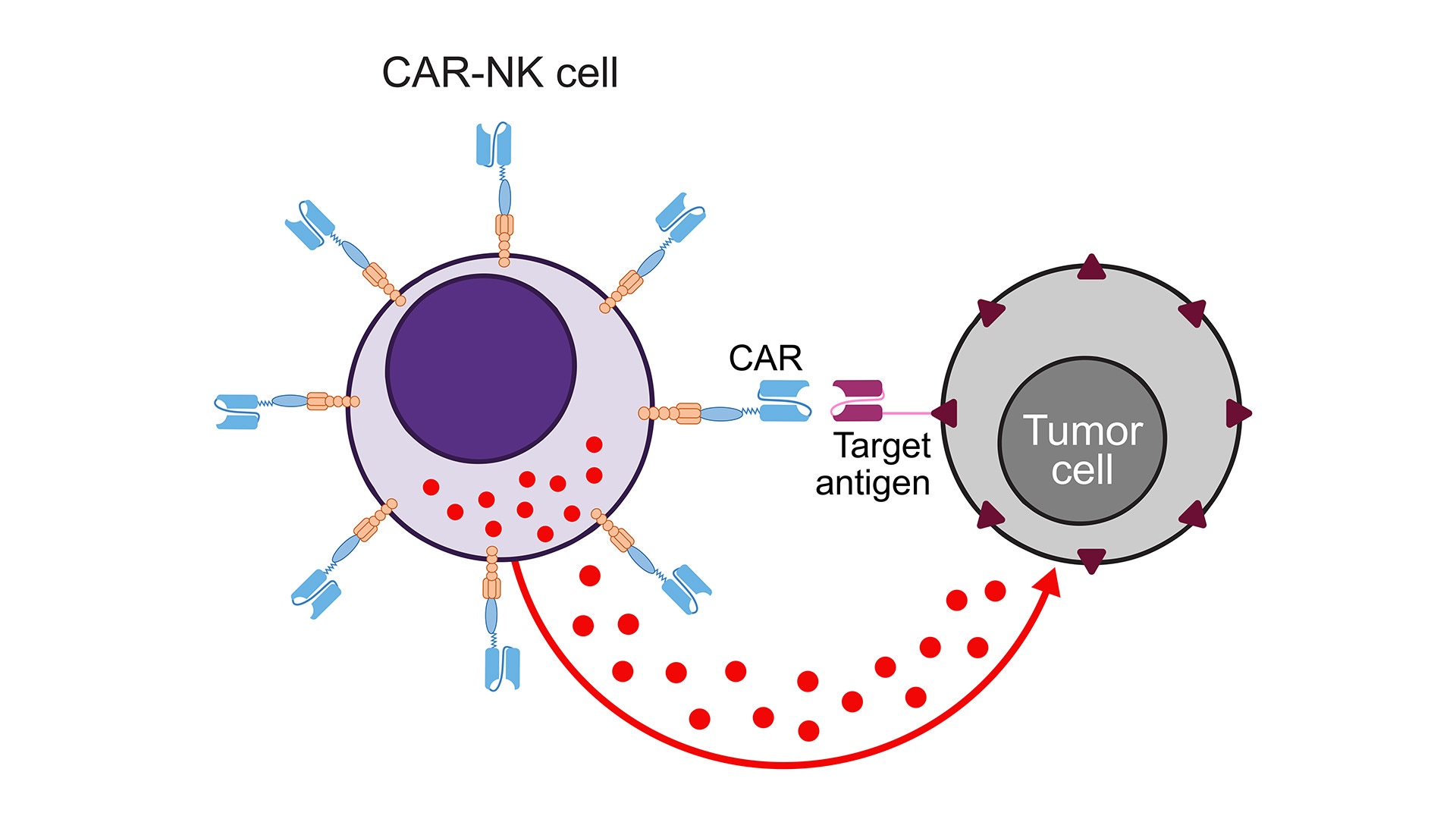
NK cells possess a unique ability to recognize and eliminate tumor cells without prior sensitization, making them compelling candidates for cancer immunotherapy. These cells mediate cytotoxicity through multiple mechanisms, including direct cell-to-cell contact and secretion of cytotoxic granules containing perforin and granzymes. This versatility, coupled with their lower risk of CRS and GvHD, positions NK cells as particularly attractive alternatives to T cells for cancer research.
By engineering NK cells to express CARs, researchers aim to combine the precision of CAR technology with NK cells' natural cytotoxicity and favorable safety profile. Furthermore, their potential to serve as off-the-shelf therapies adds to their appeal for CAR NK-cell strategies and other adoptive cell therapies.
Challenges in NK cell expansion and culture
Despite their therapeutic promise, NK cells remain difficult to culture and expand at scale. Researchers face challenges in achieving consistent NK cell expansion and function due to variability in donor material, reliance on serum-based media, cytokine requirements, and limited proliferation capacity compared to T cells. These factors complicate the manufacturing process and raise concerns about safety, reproducibility, and meeting the regulatory standards required for both research and clinical applications.
Key challenges include:
- Donor variability, which affects cell yield, phenotype, and functional capacity, making standardization and batch consistency difficult.
- Dependence on cytokine stimulation, requiring a precise balance to maintain viability and function.
- Use of serum-based media, which introduces batch-to-batch variability, potential contamination risks, and regulatory challenges.
- Limited proliferation capacity compared to T cells, with NK cells often reaching senescence after only a few weeks in culture.
The need to mitigate the risks associated with traditional serums, while optimizing and safely culturing NK cells to ensure reliable cell-mediated cytotoxicity measurements, remains a critical bottleneck in advancing NK cell research.
A serum-free solution for consistent NK cell performance
To address these challenges, we developed a comprehensive workflow for isolating NK cells, culturing them in chemically defined serum-free media, and performing detailed cytotoxicity analysis using high-quality reagents.
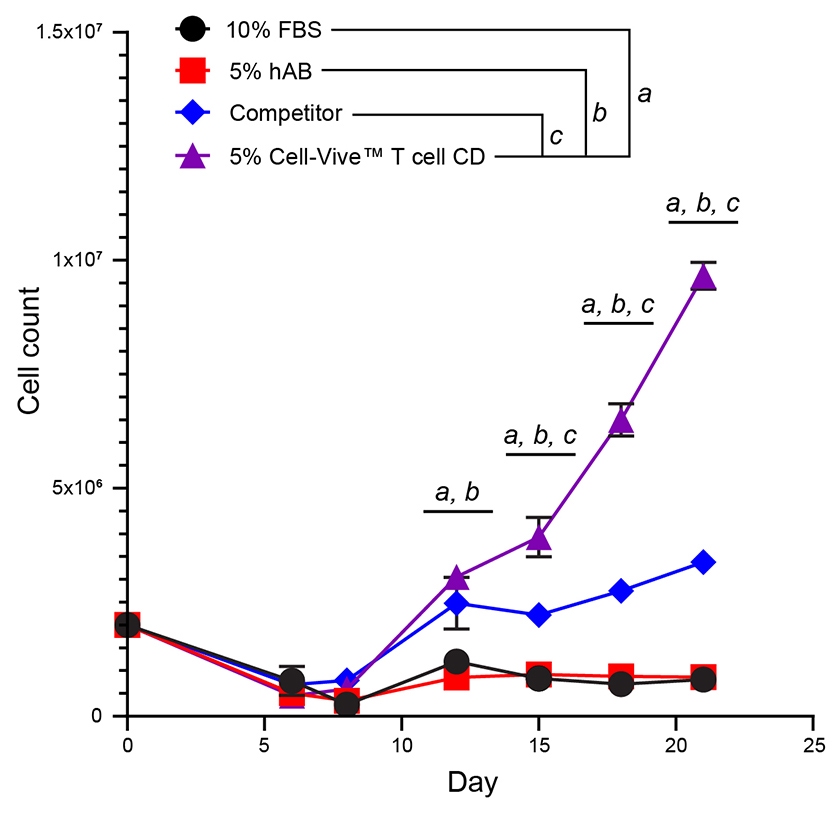
Results from our research show that NK cells cultured in Cell-Vive™ T cell CD Serum Substitute, GMP, expanded significantly more than those grown in standard or competitor serum conditions (Figure 1). Importantly, NK cells cultured in Cell-Vive also displayed a more mature phenotype with high surface expression of key markers including CD16, CD161, NKp30, NKp46, and NKG2A, and exhibited the highest cytotoxicity against target tumor cells.
Figure 1: Greater NK cell expansion with Cell-Vive T cell CD serum substitute, GMP
This superior performance was further confirmed through analysis of cytotoxic molecules, with Cell-Vive cultured NK cells producing significantly higher levels of TNF-α, perforin, granzymes A and B, and granulysin.
These results demonstrate how using a chemically defined formulation can provide researchers with more reliable, consistent, and controlled conditions for NK cell expansion while reducing variability and regulatory concerns. Our workflow enables deeper and more reliable phenotypic and functional analysis of NK cells in research applications by combining targeted killing assays, profiling surface markers, and analysis of secreted molecules.
Future outlook
As NK cell-based research continues to advance, chemically defined and serum-free culture systems will play an essential role in supporting the development of adoptive cell therapies, including CAR T-cell and CAR NK-cell research.
Importantly, the quality and safety of ancillary materials used during ex vivo cell processing is essential to the success of research outcomes and potential future therapeutic development. By using controlled reagents such as Cell-Vive T cell CD Serum Substitute, GMP, researchers can mitigate the risks associated with traditional serums like Human AB, ultimately improving the reliability, consistency, and research reproducibility of their cell culture workflows.
To explore the full findings and workflow, read the application note on deep phenotypic and cytotoxicity characterization of NK cells cultured with chemically defined additives.
For research use only. Not for use in diagnostic procedures.