


Drug resistance remains a major challenge in cancer treatment. Tumor cells can activate compensatory pathways that help them evade the effects of targeted therapies, making it difficult to predict and overcome resistance mechanisms. Understanding how these pathways contribute to resistance can help researchers identify new ways to investigate and potentially restore drug sensitivity.
Precision gene perturbation technologies, including siRNA, CRISPR knockout, CRISPR activation (CRISPRa), and CRISPR interference (CRISPRi), provide complementary approaches for the examination of resistance mechanisms and to inform therapeutic development.1 Combining these techniques can allow researchers to systematically alter cellular pathways, drive desired phenotypic outcomes, and explore mechanisms of drug sensitivity in resistant systems, ultimately providing a platform that can support the identification of novel combinatorial interventions.
Key takeaways:
- Combining CRISPRa (gene activation) with RNAi (gene silencing) reveals resistance mechanisms that either approach alone cannot identify.
- GATA5 knockdown plus MAPK1 activation together restored vemurafenib sensitivity in drug-resistant RKO cells, showing how dual perturbation can overcome compensatory pathway activation.
- This dual-direction screening strategy enables systematic identification of synergistic gene targets to restore drug sensitivity in resistant cancer models.
Recently, we explored how dual-direction gene modulation—combining gene activation with CRISPRa and gene knockdown with RNAi—can be leveraged to resensitize a drug-resistant cancer cell line. Here, we highlight a proof-of-concept experiment demonstrating this approach and discuss the broader utility of these techniques across a range of research and therapeutic applications.
Towards understanding and addressing chemotherapeutic resistance
Resistance to chemotherapeutics rarely stems from a single compensatory cellular response. Instead, cancer cells often reprogram multiple redundant pathways involved in drug efflux, DNA repair, and mechanisms of cell death.2 This can make chemotherapeutic-resistant cancers difficult to treat and study, as multiple cellular effectors are often regulated simultaneously through a combination of pathway activation and repression.
RKO colon carcinoma cells harboring BRAF V600E and MAPK1 Q56P mutations provide a model of acquired drug resistance to the BRAF inhibitor vemurafenib, resulting in reduced drug sensitivity relative to parental RKO cells.3 For this study, we selected several gene targets associated with a drug-resistant phenotype, most of which are involved in the MAPK signaling pathway.4
To demonstrate the utility of dual-direction gene modulation, we used Dharmacon™ ON-TARGETplus™ siRNA (Revvity, ON-TARGETplus siRNA) and CRISPRmod™ CRISPRa hEF1α promoter-driven dCas9-VPR lentiviral (Revvity, dCas9-VPR lentiviral particles) systems to screen tandem pairs of these genes for conditions that restore vemurafenib sensitivity in RKO (BRAF V600E/MAPK1 Q56P) cells.
Using dual-direction gene modulation to probe drug resistance mechanisms
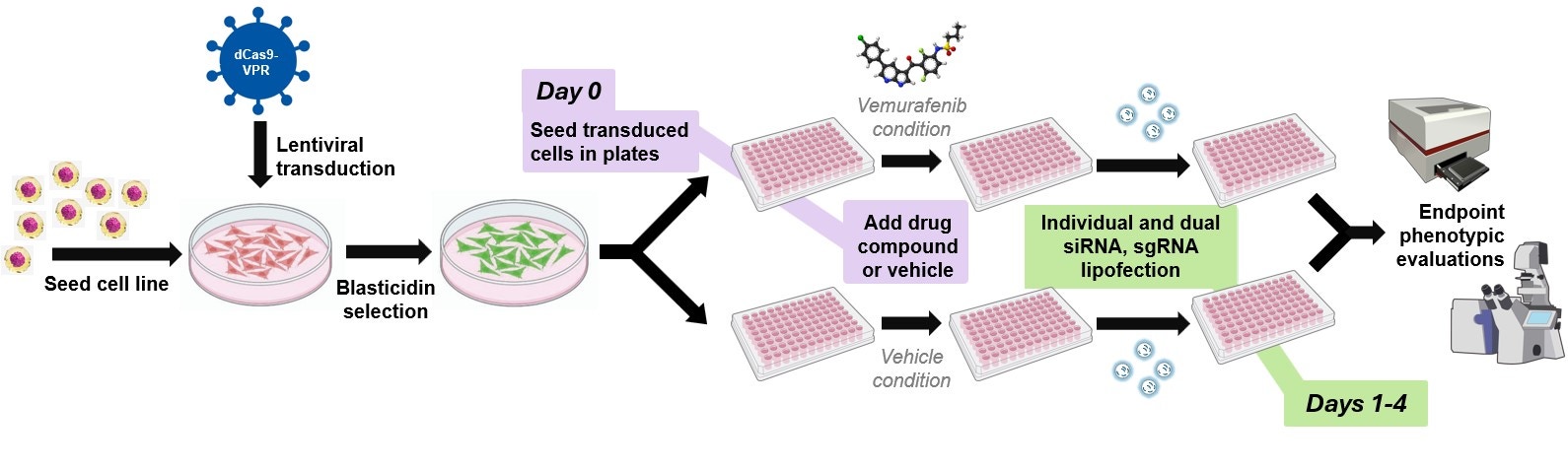
The general workflow for dual-direction gene modulation screening is shown in Figure 1. We first generated RKO (BRAF V600E/MAPK1 Q56P) cells that stably express the CRISPRa effector dCas9-VPR using CRISPRmod CRISPRa lentiviral dCas9-VPR (hEF1α promoter option). Following integration and selection, the engineered cells retained their resistance to vemurafenib, indicating that stable dCas9-VPR expression did not alter the drug-resistant phenotype.
Figure 1. Experimental layout for dual-direction gene modulation screening for drug compound sensitivity in cultured cells. Figure made using BioRender.com
Next, we dual-transfected CRISPRa sgRNA (Revvity, CRISPRmod CRISPRa Synthetic sgRNA) and siRNA into RKO (BRAF V600E/ MAPK1 Q56P) cells using DharmaFECT1 transfection reagent. Gene targets were selected based on previous work describing CRISPRa and CRISPRi targets that decrease vemurafenib resistance.4
To explore combinations of RNAi and CRISPRa that increase resistance to vemurafenib, we included siRNA targets for genes whose CRISPRa-mediated activation had previously increased drug sensitivity (e.g. EGFR, NFATC2, GATA5) and CRISPRa targets for genes whose CRISPRi-mediated suppression had previously increased drug sensitivity (e.g. NF1, NF2, MAPK1).
The dCas9-VPR stable RKO (BRAF V600E/MAPK1 Q56P) cell line was transfected with siRNA and sgRNA, both alone and in combination in a single transfection. Cells were incubated with or without 2 µM vemurafenib throughout all growth and transfection phases.
Following treatment, cell viability and proliferation were assessed as part of the dual-direction gene perturbation screen. Using a resazurin-based viability assay, we found that a combination of GATA5 siRNA and CRISPRa of MAPK1 restored vemurafenib sensitivity in RKO (BRAF V600E/MAPK1 Q56P) cells as measured through decreased cell metabolism compared to modulation of either target alone (Figures 2A and 2B).
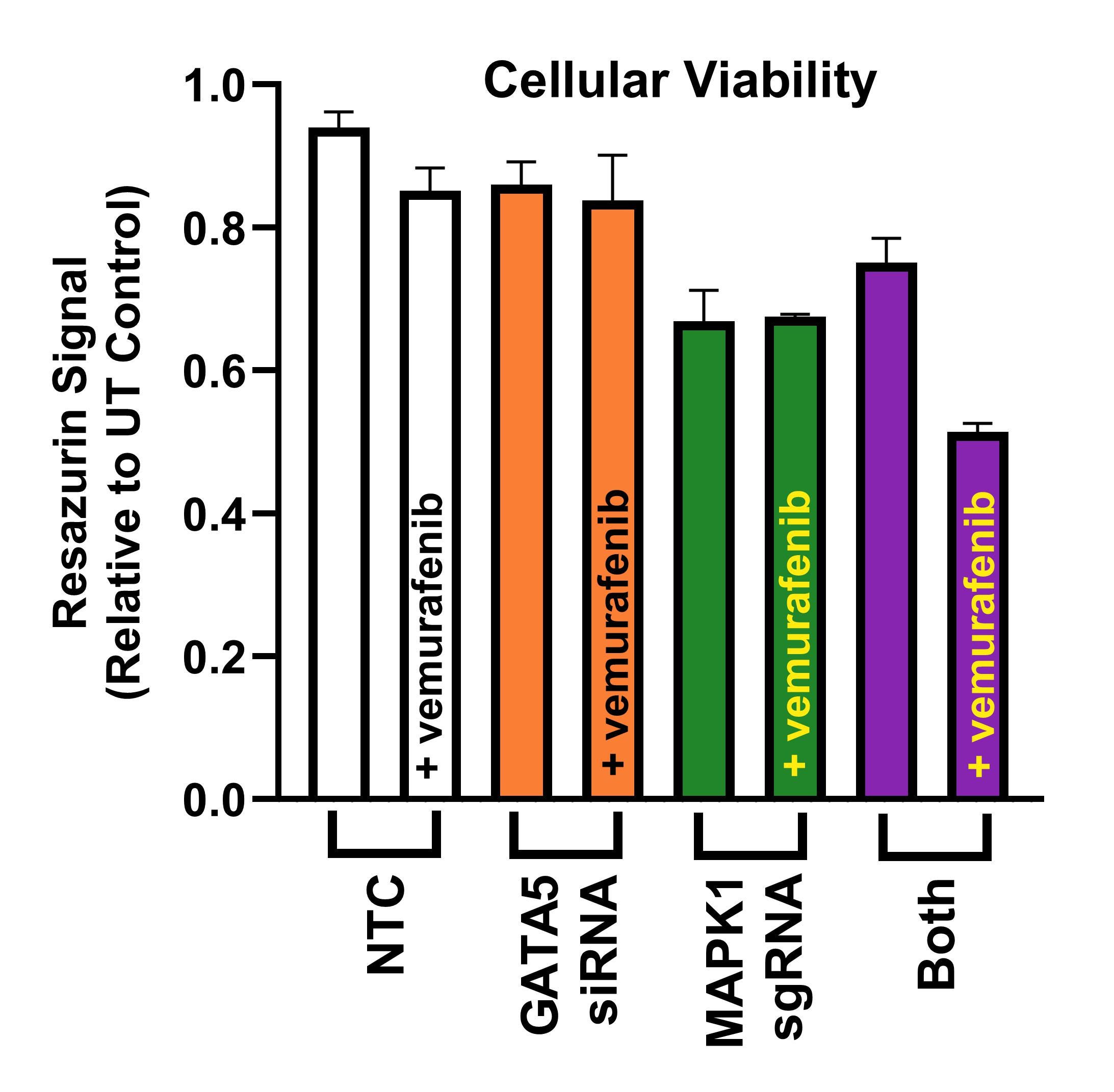
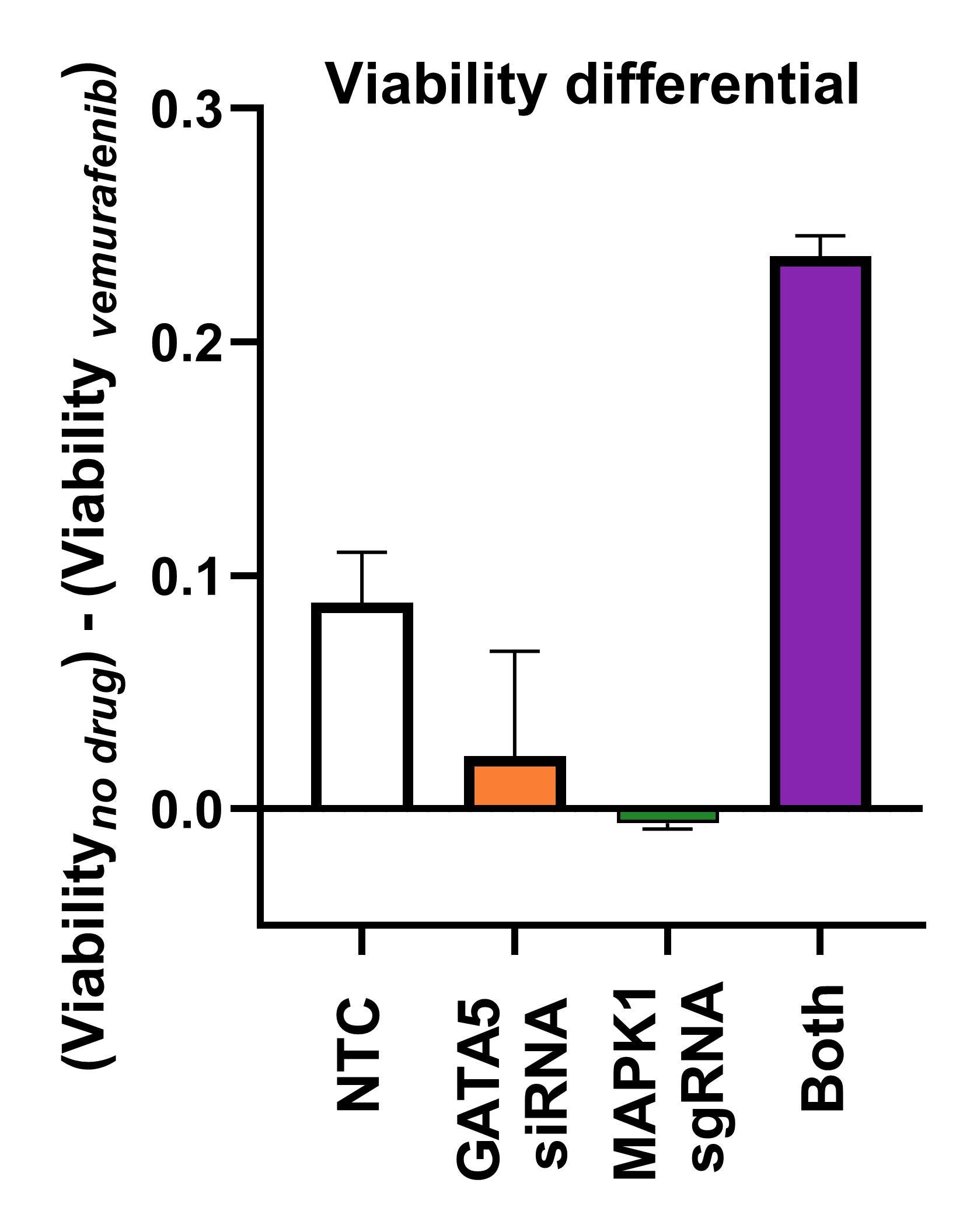
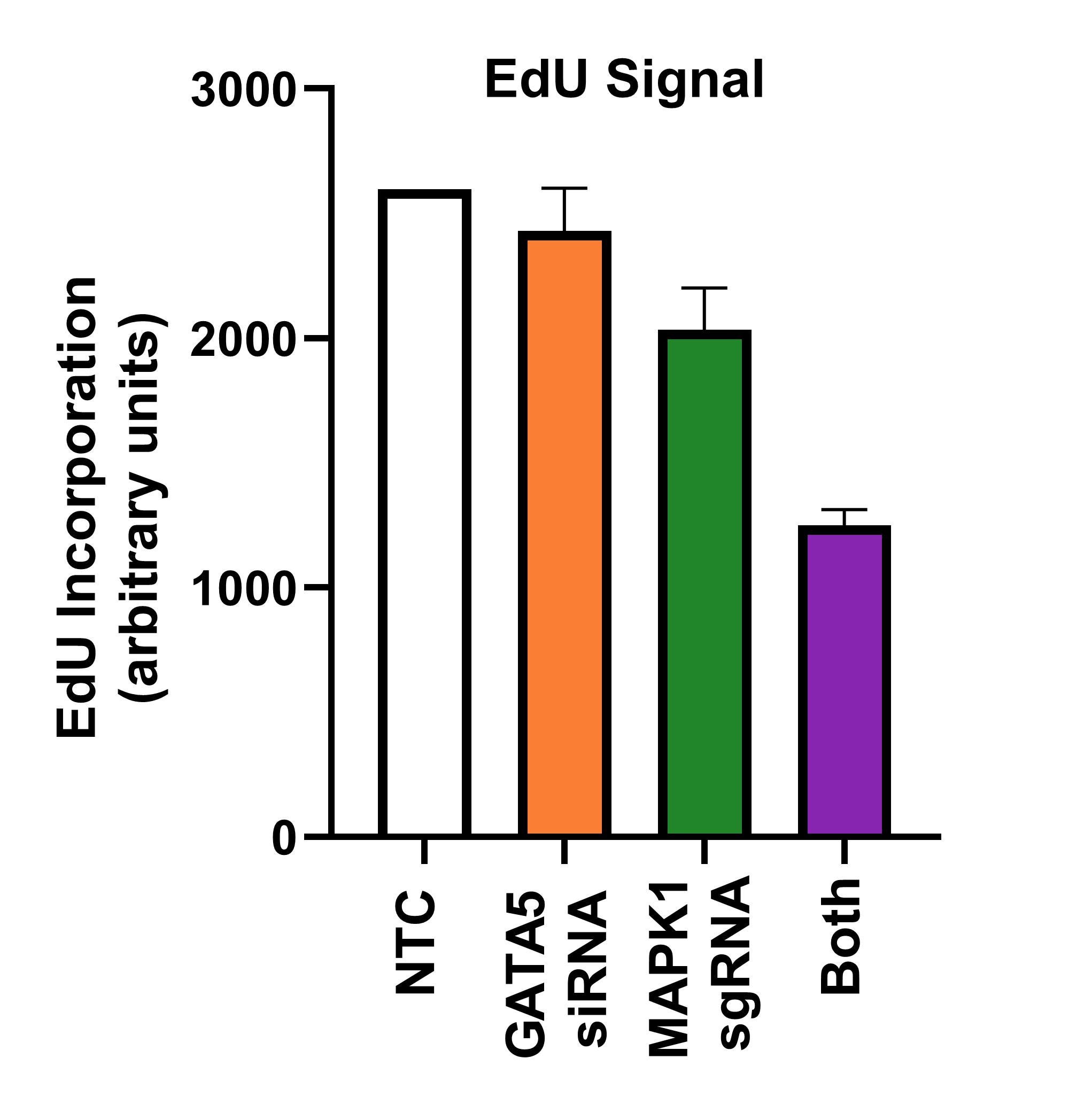
Figure 2. Dual direction gene modulation attenuates vemurafenib resistance in dCas-VPR-stable RKO (BRAF V600E/MAPK1 Q56P) cells. Assessment of cell metabolism, indicated by resazurin conversion to resorufin (A), indicates that dual transfection of siRNA and CRISPRa sgRNA targeting GATA5 and MAPK1, respectively, results in attenuation of vemurafenib resistance (B). Incorporation of EdU into treated cells (C) suggests that reestablishing drug compound sensitivity in dual transfected, drug-resistant cells may be due to a decrease in the rate of cellular proliferation.
To corroborate resazurin results, cell proliferation was also measured using a Click-iT EdU assay in cells treated with either and both GATA5 siRNA and MAPK1 CRISPRa sgRNA. This analysis showed that RKO (BRAF V600E/MAPK1 Q56P) cells subjected to dual-directed regulation exhibited significantly reduced proliferation compared with cells receiving either perturbation alone (Figure 2C). Together, these data indicate that dual-direction regulation of GATA5 and MAPK1 enhances vemurafenib sensitivity in RKO (BRAF V600E/MAPK1 Q56P) cells.
This proof-of-concept study illustrates the utility of dual-direction siRNA and CRISPRa screening in drug-resistant cell lines. The combination of functional interrogation and compound screening can reveal biological phenotypes (e.g. drug sensitivities), such as altered drug sensitivity, that may otherwise be masked by endogenous gene regulatory responses. As a screening approach, a combinatorial genetic interrogation of genes in combination with compounds can enable the study of complicated cellular pathways, deconvolution of drug pathways and identification of gene targets that can restore drug sensitivity in resistant cell lines.
In this study, Revvity's Dharmacon reagents provide researchers with a flexible toolkit to perturb genes via multiple independent and complementary biological mechanisms, enabling the discovery of novel therapeutic targets and drug resistance mechanisms that single-perturbation or technology approaches cannot reveal. By combining RNAi and CRISPRa technologies, researchers can systematically interrogate complex resistance networks and identify combination strategies to restore drug sensitivity in models of drug-resistant cancers.
References:
- Kumar, K., Rani, V., Mishra, M., & Chawla, R. (2022). New paradigm in combination therapy of siRNA with chemotherapeutic drugs for effective cancer therapy. Current research in pharmacology and drug discovery, 3, 100103. https://doi.org/10.1016/j.crphar.2022.100103
- Garg, P., Malhotra, J., Kulkarni, P., Horne, D., Salgia, R., & Singhal, S. S. (2024). Emerging Therapeutic Strategies to Overcome Drug Resistance in Cancer Cells. Cancers, 16(13), 2478. https://doi.org/10.3390/cancers16132478
- Germann, U. A., Furey, B. F., Markland, W., Hoover, R. R., Aronov, A. M., Roix, J. J., Hale, M., Boucher, D. M., Sorrell, D. A., Martinez-Botella, G., Fitzgibbon, M., Shapiro, P., Wick, M. J., Samadani, R., Meshaw, K., Groover, A., DeCrescenzo, G., Namchuk, M., Emery, C. M., Saha, S., … Welsch, D. J. (2017). Targeting the MAPK Signaling Pathway in Cancer: Promising Preclinical Activity with the Novel Selective ERK1/2 Inhibitor BVD-523 (Ulixertinib). Molecular cancer therapeutics, 16(11), 2351–2363. https://doi.org/10.1158/1535-7163.MCT-17-0456
- le Sage, C., Lawo, S., Panicker, P., Scales, T. M. E., Rahman, S. A., Little, A. S., McCarthy, N. J., Moore, J. D., & Cross, B. C. S. (2017). Dual direction CRISPR transcriptional regulation screening uncovers gene networks driving drug resistance. Scientific reports, 7(1), 17693. https://doi.org/10.1038/s41598-017-18172-6