


Introduction
Receptor internalization and intracellular trafficking are key biological processes that influence the activity, localization, and cellular fate of many therapeutic modalities, including biased receptor agonists, antibodies and antibody-drug conjugates (ADCs).
Built on Revvity's expertise in Europium complex chemistry, pHSense™ reagents are pH-sensitive dyes specifically designed to monitor cellular internalization. These reagents enable real-time tracking of antibodies, ADCs, and receptor internalization in live cells using a simple, no-wash, plate-based assay format. pHSense assays require a time-resolved fluorescence (TRF)-capable plate reader, with appropriate sensitivity and delay settings to capture the long-lived emission signal.
pHSense assays provide an easy-to-implement solution for both kinetic measurements and end-point detection, supporting high-throughput workflows with compatibility across adherent and suspension cell lines.
Designed for physiological, cell-based internalization assays, these probes can be used directly in cell culture medium at 37°C. The reagents remain minimally fluorescent at neutral extracellular pH (≥7). Following internalization, pHSense reagents encounter progressively acidic intracellular compartments, including early and late endosomes and lysosomes, resulting in a corresponding increase in TRF signal.
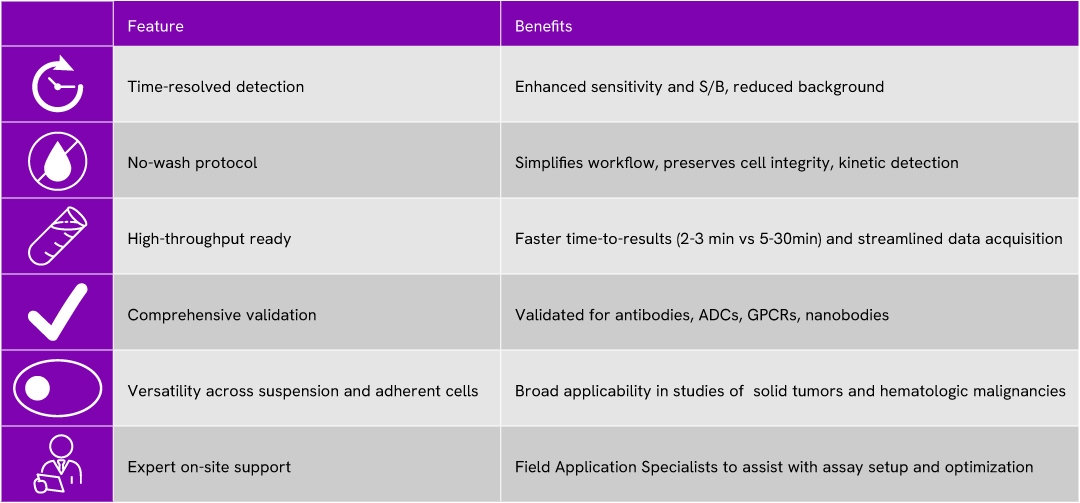
Key features and benefits of pHSense internalization assays
Table 1: Key features and benefits of pHSense internalization assays.
This table summarizes the core features of pHSense technology and their corresponding benefits for cell-based internalization studies.
pHSense dual pH sensitivity
pHSense dyes respond to pH changes in two complementary ways:
- Fluorescence intensity increases as the pH becomes more acidic (see Figure 1)
- Emission lifetime increases as the pH becomes more acidic (see Figure 2)
In a neutral pH environment, such as in the extracellular space, pHSense fluorescence is minimal and its emission lifetime is short. However, when pH decreases, for example during internalization of a pHSense-labeled antibody or receptor into endosomal or lysosomal compartments, both fluorescence brightness and emission lifetime increase substantially.
This two-dimensional pH sensitivity makes pHSense dyes highly responsive to pH changes, enabling the detection of receptor internalization even when receptors are expressed at endogenous levels in cells.
Note: Unlike traditional HTRF Europium Cryptate dyes, pHSense does not require the addition of potassium fluoride (KF). The distinct chemistry of pHSense eliminates the need for KF-based stabilization.
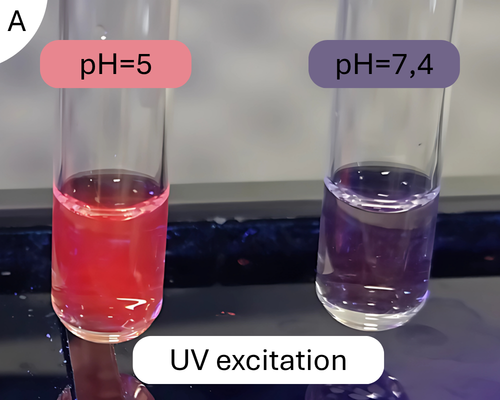
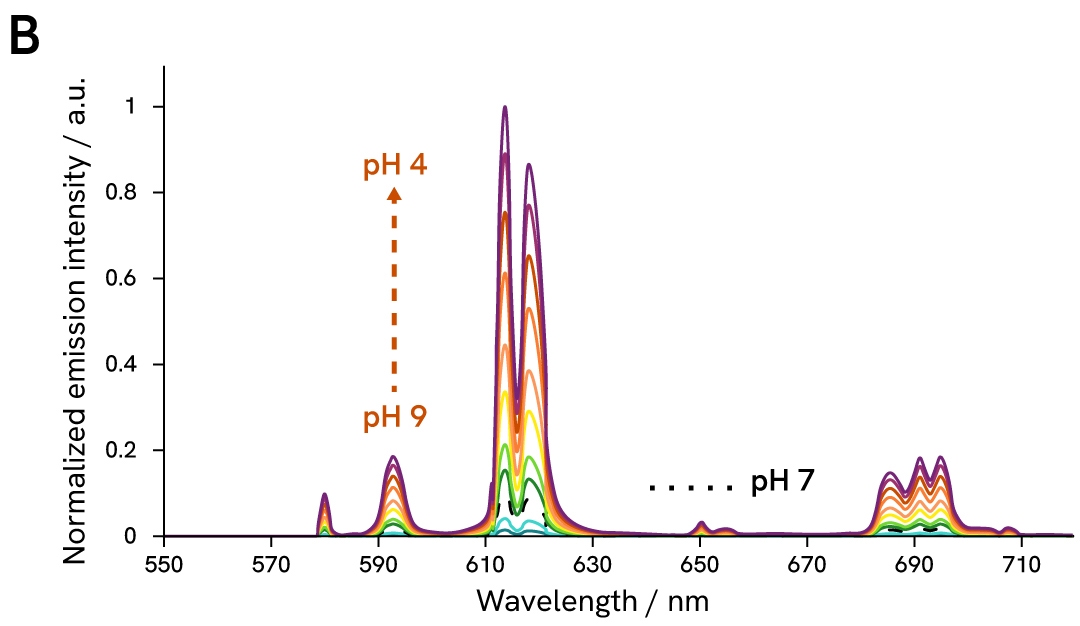
Figure 1: pH-dependent variation of pHSense fluorescence intensity
A. Visual comparison of pHSense brightness at pH 5.0 versus pH 7.4 under ultraviolet excitation. The dye exhibits significantly increased fluorescence at acidic pH, with emission at 620 nm appearing as red light.
B. Normalized fluorescence emission spectrum of pHSense across a range of pH values. All spectra are normalized to the brightest emission peak observed at pH 4.0.
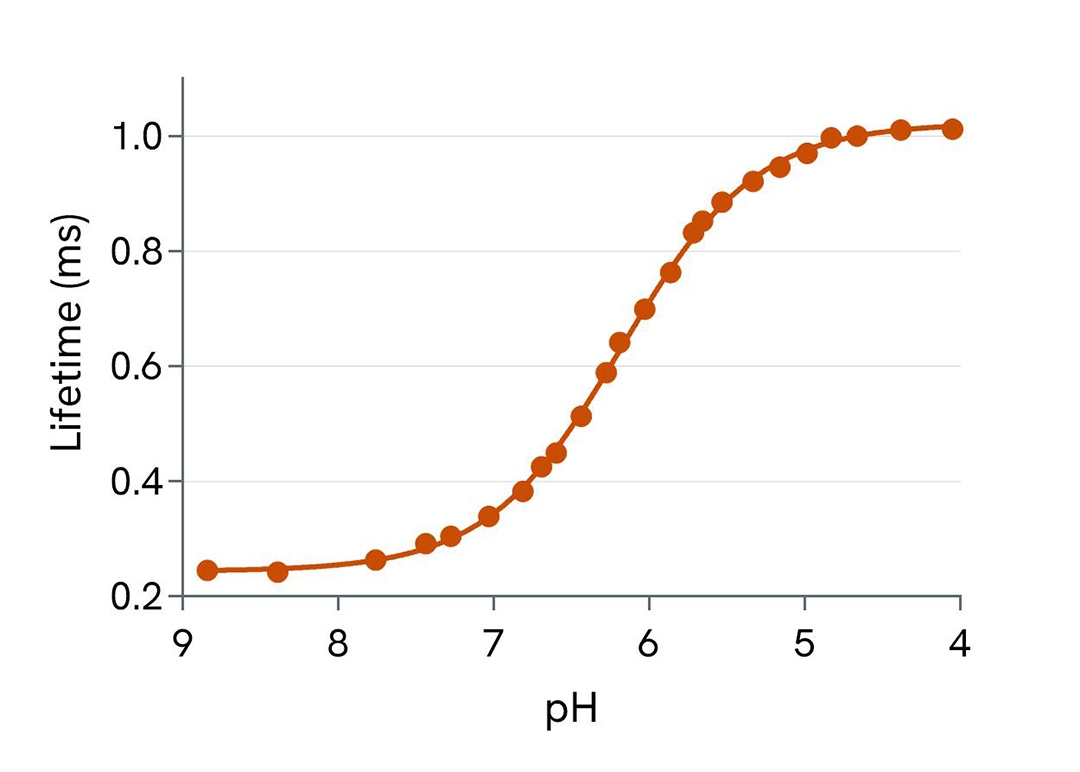
Figure 2: pH-dependent variation of pHSense emission lifetime
The emission lifetime of pHSense increases as pH becomes more acidic. By applying a 1,000 µs delay in the time-resolved fluorescence measurement, the signal difference between neutral and acidic pH environments is amplified, significantly enhancing assay sensitivity.
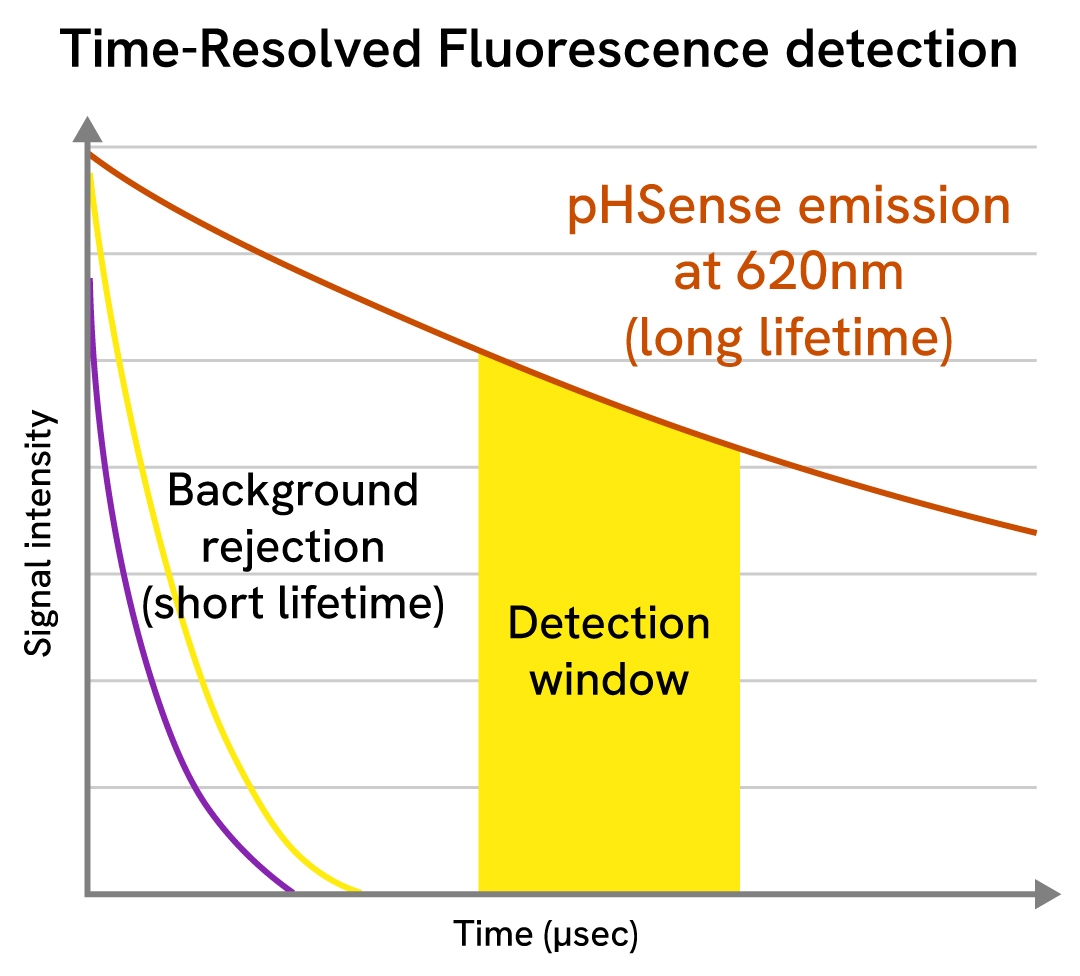
Figure 3: Principle of time-resolved fluorescence (TRF) detection of the pHSense signal
In time-resolved fluorescence, a delay is introduced between the excitation light flash and the signal measurement. This delay allows the short-lived autofluorescence from biological components, such as proteins and lipids, as well as from the assay plate plastic (represented by the purple and yellow curves), to fully decay before detection begins. Since these background signals typically last only a few nanoseconds, they are completely eliminated by the time the detection window opens. The TRF dyes (e.g. pHSense, represented by the orange curve), by contrast, emit fluorescence over a much longer period, spanning several hundreds of microseconds, ensuring its signal is captured cleanly, free from background interference. For pHSense specifically, an extended delay of 1,000 µs is applied. This longer delay is intentional: it selectively focuses detection on the dye's fluorescence when it is located in an acidic pH environment, further improving signal specificity.
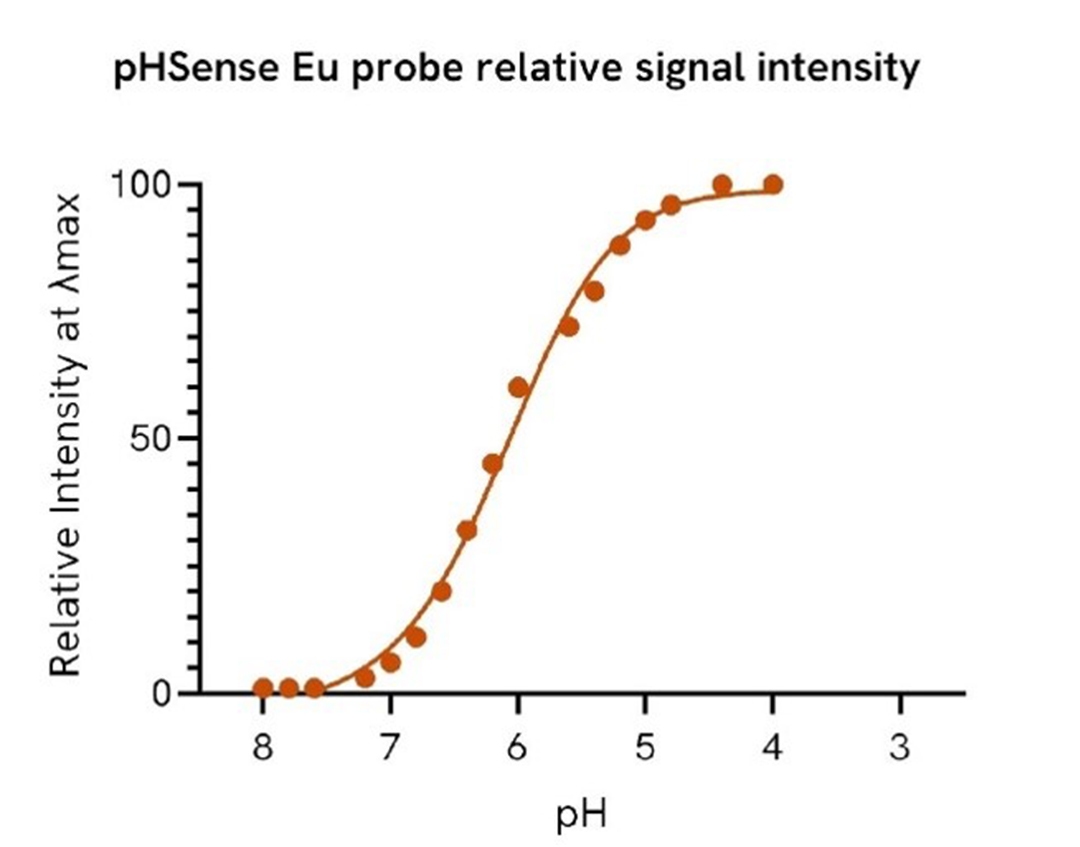
Figure 4: pH-dependent variation of pHSense global TRF signal at 620 nm
This figure shows the global time-resolved fluorescence (TRF) response of the pHSense dye across a range of pH levels, measured using the recommended settings (including a 1,000 µs delay). pHSense exhibits a unique two-dimensional pH sensitivity: both its fluorescence brightness and emission lifetime change with pH. This dual sensitivity effectively eliminates background signal from non-internalized probe, significantly enhancing pHSense's detection sensitivity.
For research use only. Not for use in diagnostic procedures.
The information provided above is solely for informational and research purposes only. Revvity assumes no liability or responsibility for any injuries, losses, or damages resulting from the use or misuse of the provided information, and Revvity assumes no liability for any outcomes resulting from the use or misuse of any recommendations. The information is provided on an "as is" basis without warranties of any kind. Users are responsible for determining the suitability of any recommendations for the user's particular research. Any recommendations provided by Revvity should not be considered a substitute for a user's own professional judgment.
